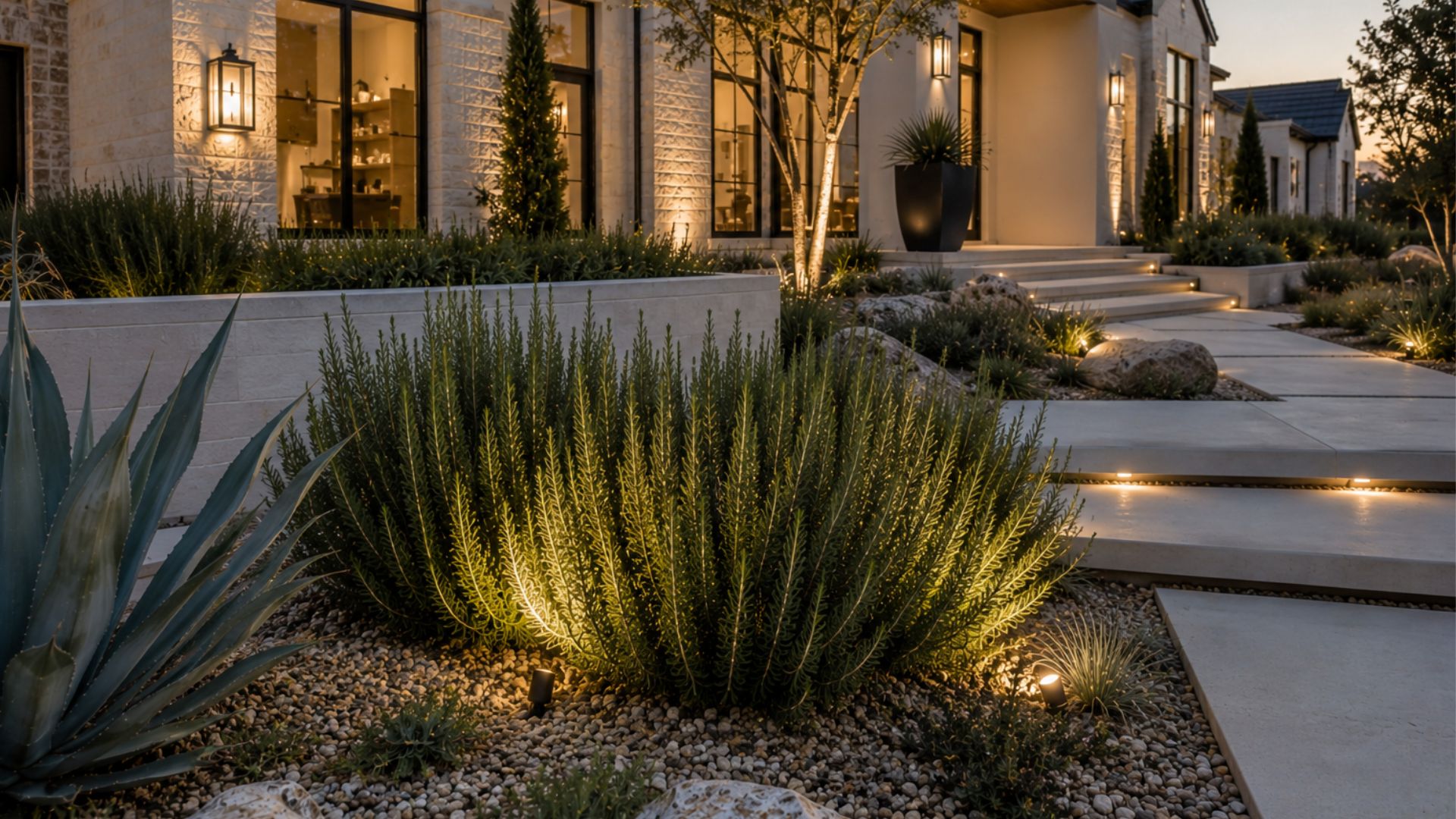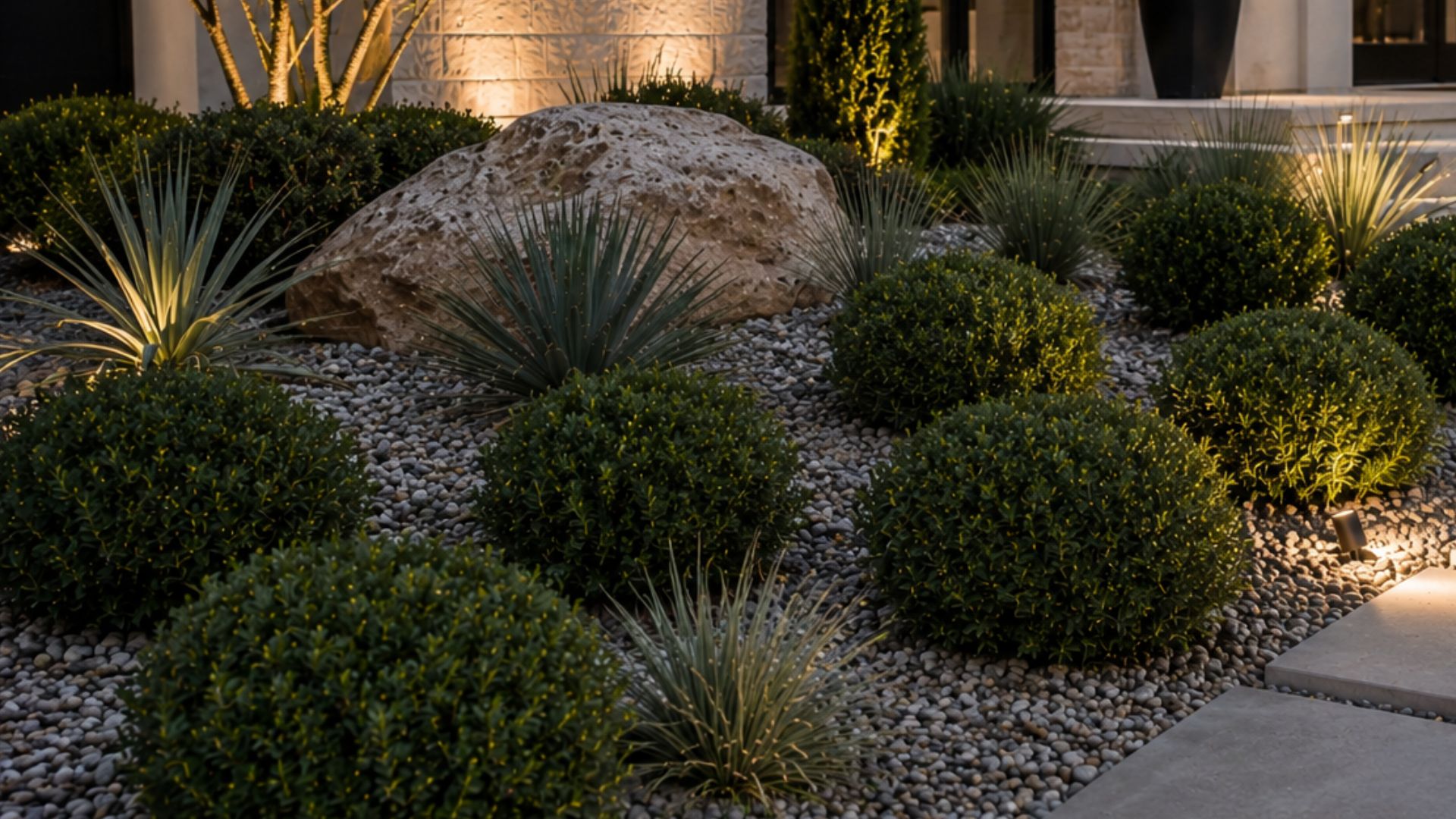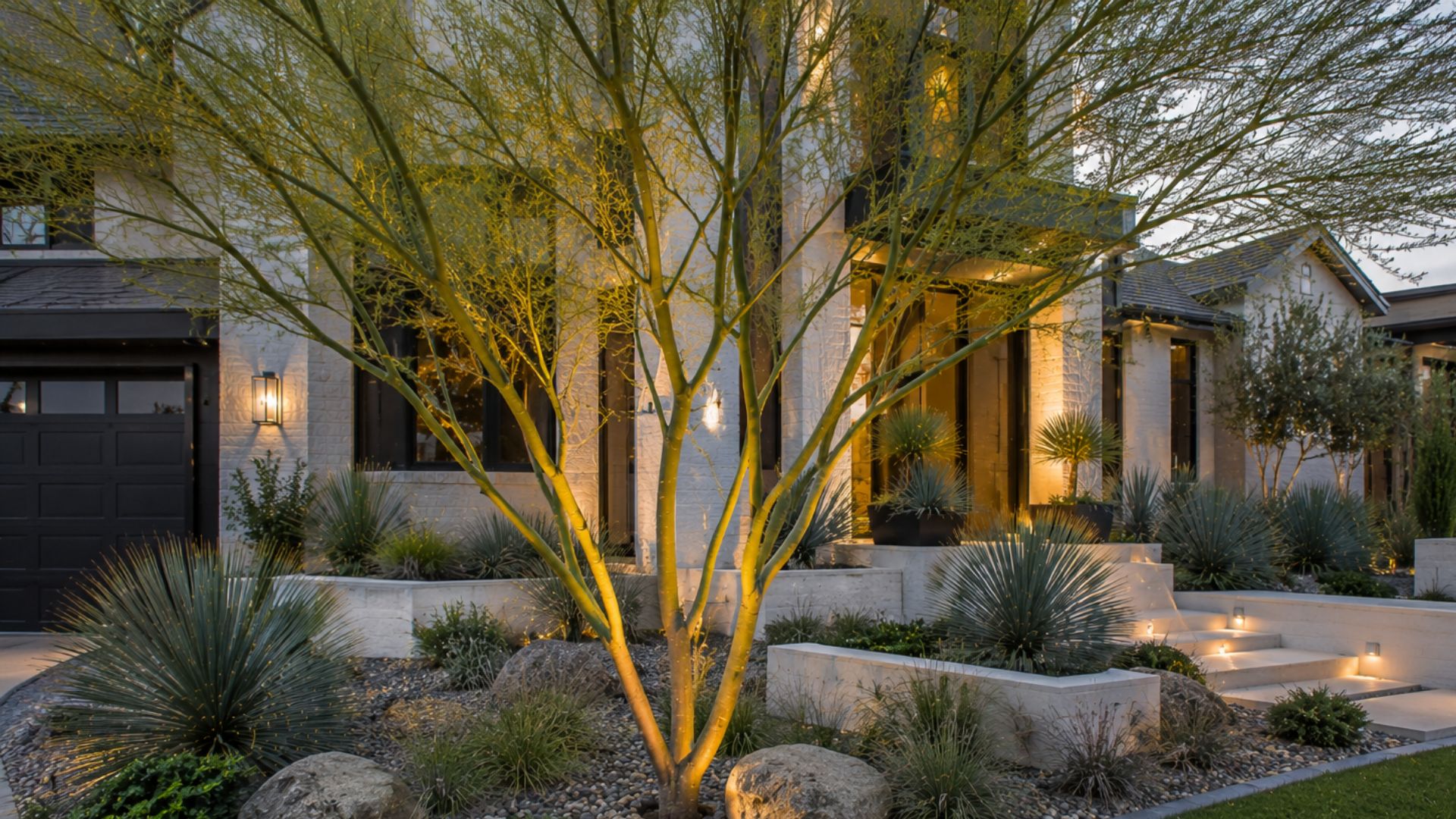
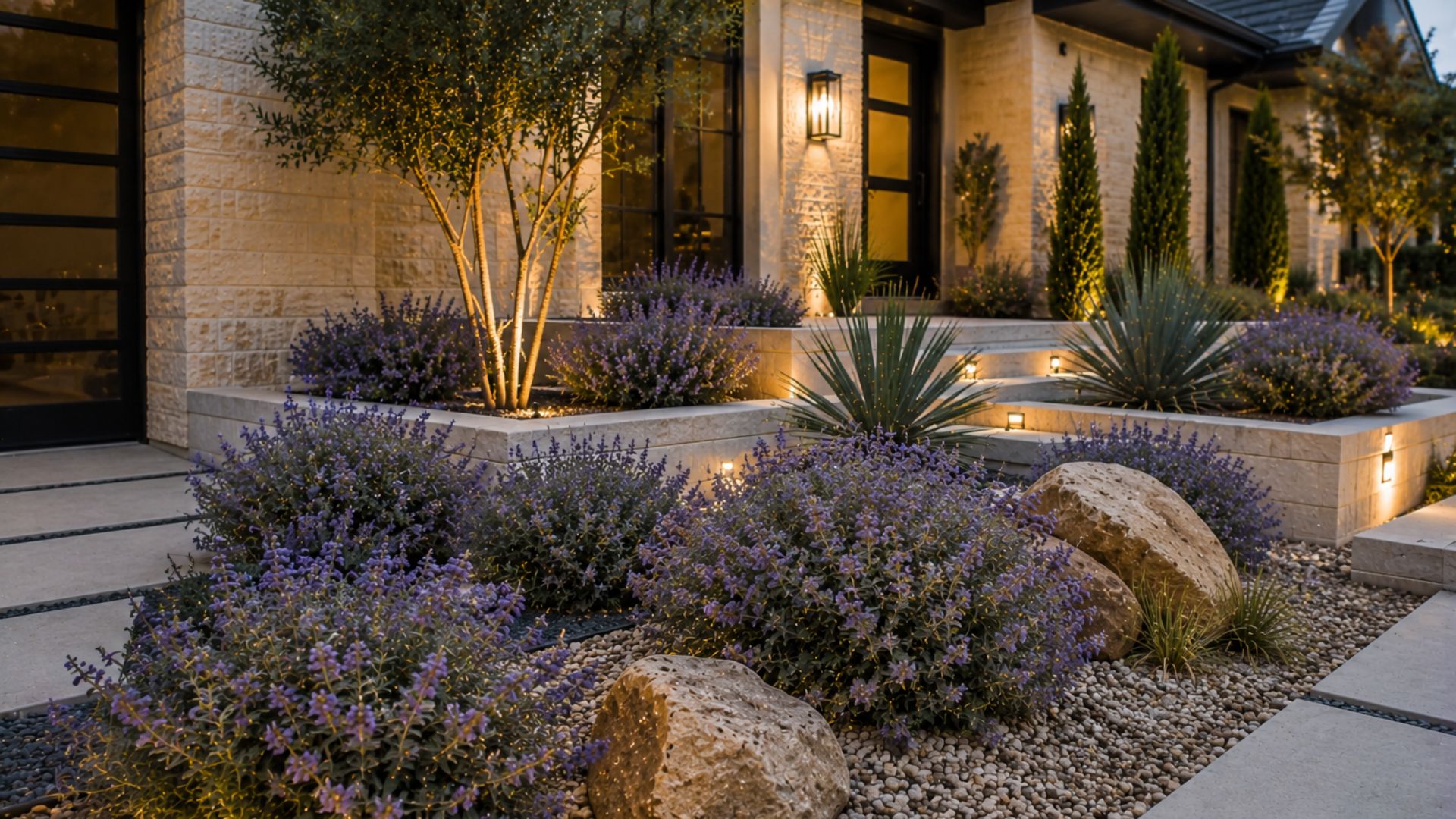


Texas Sage
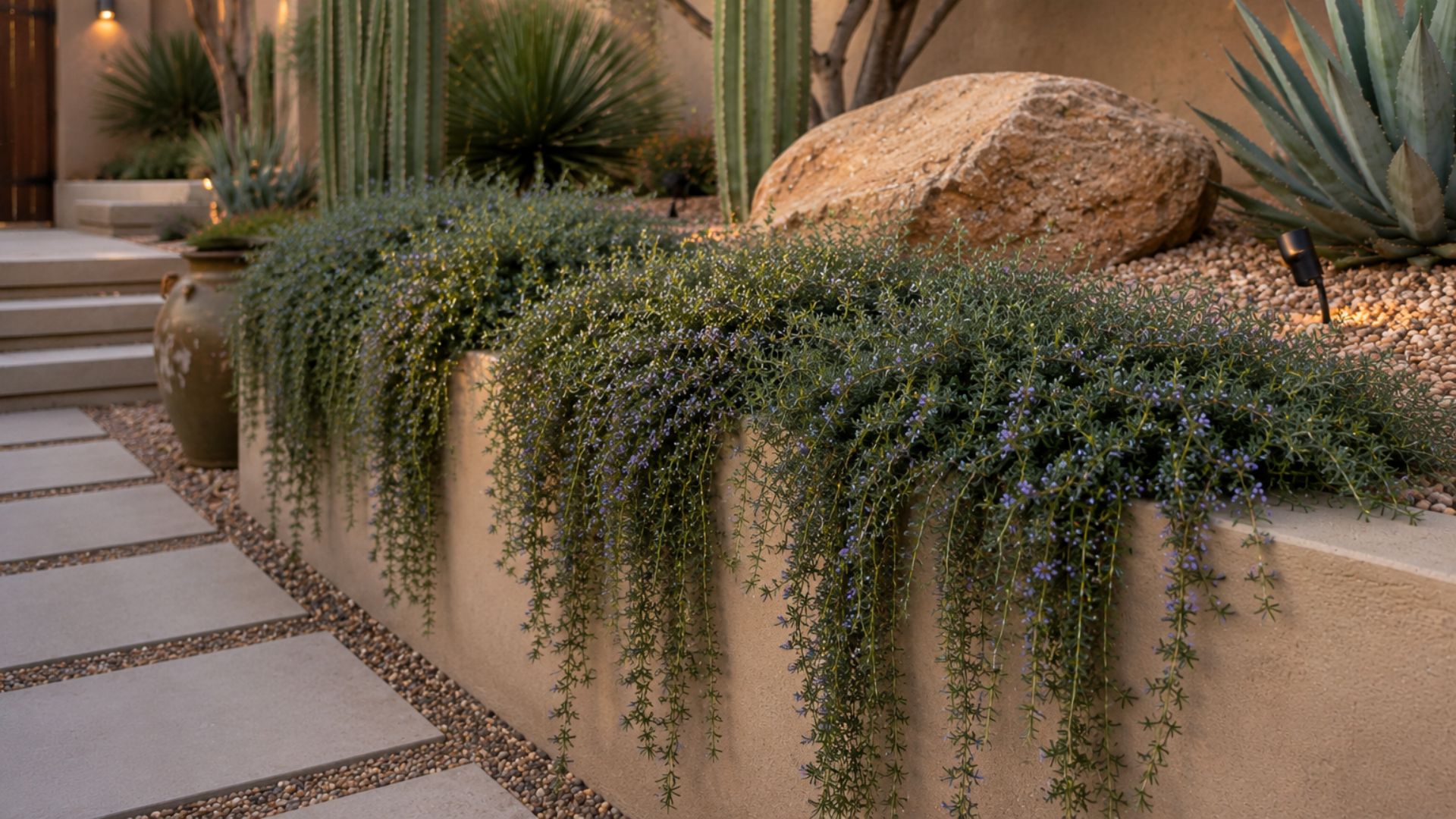
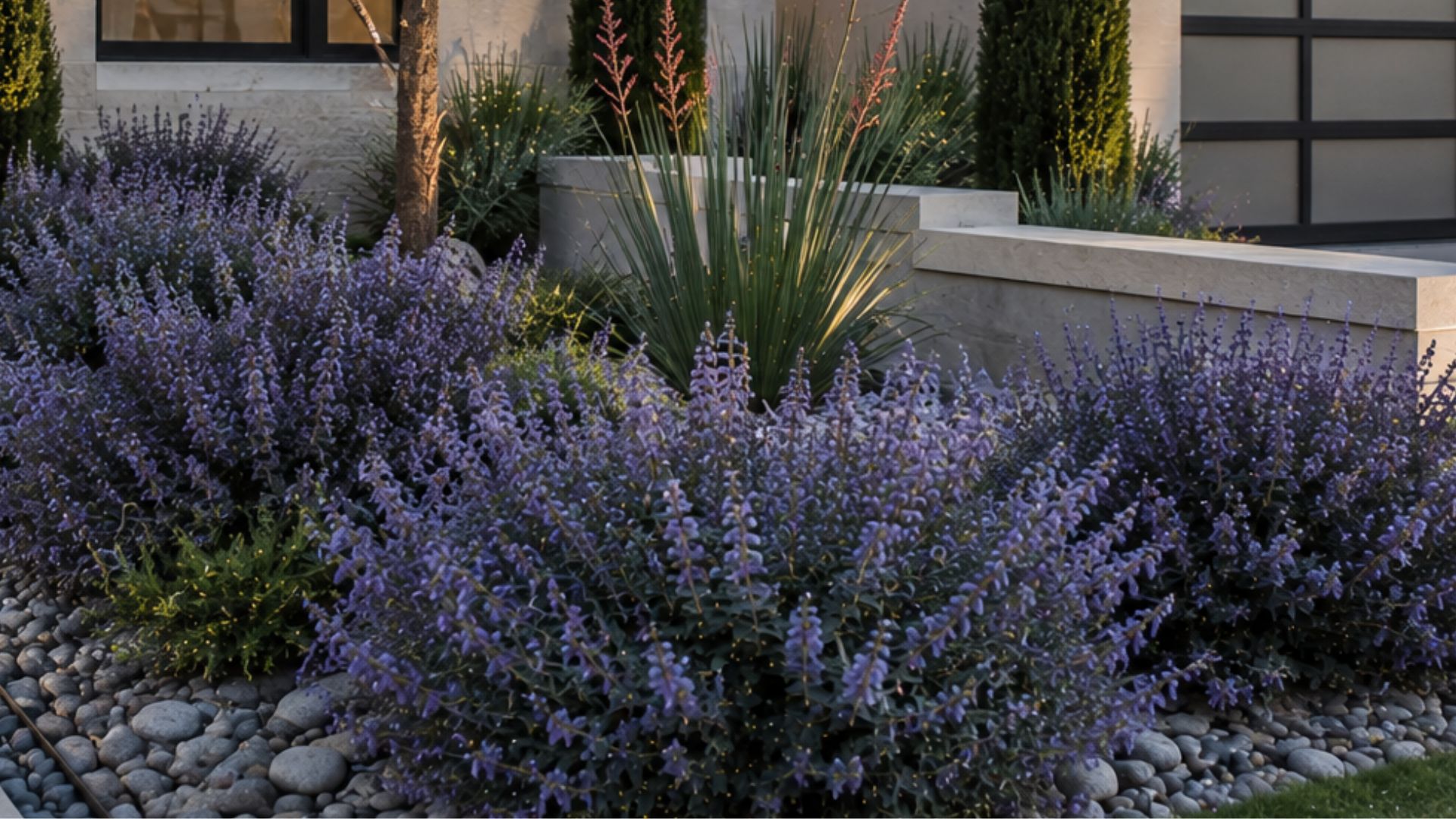
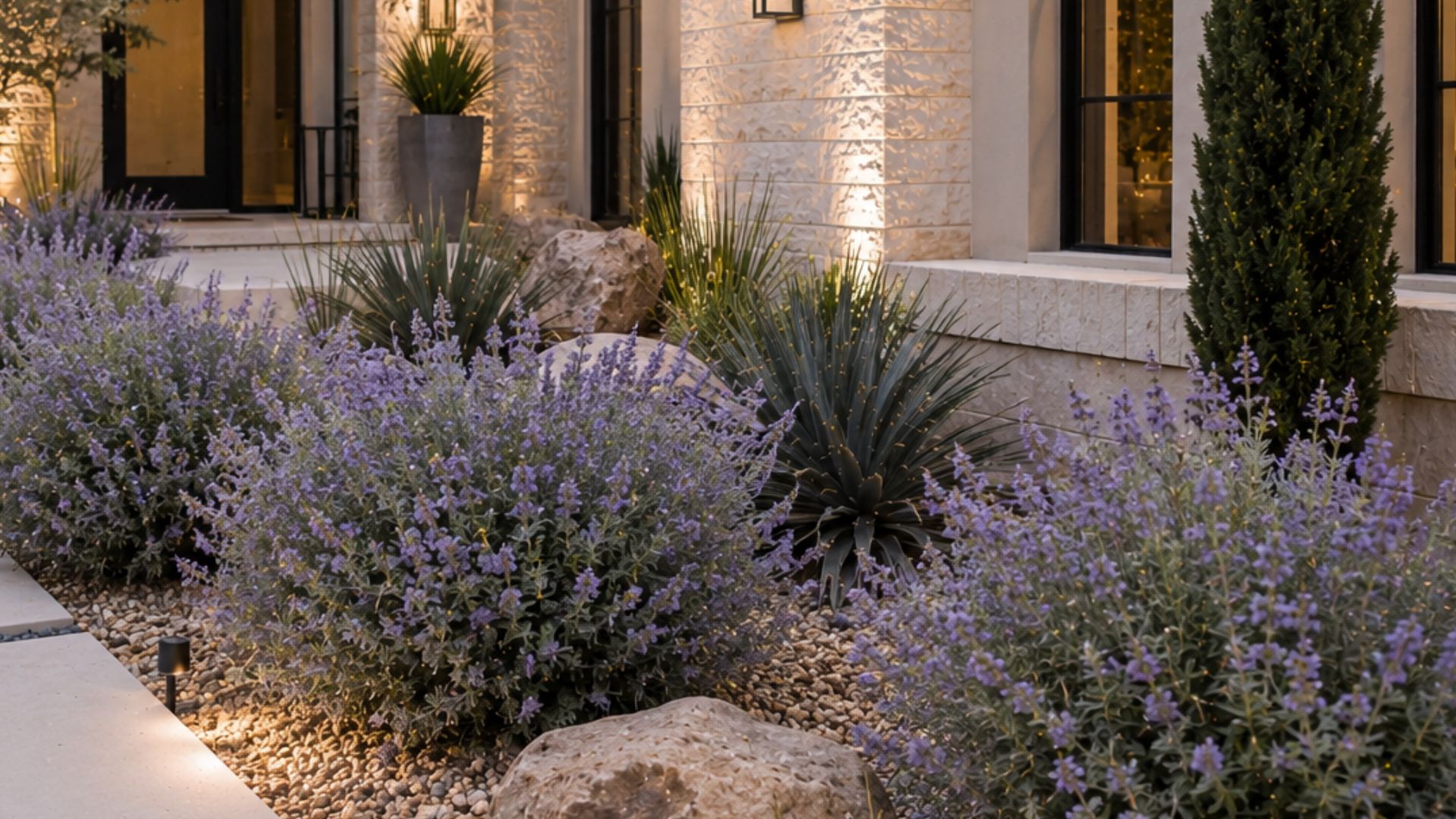
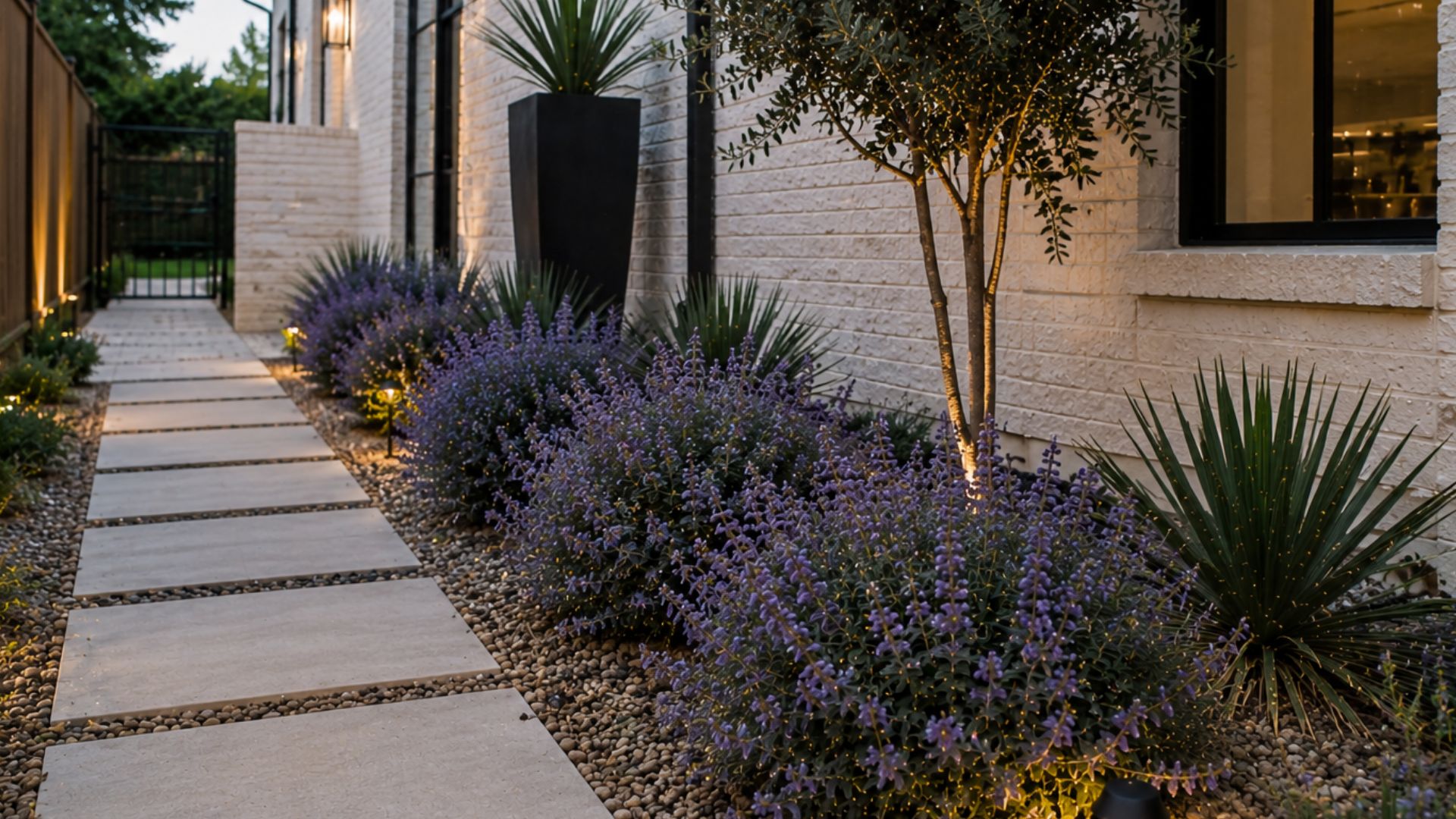
A hardy evergreen shrub with soft silver-gray foliage and vibrant purple flowers that bloom after periods of rain or increased humidity. Typically grows 5–8 feet tall and 5–6 feet wide, though compact varieties are also available. Hardy in USDA Zones 8–11, Texas Sage thrives in the hot, dry climate of North Texas, making it one of the signature plants for desert-style and water-wise landscapes throughout the DFW area.
Texas Sage
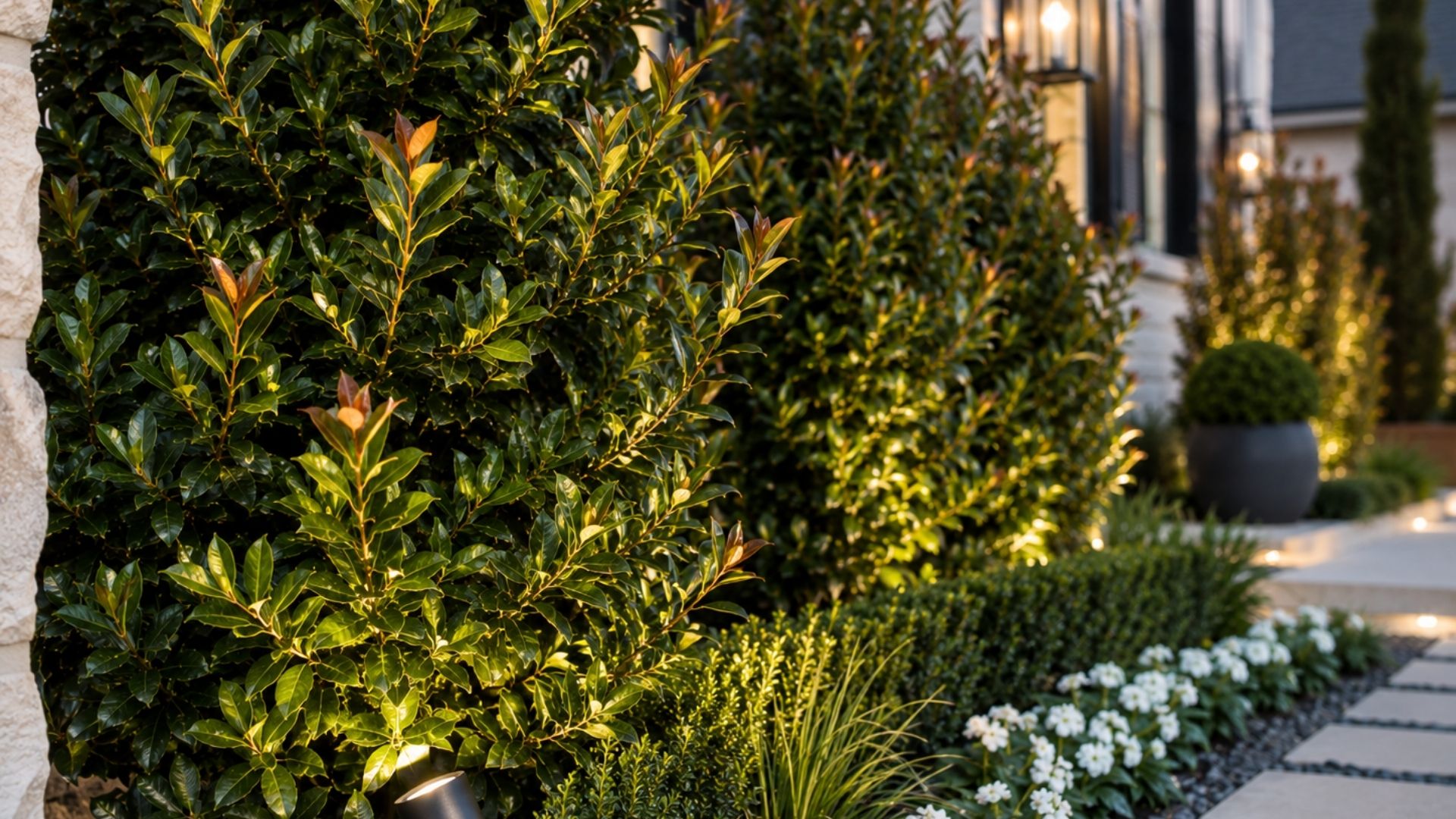
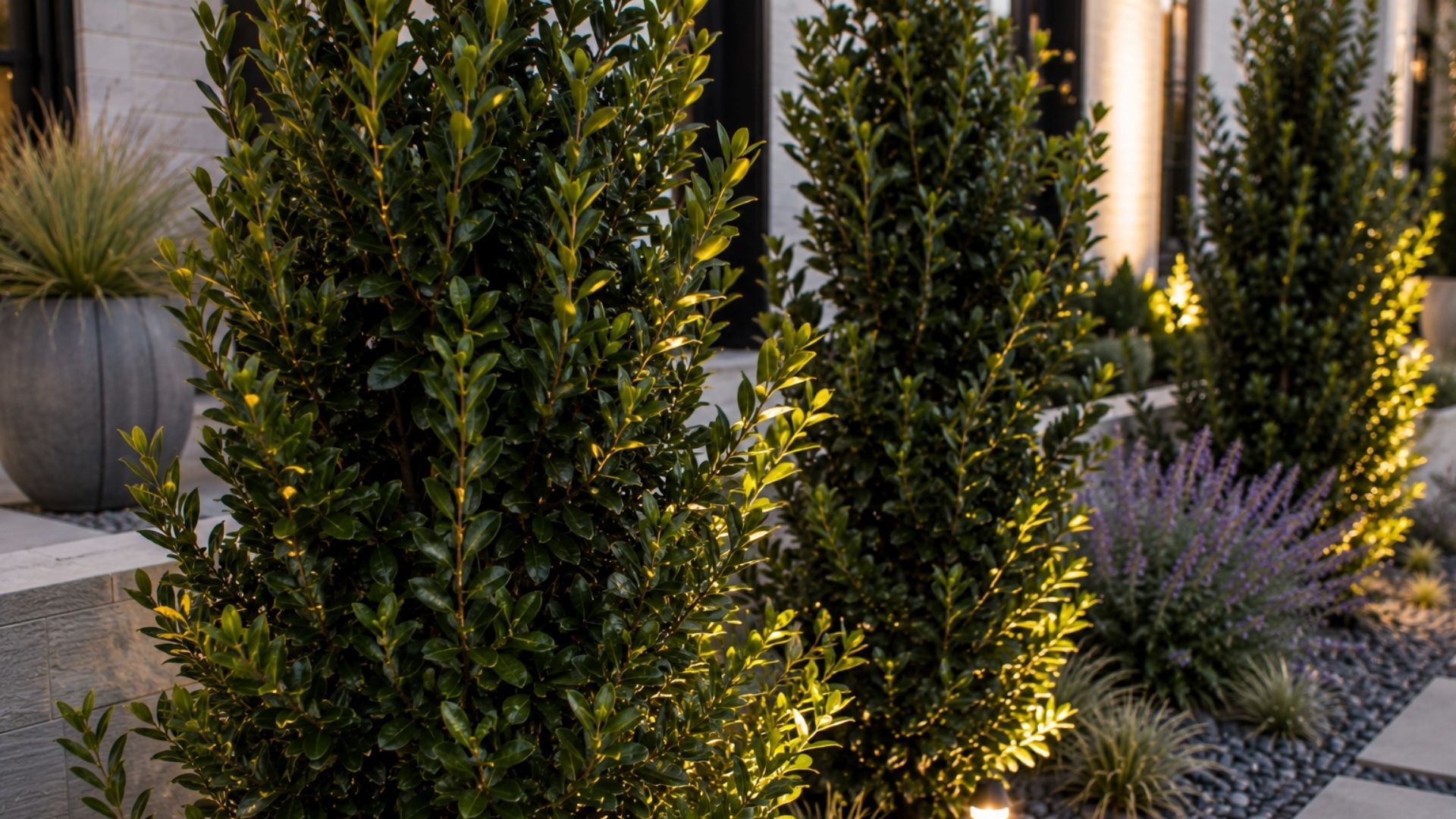
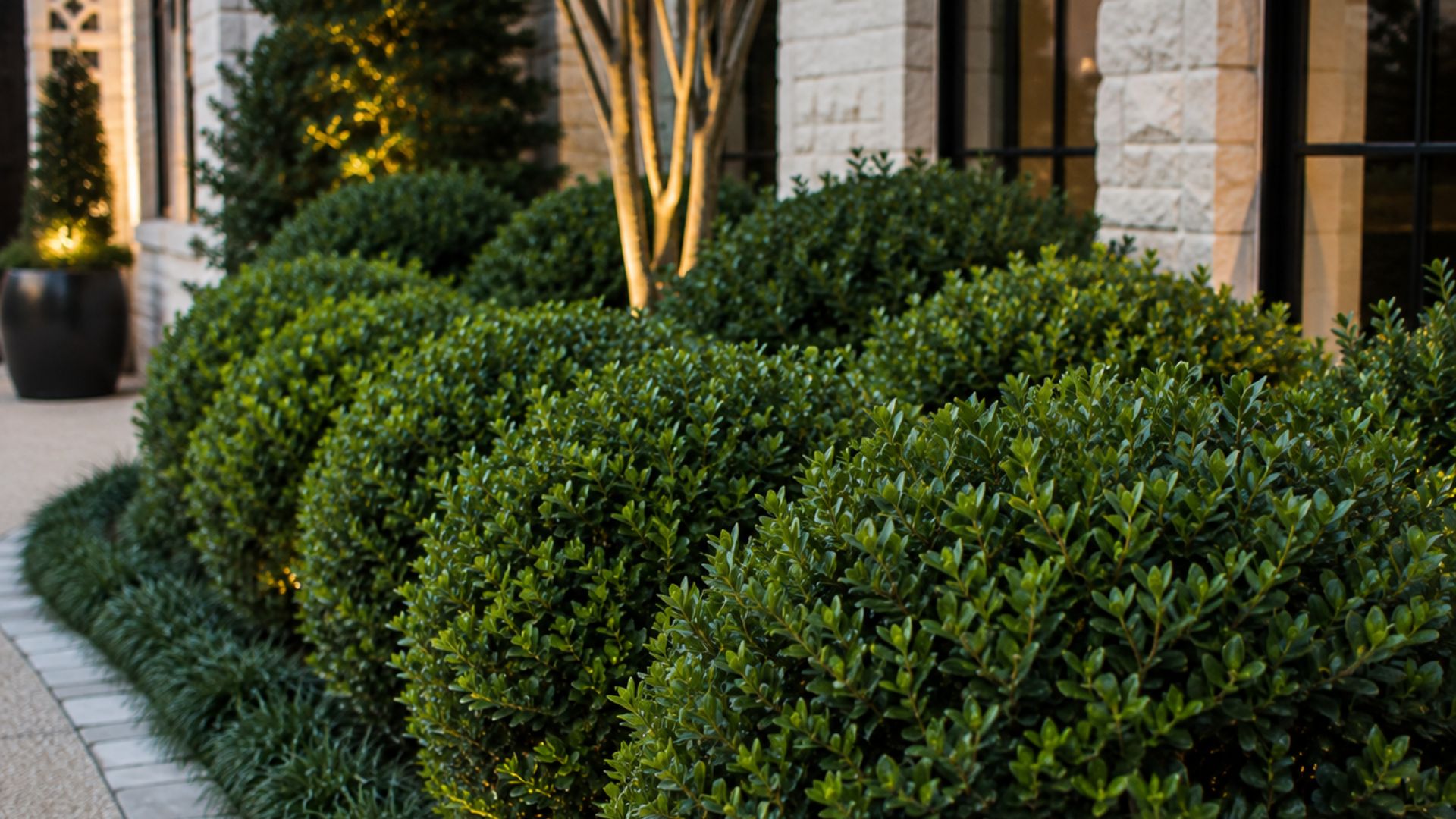
Texas Sage (Leucophyllum frutescens) is one of the most recognizable shrubs in Southwestern landscapes, admired for its silvery foliage, vibrant purple blooms, and exceptional drought tolerance. Its naturally rounded form provides year-round structure, while bursts of colorful flowers often appear following rainfall or periods of high humidity, earning it the nickname "Barometer Bush."
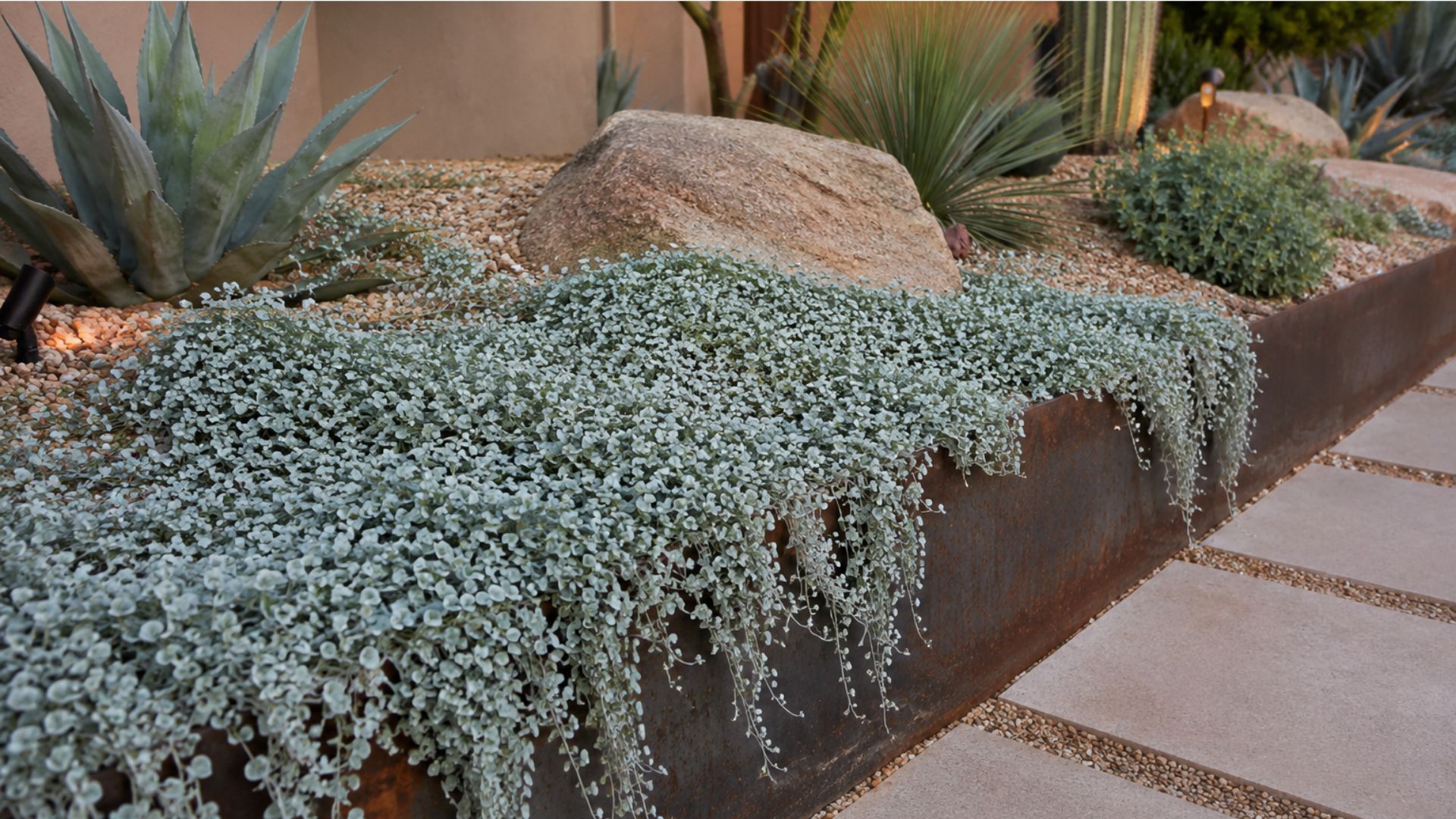
The soft silver foliage creates beautiful contrast against darker evergreens, decorative gravel, and natural stone, making Texas Sage a standout feature in desert-style landscapes. Whether planted as a privacy screen, informal hedge, or specimen shrub, it delivers color, texture, and structure with very little maintenance. It's especially popular among homeowners in Plano who want a landscape that looks vibrant while using less water.
Texas Sage performs best in full sun and well-draining soil. It requires at least six to eight hours of direct sunlight each day to maintain dense growth and produce abundant blooms. Once established, it requires very little supplemental irrigation and actually performs better when allowed to dry between waterings.
Avoid overwatering, as excessive moisture can reduce flowering and lead to root problems. Light pruning after flowering or once each year helps maintain a neat shape, but excessive shearing should be avoided because it can reduce the shrub's natural appearance and blooming potential. Its ability to thrive with minimal care makes Texas Sage a favorite for Southlake landscapes designed around drought tolerance and long-term beauty.
The most common issue affecting Texas Sage is overwatering. This shrub is adapted to dry environments, and consistently wet soil can lead to root rot, poor growth, and fewer blooms. Planting in well-draining soil and limiting irrigation are key to keeping the plant healthy. Desert-Style plants usually don't do great with lots of water!
Too much shade can also reduce flowering and create a thinner, less compact growth habit. Texas Sage is generally resistant to most insects and diseases, making it one of the easiest shrubs to maintain in North Texas. Proper spacing allows for good air circulation and helps preserve its naturally full shape.
Texas Sage is famous for blooming after periods of rainfall or increased humidity, which is why it's often called the "Barometer Bush." While it may produce occasional flowers throughout the growing season, the most dramatic blooms often occur shortly after weather changes.
Yes. Texas Sage is one of the most drought-tolerant shrubs available for residential landscapes. Once established, it requires very little supplemental watering and thrives in the hot, sunny conditions found throughout North Texas, making it an excellent choice for water-wise landscape designs.
Absolutely. Texas Sage naturally develops into a dense, rounded shrub that works well as an informal hedge, property border, or privacy screen. Its evergreen foliage, seasonal purple blooms, and low-maintenance nature make it a popular choice for homeowners throughout the DFW area seeking both beauty and function.
You might also like