

Mediterranean Fan Palm
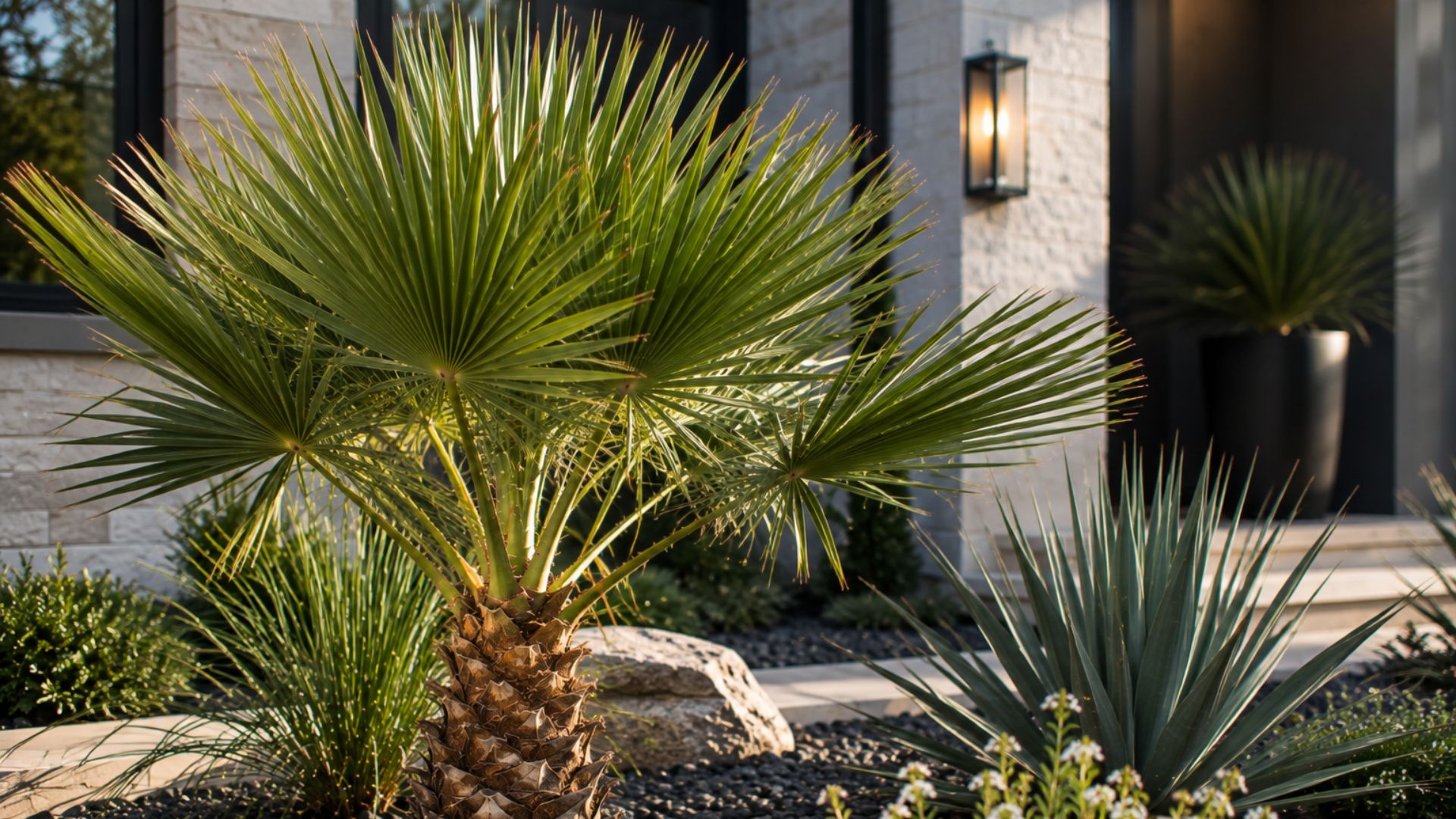
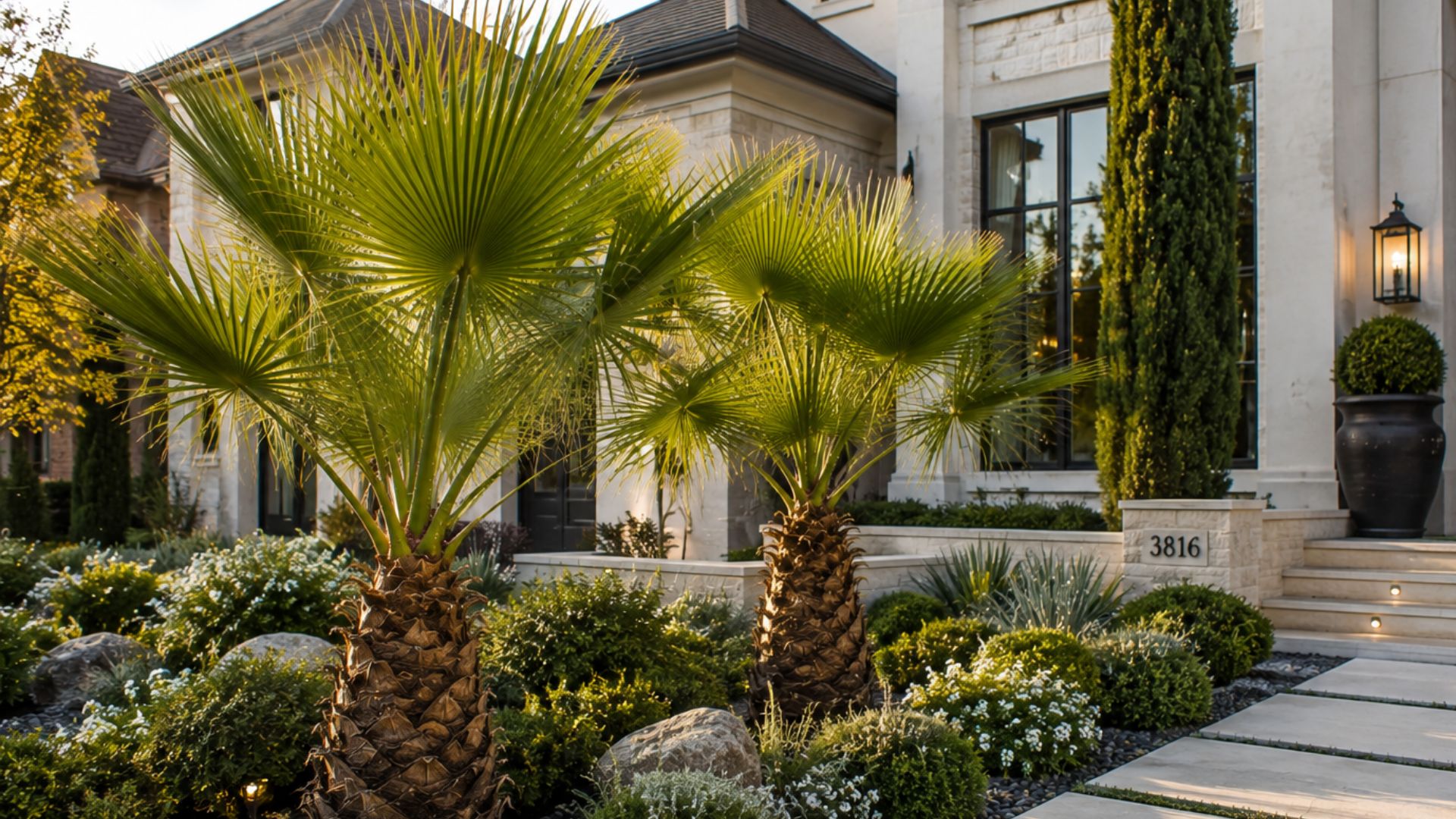
A compact, multi-trunk evergreen palm with dramatic fan-shaped fronds that creates an immediate resort-inspired appearance. Typically grows 10–15 feet tall and 6–10 feet wide, although mature specimens can eventually grow larger. Hardy in approximately USDA Zones 8–11, Mediterranean Fan Palm is one of the more cold-tolerant palms available, making it an attractive option for protected resort-style landscapes in North Texas.
Mediterranean Fan Palm
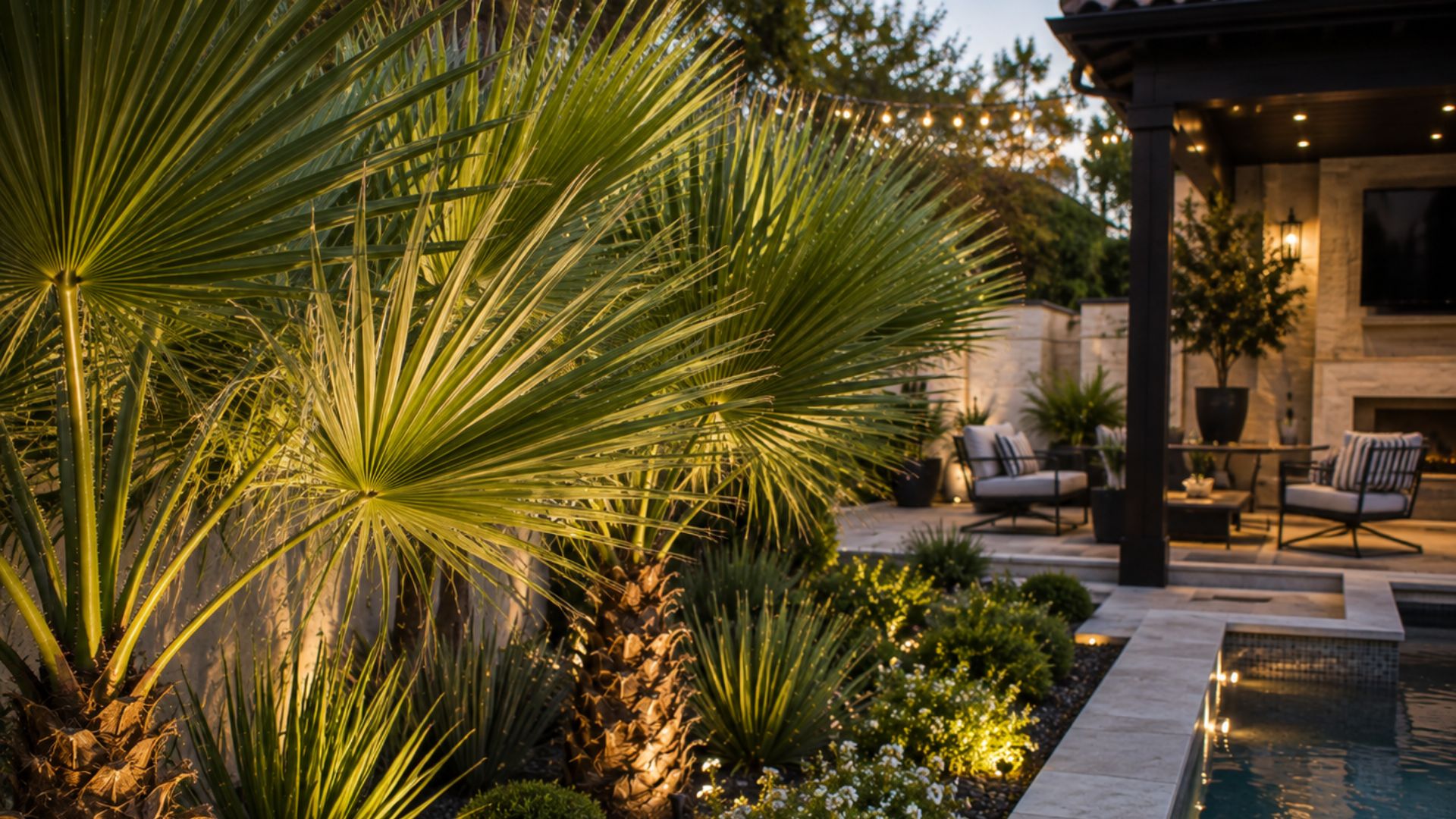
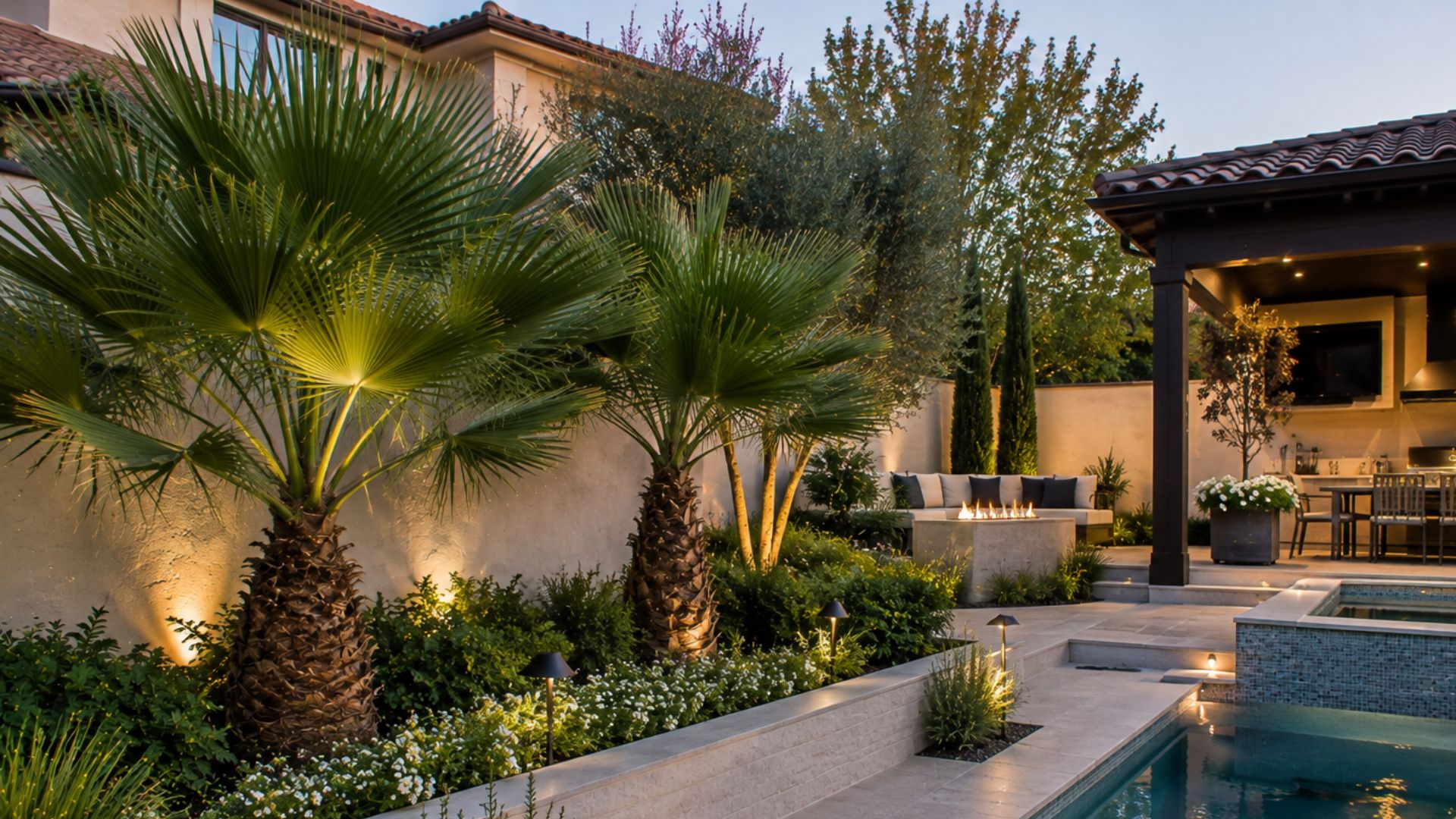
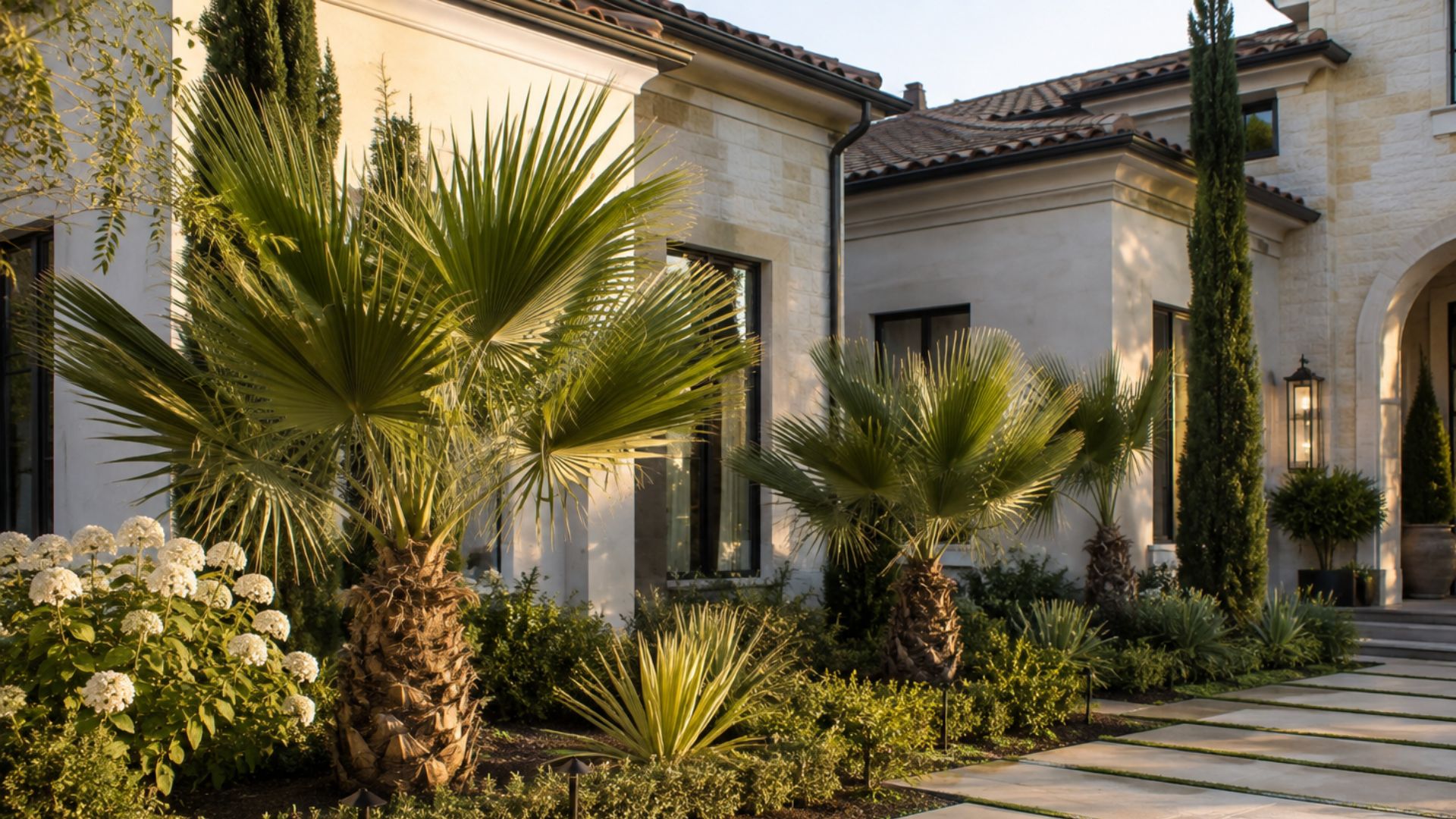
Mediterranean Fan Palm (Chamaerops humilis) is a distinctive palm known for its dense clusters of trunks and bold, fan-shaped foliage. Unlike tall, single-trunk palms, it develops a fuller, more sculptural form that creates visual interest from ground level upward. Depending on the specimen, foliage can range from rich green to silvery blue-green, giving each palm its own character.
Its compact size makes it particularly useful around swimming pools, courtyards, patios, and outdoor kitchens where a towering palm may feel out of scale. A Mediterranean Fan Palm can create a strong focal point without dominating the entire space, giving Southlake backyards the relaxed atmosphere of a Mediterranean resort while still feeling appropriate alongside North Texas architecture.
Mediterranean Fan Palm performs best in full sun to partial shade and prefers well-draining soil. Regular watering is important while newly planted specimens establish their root systems, but mature palms become quite drought tolerant and should not remain in constantly wet soil.
Maintenance primarily involves removing completely brown or damaged fronds and, when desired, controlling shoots around the base to maintain a cleaner multi-trunk form. Over-pruning healthy green fronds should be avoided because they are essential for photosynthesis and healthy growth.
For Plano landscapes, a sunny location protected from harsh northern winter winds can provide a better environment for long-term success. Proper drainage is equally important when planting in the heavier clay soils commonly found throughout the area.
Winter cold is an important consideration when growing Mediterranean Fan Palms in North Texas. Although this species is considerably more cold tolerant than many tropical palms, severe DFW freezes can still cause significant foliage damage. Established plants generally tolerate cold better than newly installed specimens.
Poor drainage is another potential problem. Prolonged wet soil can stress the root system, especially during cooler weather. Proper bed preparation and controlled irrigation help prevent many moisture-related issues.
The leaf stems also have sharp spines, so placement should be considered carefully. Mediterranean Fan Palms are best positioned where their dramatic foliage can be appreciated without extending directly into narrow walkways or high-traffic areas.
Yes, with some considerations. Mediterranean Fan Palm is among the more cold-hardy palms and can be grown in North Texas, particularly in protected locations. However, unusually severe freezes can damage foliage or stems, so proper placement and winter protection for younger specimens may be beneficial.
Yes. Its compact, architectural shape makes it an excellent palm for pool landscaping. Unlike very tall palms, its foliage begins closer to the ground, creating a lush resort atmosphere around patios, pool decks, and outdoor living areas. It works particularly well as a statement plant in Southlake resort-style landscapes.
The biggest difference is their overall form. Sabal Palm typically develops a tall single trunk with an elevated canopy, while Mediterranean Fan Palm usually grows as a shorter cluster of multiple trunks with foliage extending much closer to the ground. Sabal Palms are excellent for adding height, while Mediterranean Fan Palms provide a fuller, more architectural accent closer to eye level.
You might also like