
Stunning Paver Patterns to Enhance Curb Appeal in Plano TX
Paver patterns shape the look of driveways, walkways, and patios. They can feel crisp and formal, or soft and relaxed, depending on the layout and the stone size. Use these paver pattern ideas to narrow your choices and to talk more clearly with your hardscape designer.
The best paver layout depends on house style, traffic needs, and the view from the street.
Which paver patterns work best for driveways, walkways, and patios?
Herringbone is a strong pick for driveways. Its locking layout helps resist movement from braking, turning, and daily traffic. Walkways and patios leave more room for running bond, basketweave, and mixed-size layouts. For vehicle areas, the Concrete Masonry & Hardscapes Association recommends herringbone instead of treating every decorative layout the same.
Herringbone for movement and definition
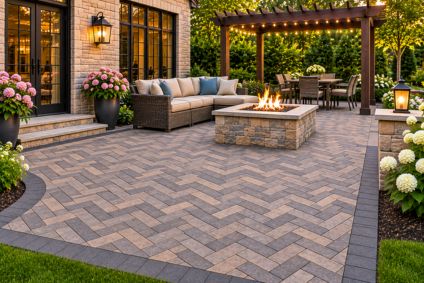
Rectangular pavers meet at right angles to form a repeating zigzag. Experts recommend both 45-degree and 90-degree herringbone layouts for areas with steady vehicle traffic, so we should discuss this paving pattern for an entry drive. The pattern still needs the right paver size, edge restraint, and a strong pavement base.
For curb appeal, choose a calm color palette so the geometry stands out. A border in a contrasting color can frame the space without adding another busy layer. Ask your designer to show both orientations beside the house before you decide.
Running bond for a familiar, orderly look
Running bond places rectangular units in parallel rows with staggered joints. The result is the classic brick paver pattern many people expect. Basketweave alternates groups of pavers set side by side and upright, which creates a woven look. Both are common choices in makers' pattern collections, but they create distinct visual rhythms.
Use running bond when you want the paving to support the entry instead of lead it. Basketweave works well for a courtyard or a garden path where you want more detail. Compare these pavement styles beside the home's brickwork so the surface matches the masonry instead of competing with it.
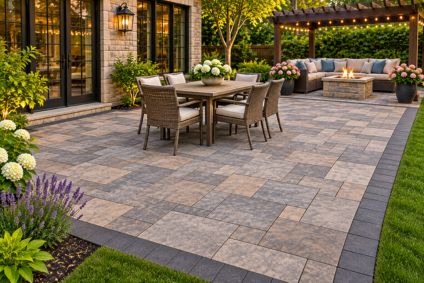
Mixed-size layouts for a less repetitive surface
Ashlar and modular layouts mix different rectangular or square units. Their appeal comes from the balance between change and repeat: each stone is different, but the full layout stays coordinated. Maker-designed modular collections give you matched sizes and layout options instead of forcing an improvised mix.
For patio paver patterns, a mixed-size field with a simple border can look rich without feeling busy. It adds interest to the seating area while keeping the edge clear. Carrying one border color toward the front walkway is another design option worth considering.
How do paver sizes affect the layout and cutting requirements?
Paver size and shape decide which layouts work. Edges and obstacles determine where cuts need to occur. Paver patterns with three different sizes should follow a compatible product layout. Do not just mix three stones that look good together. Maker guides also note that a pattern's size mix may differ from the mix shipped on a pallet, which matters when you order materials.
When comparing concrete paver patterns with your contractor, request these details:
- The exact product and layout diagram: Confirm that the selected sizes belong to a matching system and fit the planned use.
- The border treatment: Ask for a drawing that shows how the field meets steps, walls, planting beds, and driveway edges.
- The material breakdown: Ask whether the chosen arrangement leaves extra units in certain sizes.
- The cutting plan: Review likely cuts around curves, columns, drain inlets, and other breaks before you approve the design.
Treat no cut paver patterns as a planning goal, not a promise. Even a simple layout may need trimming at edges or around fixed features. Unilock's installation guide points to edges, planters, drain inlets, and pattern changes as common cut spots.
Match pattern scale to the house
When you review paving stone designs, start with the house, not a random inspiration photo. Consider if the front wall has a strong texture. Think about if the entry needs a focal point. Also, note how much paved area people will see from the street. These questions help you choose paver design patterns with a clear goal.
Ask for drawings that compare these approaches:
- Quiet and coordinated: One main color, a simple paver layout, and a subtle border that echoes an exterior detail.
- Defined and welcoming: A patterned entry panel framed by simpler paving around it.
- Relaxed and layered: Mixed-size paving stone patterns paired with planting beds and plain edging.
For backyard patio patterns, include furniture footprints in the review. Judge patterns for patio pavers as part of a furnished outdoor room, not just as an empty surface. Keep the paths between dining, lounging, and walking areas clear instead of giving each zone a new motif.
Protect the design with a complete installation plan
Good pavement pattern design needs more than attractive stones. Stable edge restraints help preserve interlock, while proper soil checks, base work, and drainage all belong in the plan. A decorative arrangement cannot replace those support parts.
For a property in Plano, TX, ask your contractor to explain how the proposed system handles the site conditions. Request a scope that separates surface materials, prep, drainage, borders, and decorative details. When you compare estimates, ask how different paving designs and patterns affect the costs. Don't assume that a simpler-looking surface always costs less.
Choose one clear design direction
The best starting point is a short list: one preferred pattern, one backup, and a matching border. Review samples beside the house and ask for a scaled plan before you decide. A thoughtful paver design should connect the entry, landscape, and outdoor living areas—not compete with all three.
FAQS
1. What is the best paver pattern for patios in Plano, TX?
The best paver pattern depends on your home's style, patio size, and outdoor living needs. Popular options include herringbone, running bond, and mixed-size ashlar patterns. At Jaguar Landscape, we help Plano, TX homeowners choose paver patio designs that enhance curb appeal, complement their landscaping, and create beautiful outdoor living spaces.
2. How much does paver patio installation cost in Plano, TX?
The cost of paver patio installation in Plano, TX depends on the patio's size, paver materials, pattern complexity, site preparation, and drainage requirements. Simple layouts may require less cutting and labor, while custom patterns and decorative borders can increase installation costs. Jaguar Landscape offers customized hardscape solutions designed around your property's needs and budget.
3. Which paver pattern is best for driveways and walkways?
Herringbone is one of the best paver patterns for driveways because its interlocking design helps resist shifting under vehicle traffic. For walkways and garden paths, running bond, basketweave, and mixed-size patterns provide attractive design options. Jaguar Landscape specializes in paver installation in Plano, TX, creating durable driveways, walkways, and patios that combine functionality with premium landscape design.