

Asian Jasmine
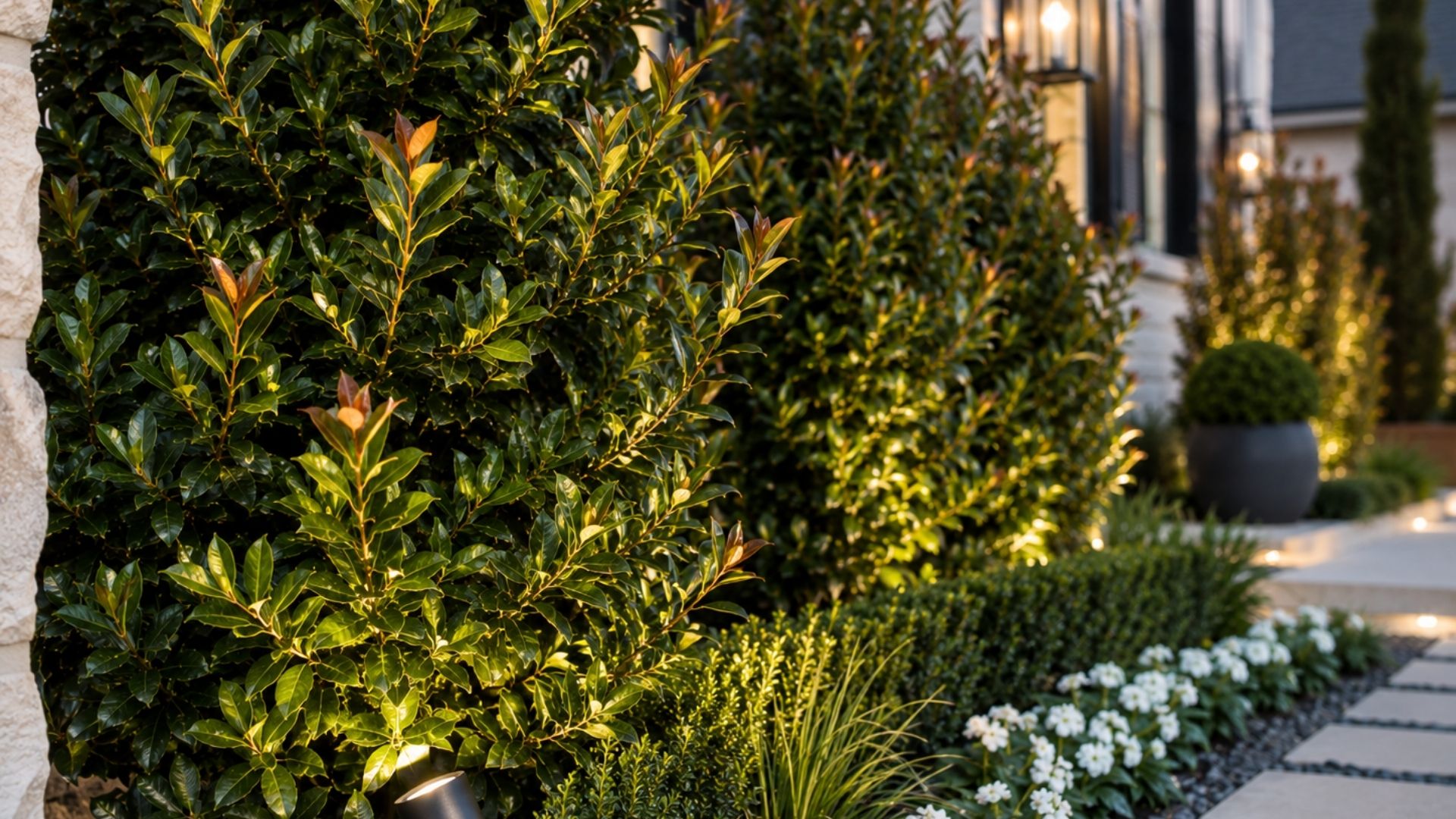
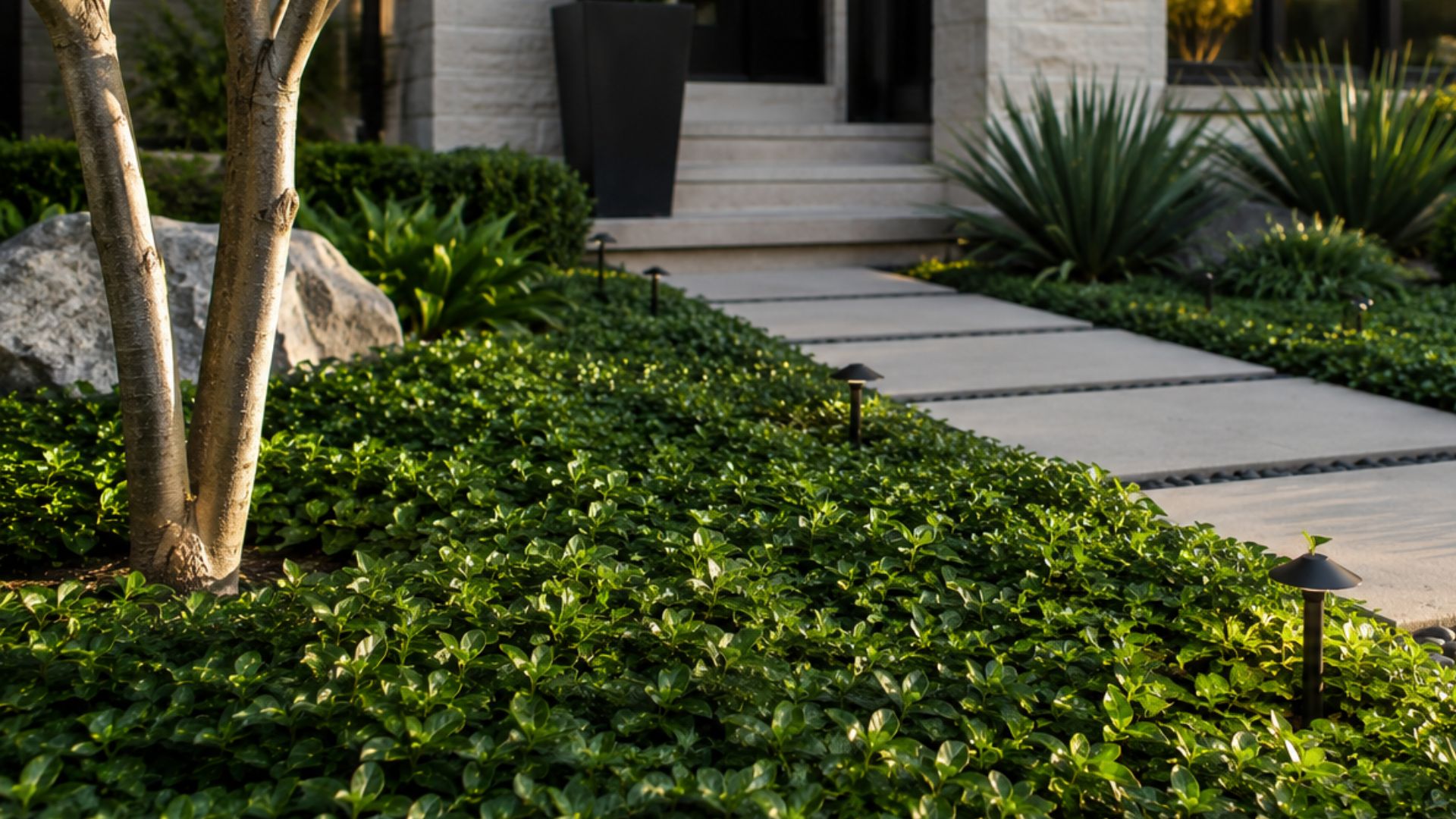
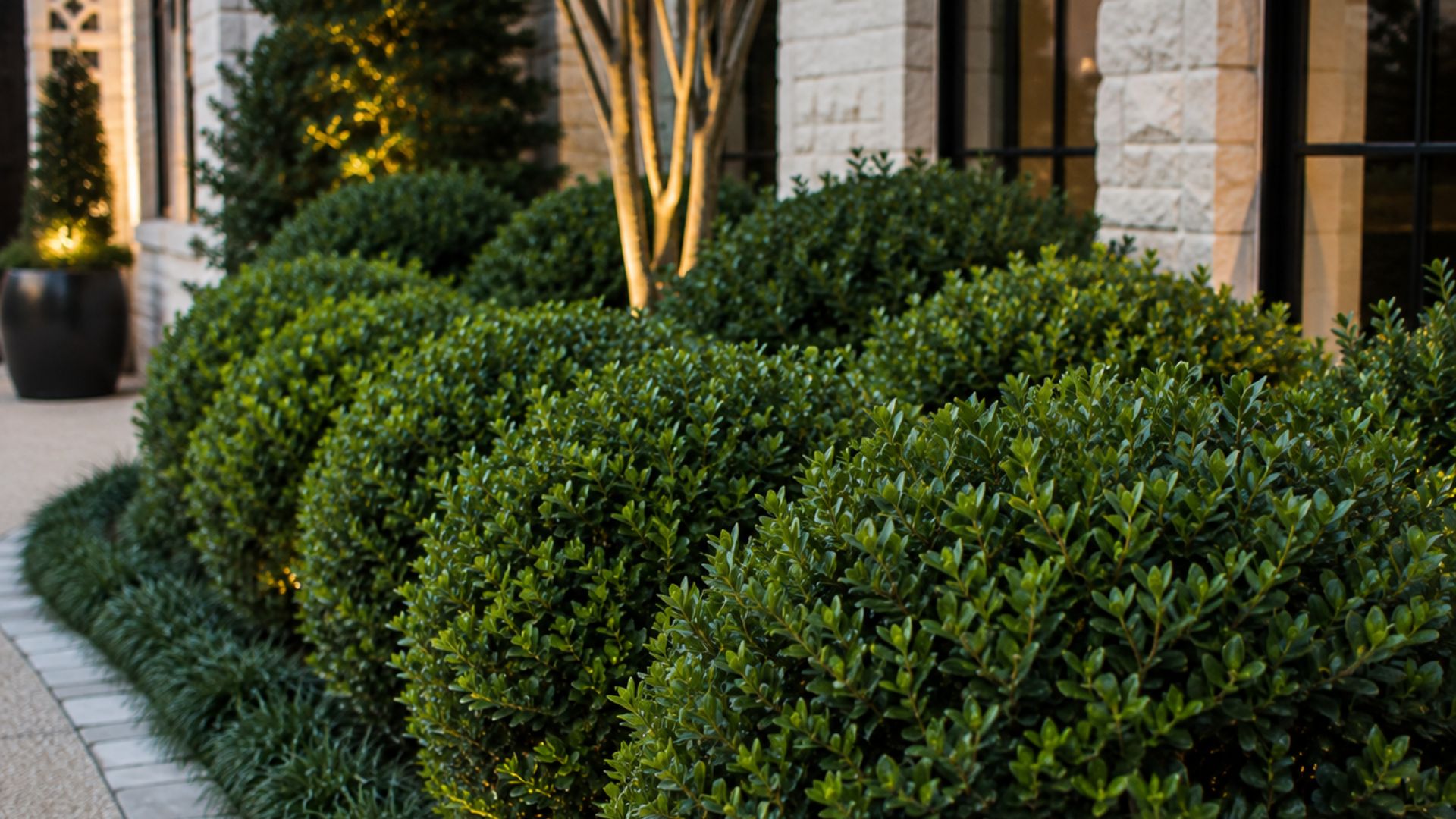
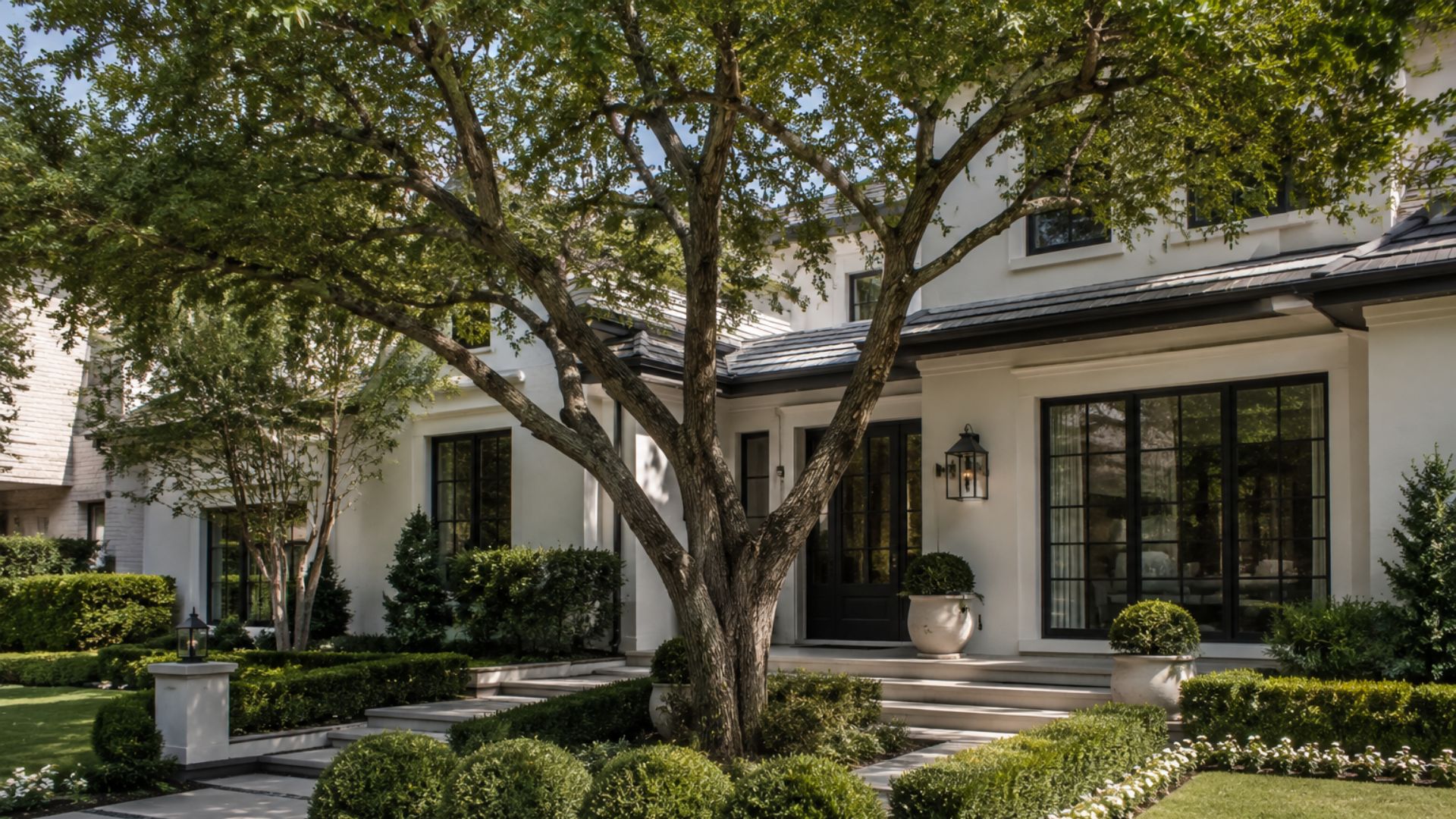
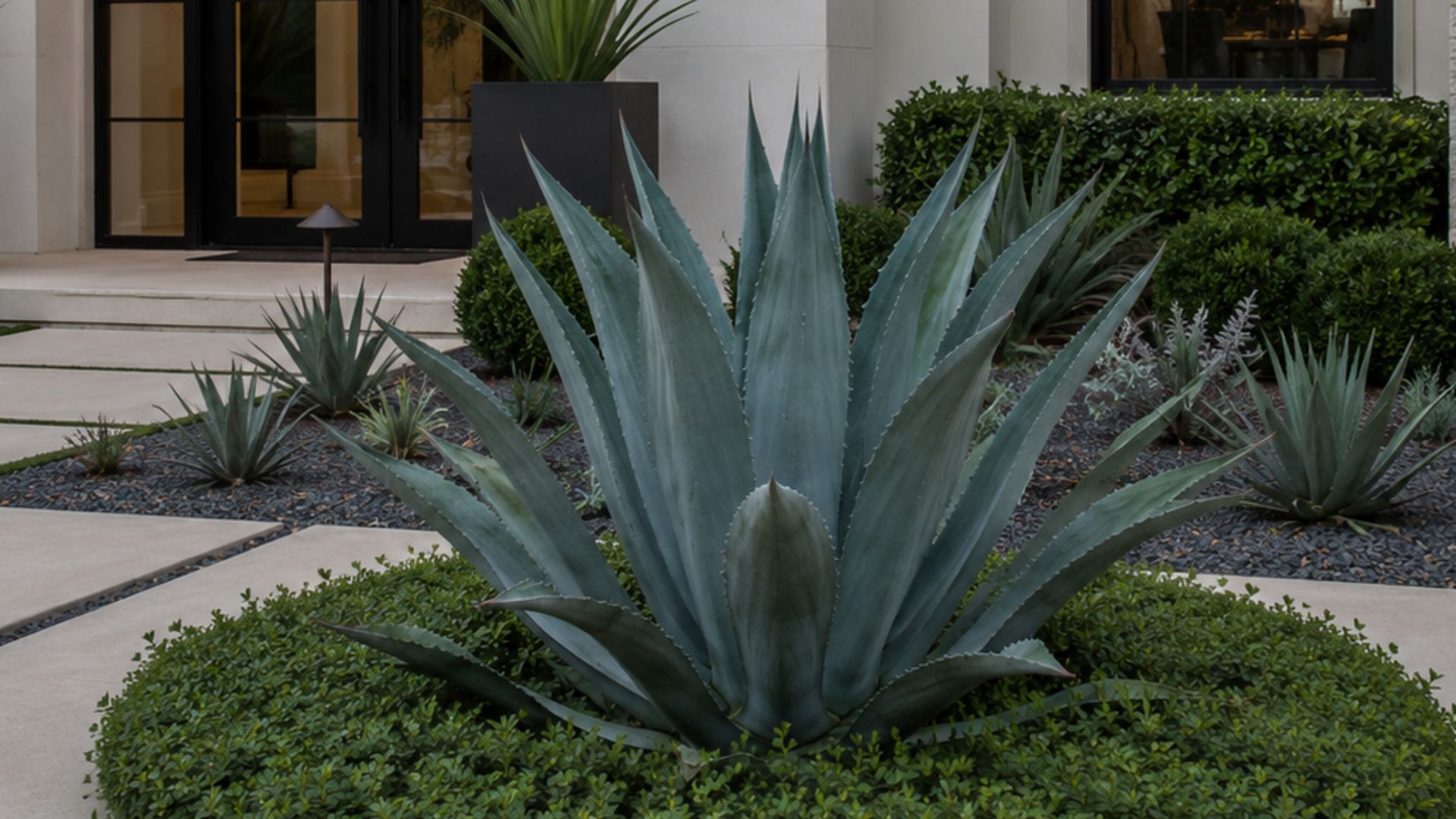
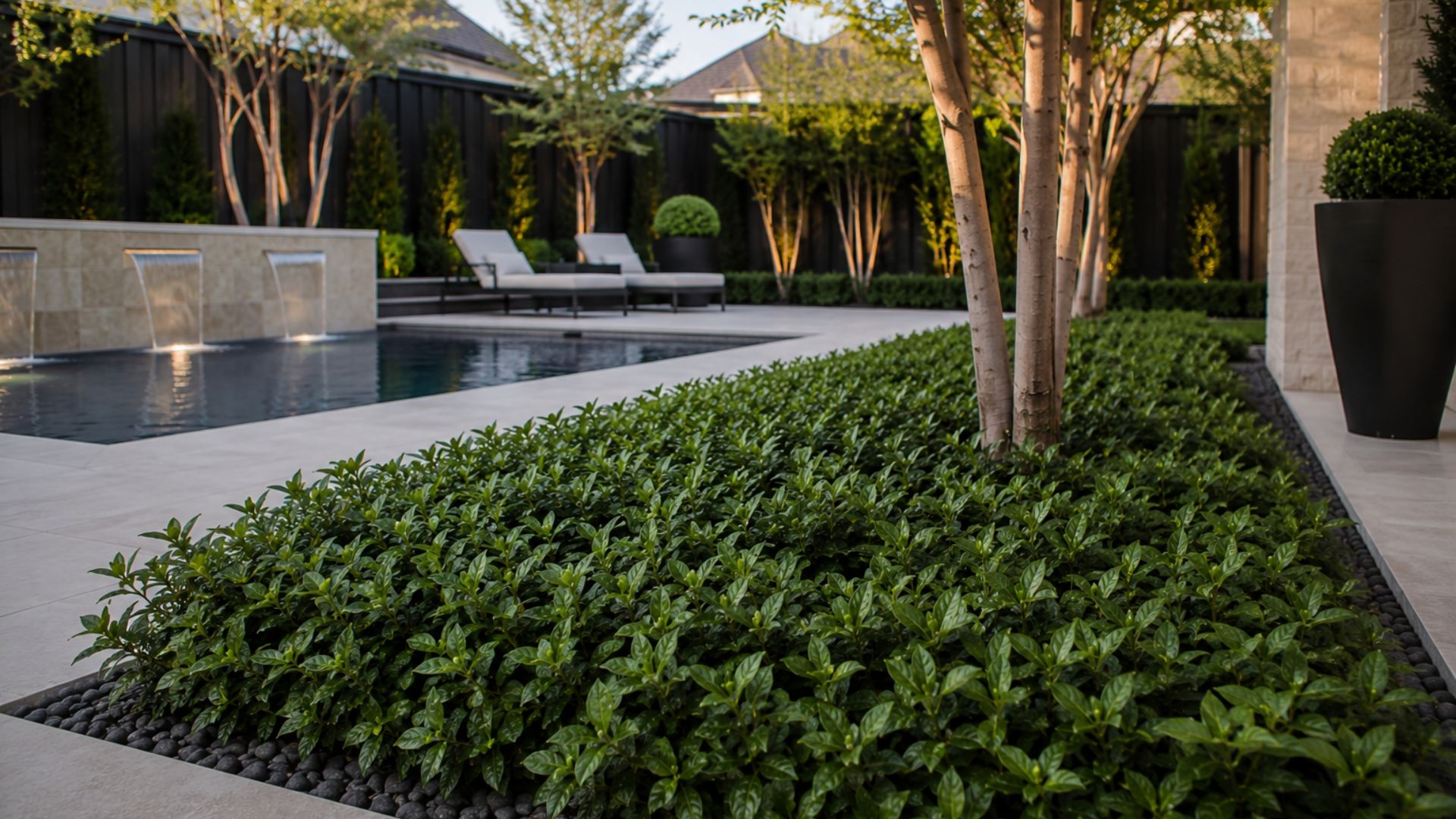
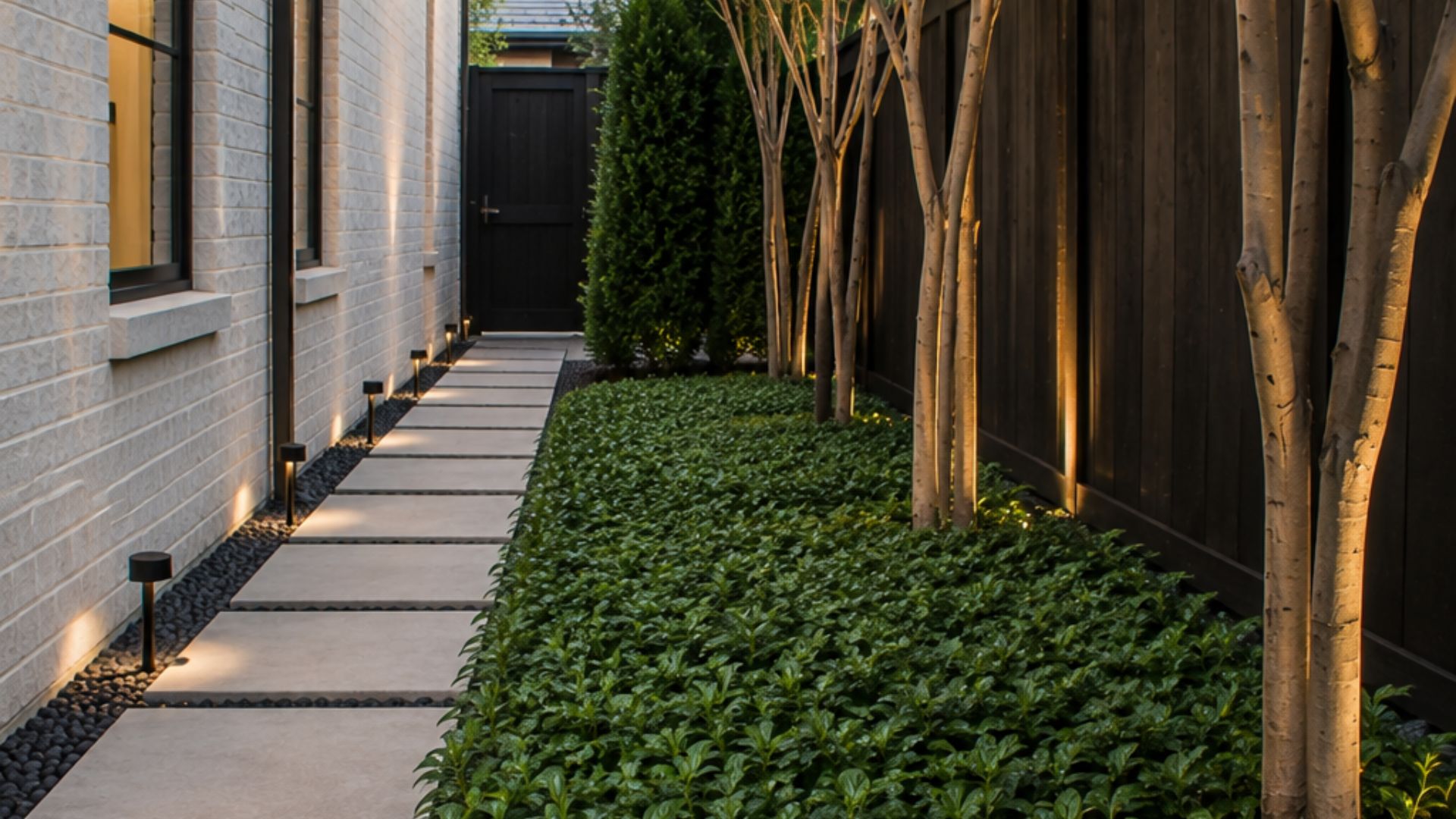
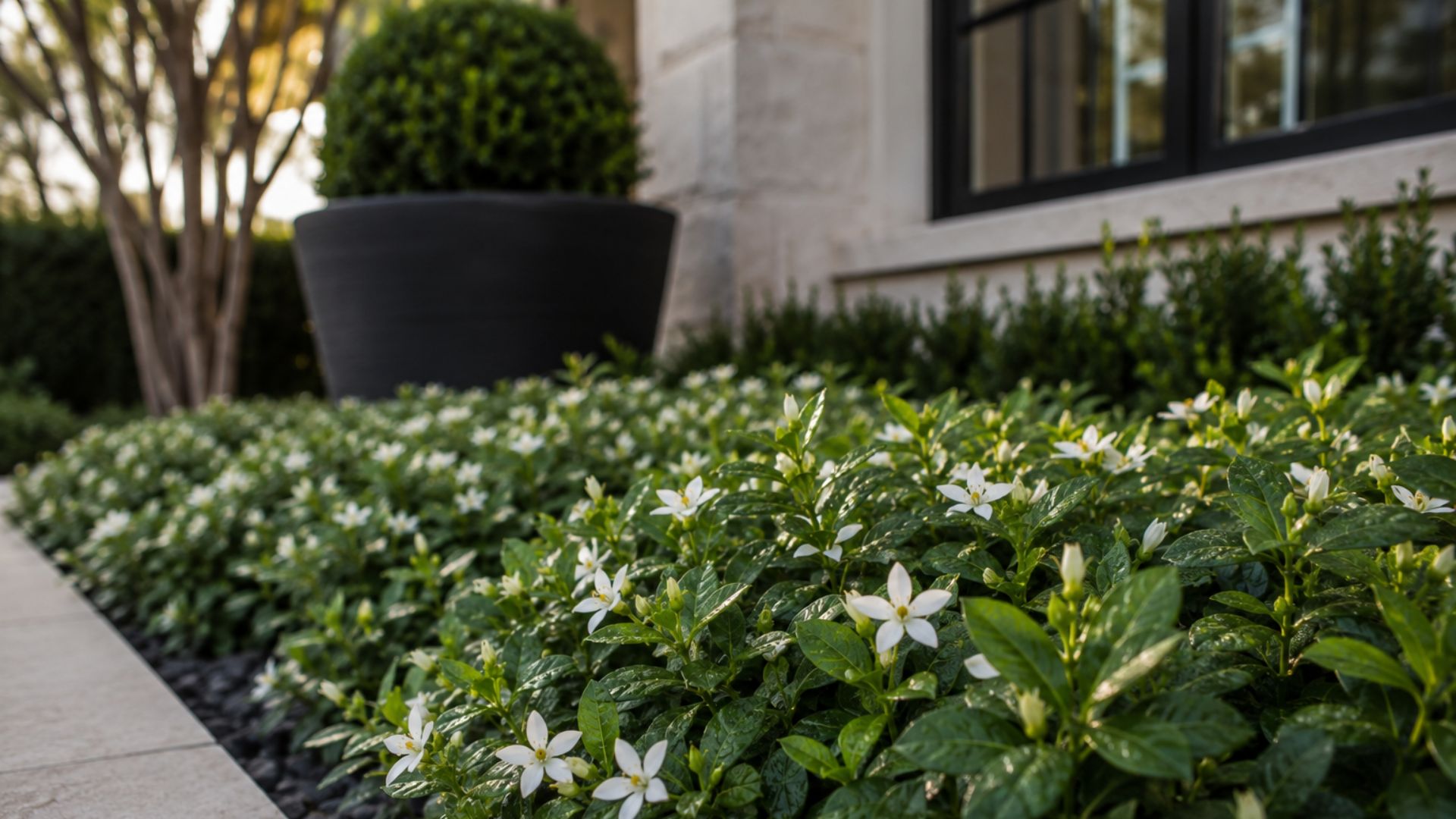
A dense evergreen groundcover with glossy dark-green foliage that creates a lush, uniform carpet throughout the landscape. Typically grows 6–12 inches tall and spreads quickly to cover open planting areas, slopes, and shaded spaces beneath trees. Hardy in USDA Zones 8–10, Asian Jasmine performs well in North Texas and is an excellent choice for evergreen landscapes where homeowners want year-round coverage with relatively little maintenance.
Asian Jasmine
Asian Jasmine (Trachelospermum asiaticum) is a vigorous evergreen groundcover valued for its dense foliage and ability to create continuous greenery in areas where traditional turf or other plants may struggle. Its small, glossy leaves develop into a thick mat that gives landscape beds a finished appearance while helping cover exposed soil.
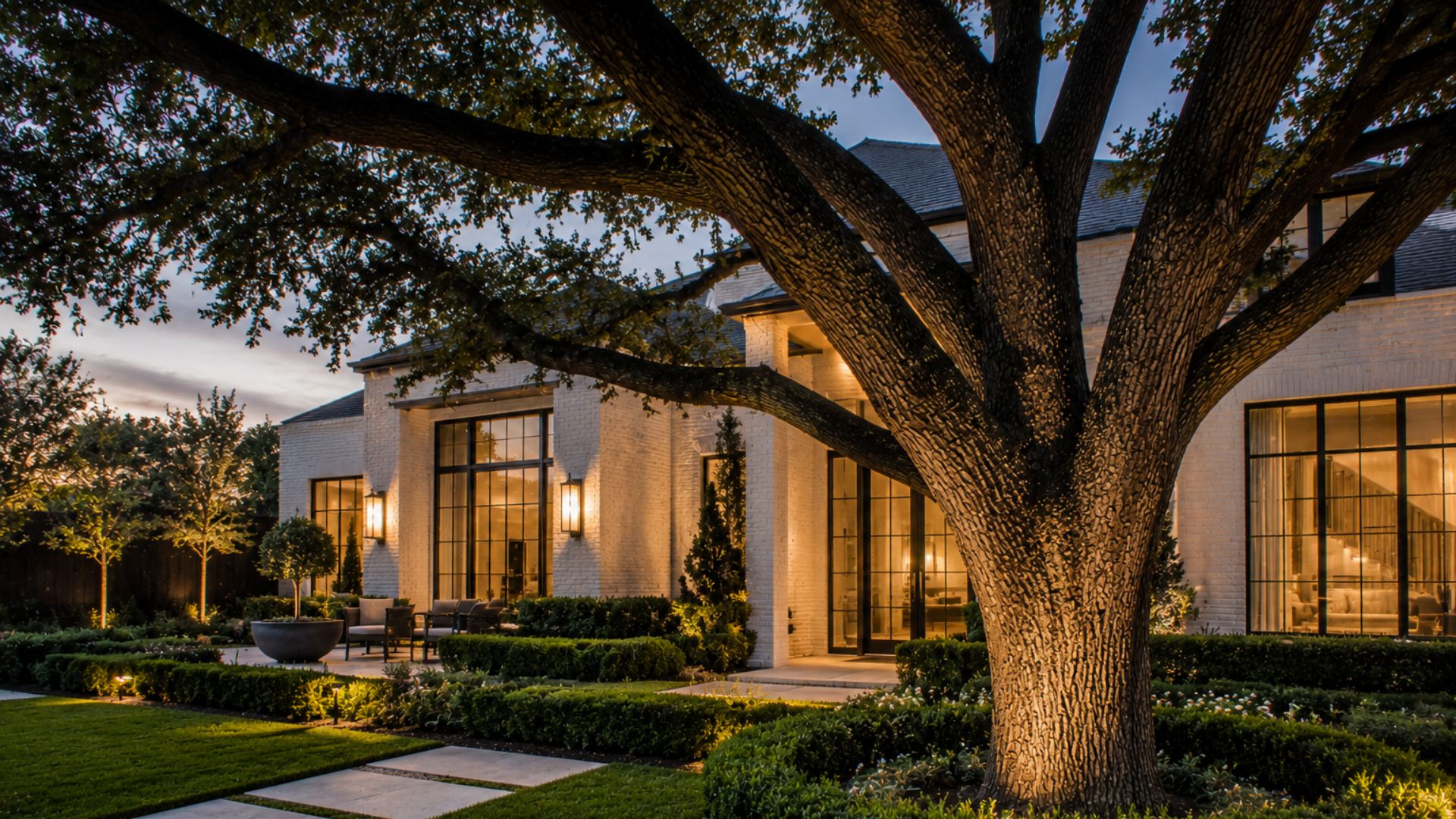
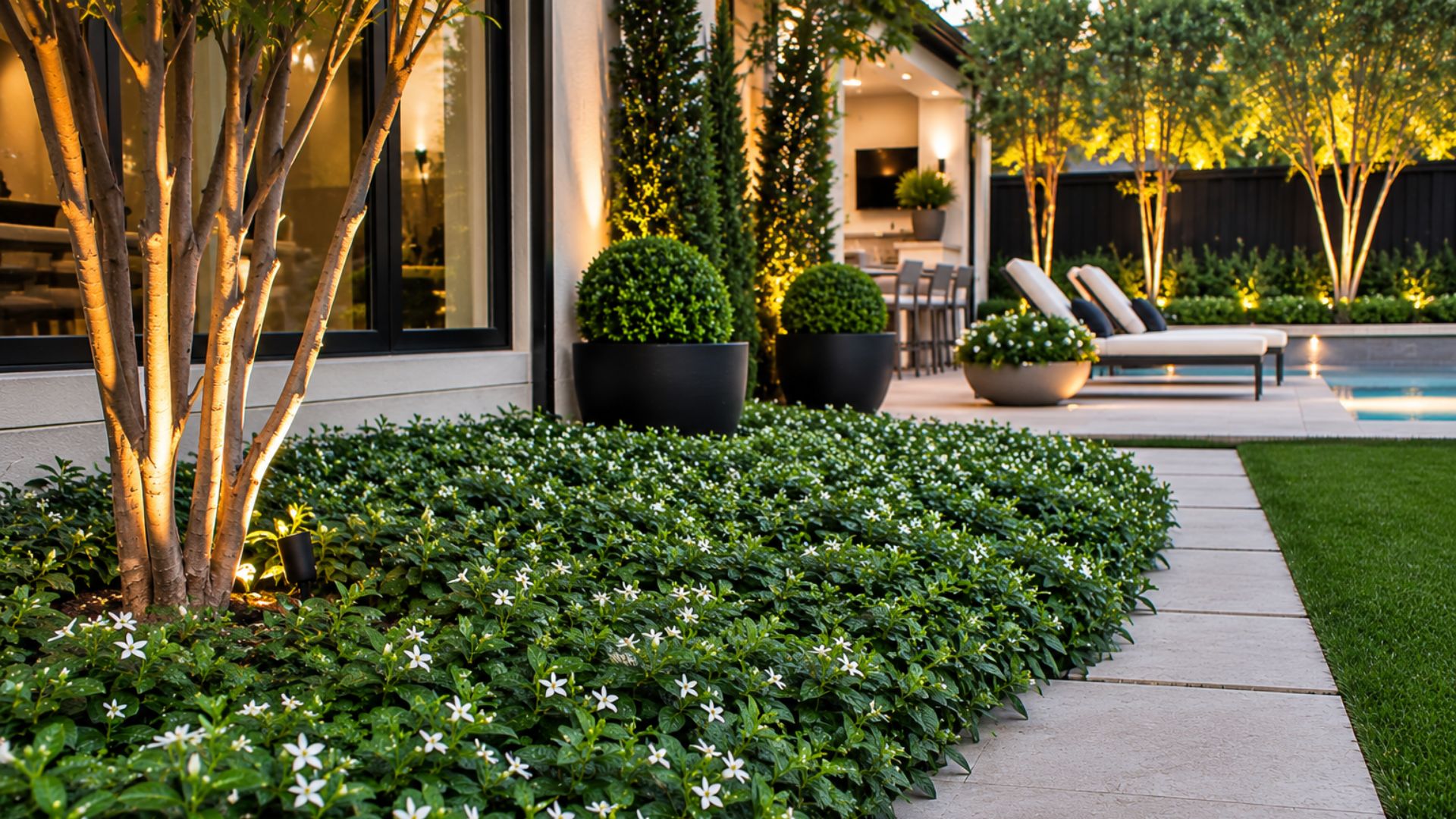
One of Asian Jasmine's greatest strengths is its ability to connect different areas of a landscape visually. Instead of leaving large spaces covered only with mulch, it creates a living green layer beneath evergreen trees, between shrubs, and along the edges of planting beds. This makes it particularly useful in Plano evergreen landscapes, where year-round greenery can create a more established and cohesive appearance.
Asian Jasmine performs well in partial shade to full shade, although it can tolerate more sunlight when provided adequate moisture. This versatility makes it especially valuable underneath mature trees and along shaded sides of homes where many other groundcovers struggle.
Regular watering is important during establishment, but mature plants become relatively tolerant of short dry periods. Well-draining soil is preferred, although Asian Jasmine adapts to many of the soil conditions found throughout North Texas.
Maintenance usually consists of trimming the edges once or twice during the growing season to prevent the plant from spreading beyond its intended area. Large established sections can also be lightly cut back to encourage fresh, dense foliage.
Asian Jasmine is generally dependable and has relatively few serious pest or disease problems. One of the biggest considerations is simply controlling its growth. Once established, it can spread vigorously and may grow into neighboring planting beds or across edging if left unmanaged.
Extreme winter weather can occasionally cause foliage to brown or experience cold damage. Established plants will often recover as temperatures warm and new growth emerges in spring.
Overwatering should also be avoided, particularly in poorly draining areas. Although Asian Jasmine appreciates moisture during establishment, constantly saturated soil can contribute to root problems. Proper irrigation helps create a healthier, denser groundcover for Southlake landscapes.
Yes. Asian Jasmine is an evergreen groundcover and typically maintains its glossy green foliage throughout the year. Severe North Texas freezes can cause temporary browning, but established plants generally recover once warmer weather returns.
Absolutely. Shade tolerance is one of Asian Jasmine's biggest advantages. It performs particularly well beneath mature trees, along foundations, and in other areas where turfgrass may become thin. This makes it a practical groundcover for Plano properties with established tree canopies.
Yes, particularly in areas where maintaining turf is difficult. Asian Jasmine creates a dense, attractive carpet without requiring regular mowing and performs well in shade. While it isn't intended for heavy foot traffic, it's an excellent choice for creating lush evergreen coverage in low-traffic areas of a North Texas landscape.
You might also like