

Sabal Palm
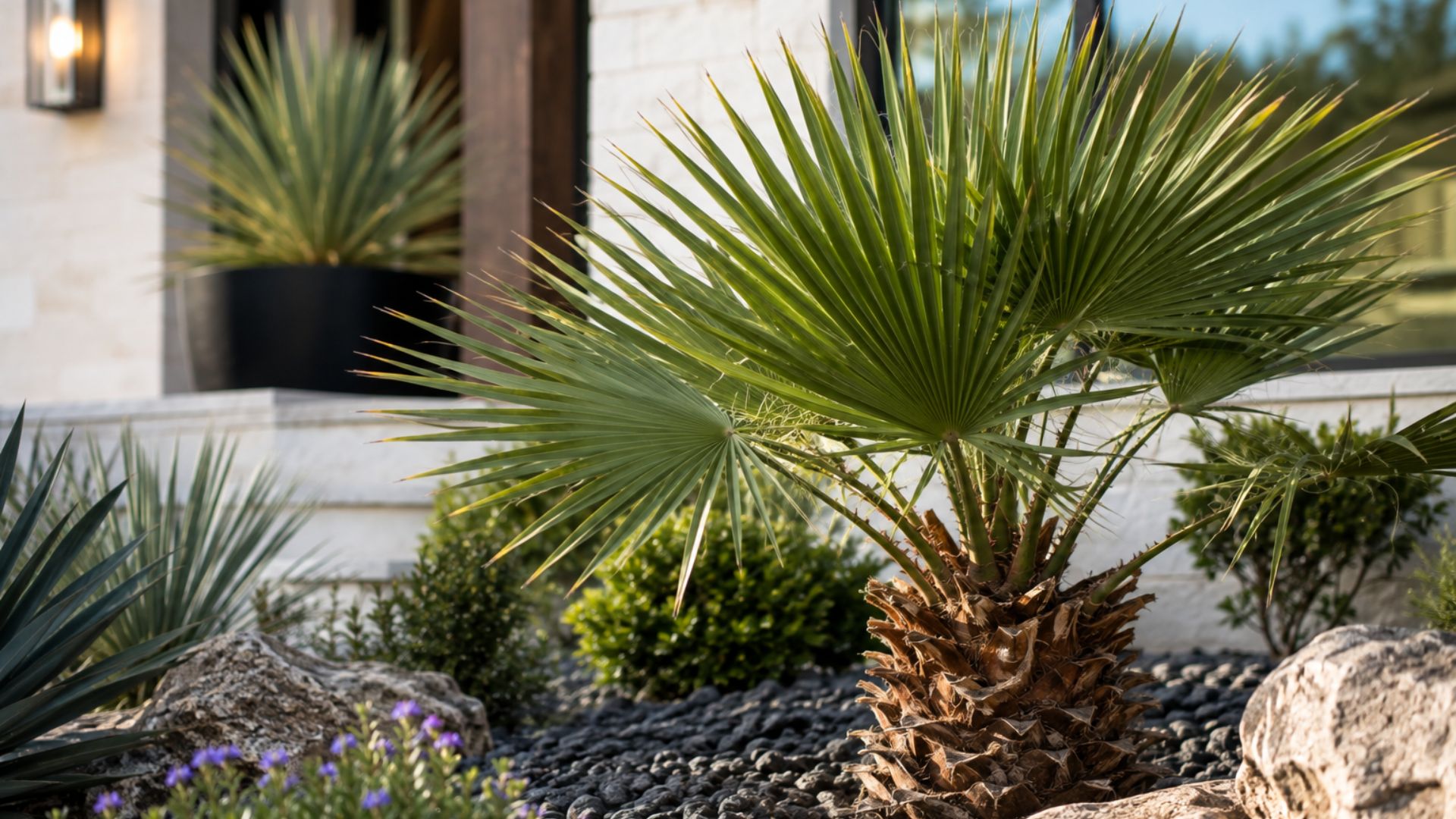
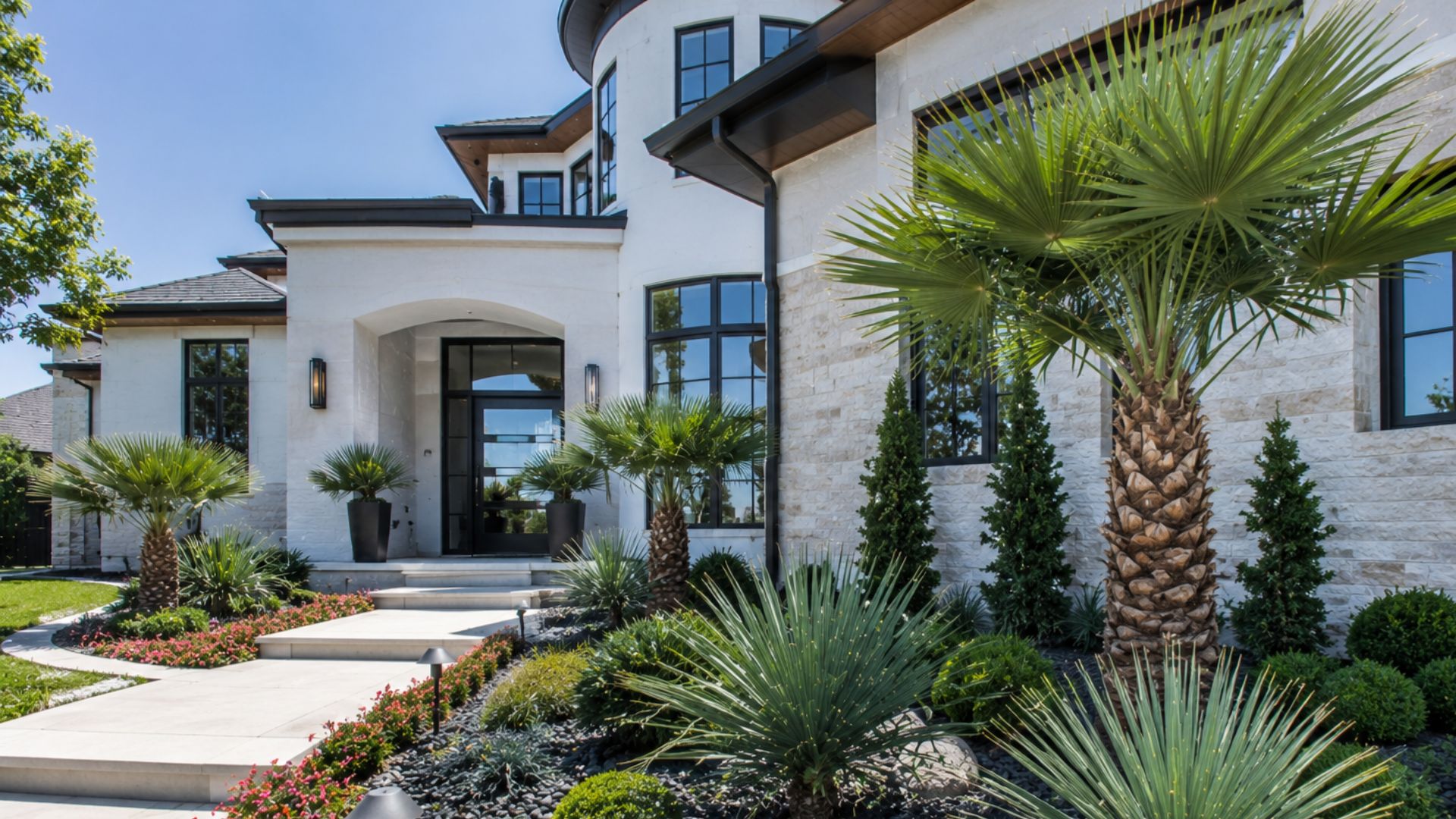
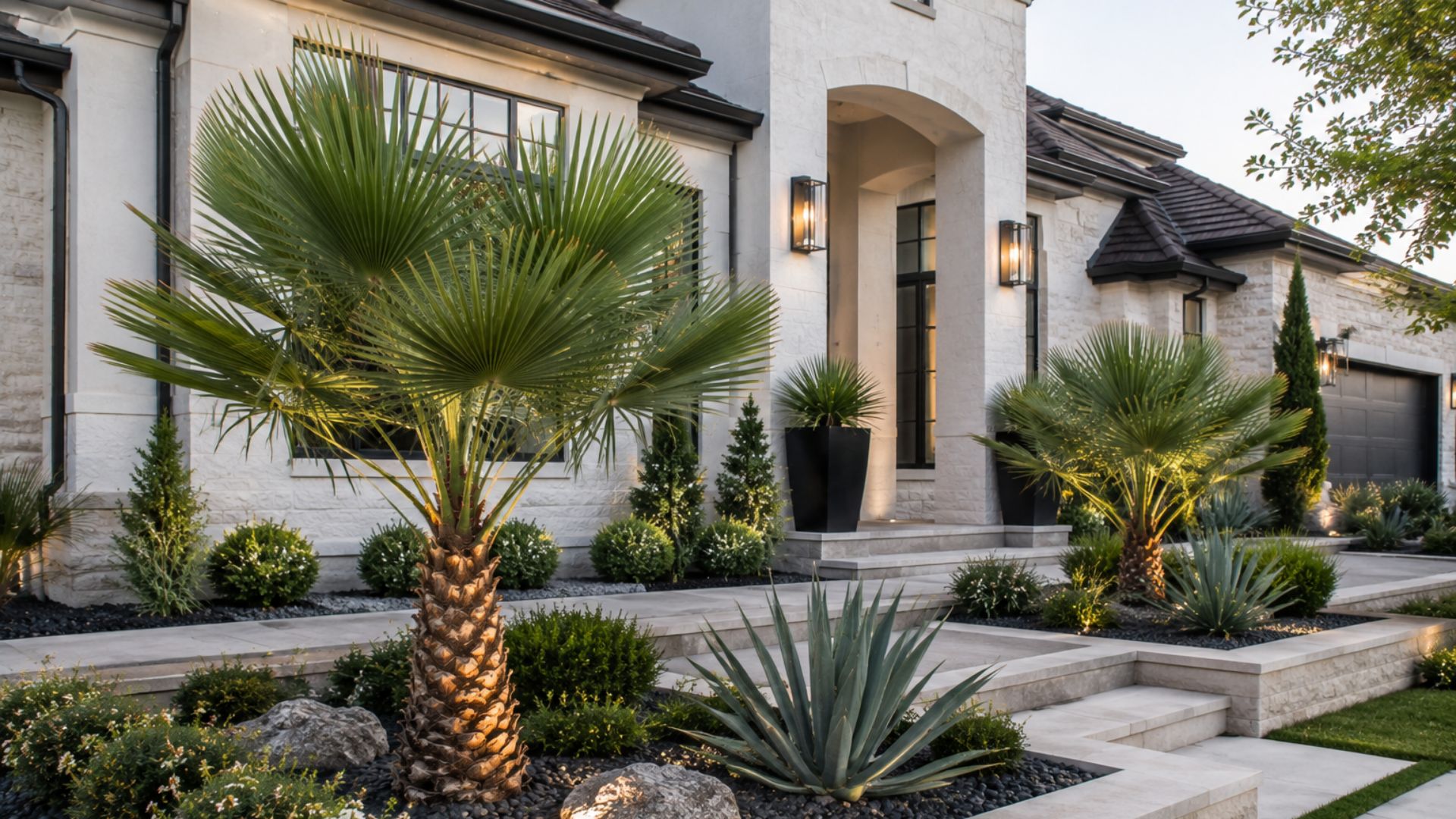
A stately evergreen palm with a tall trunk and broad, fan-shaped fronds that instantly bring a relaxed, resort-inspired character to the landscape. Mature Sabal Palms can reach 30–50 feet tall with a canopy approximately 10–15 feet wide, creating dramatic vertical interest without occupying excessive ground space. Hardy in approximately USDA Zones 8–11, Sabal Palm is one of the more cold-tolerant palms and can be incorporated into select North Texas landscapes where proper placement and winter conditions are considered.
Sabal Palm
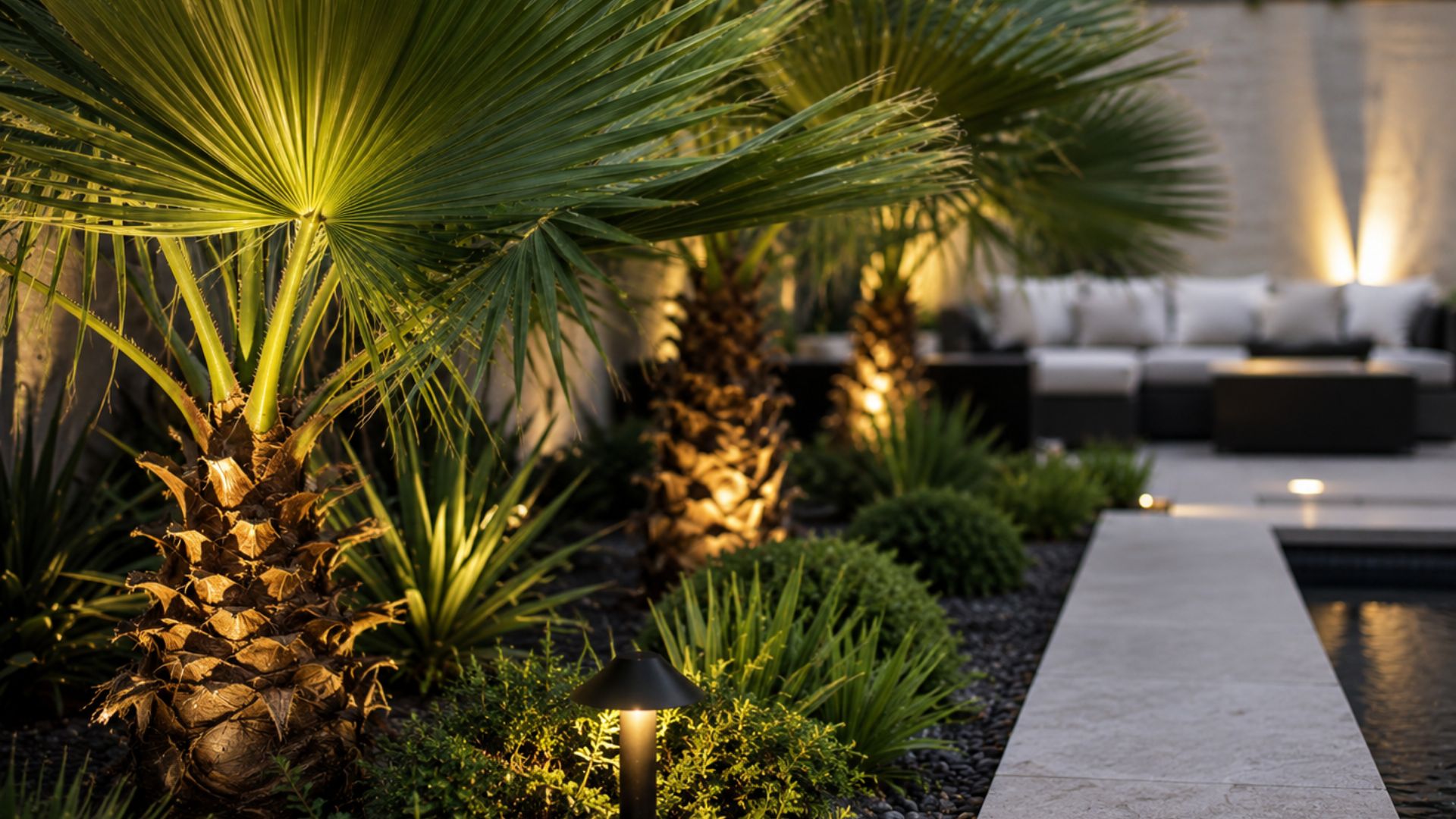
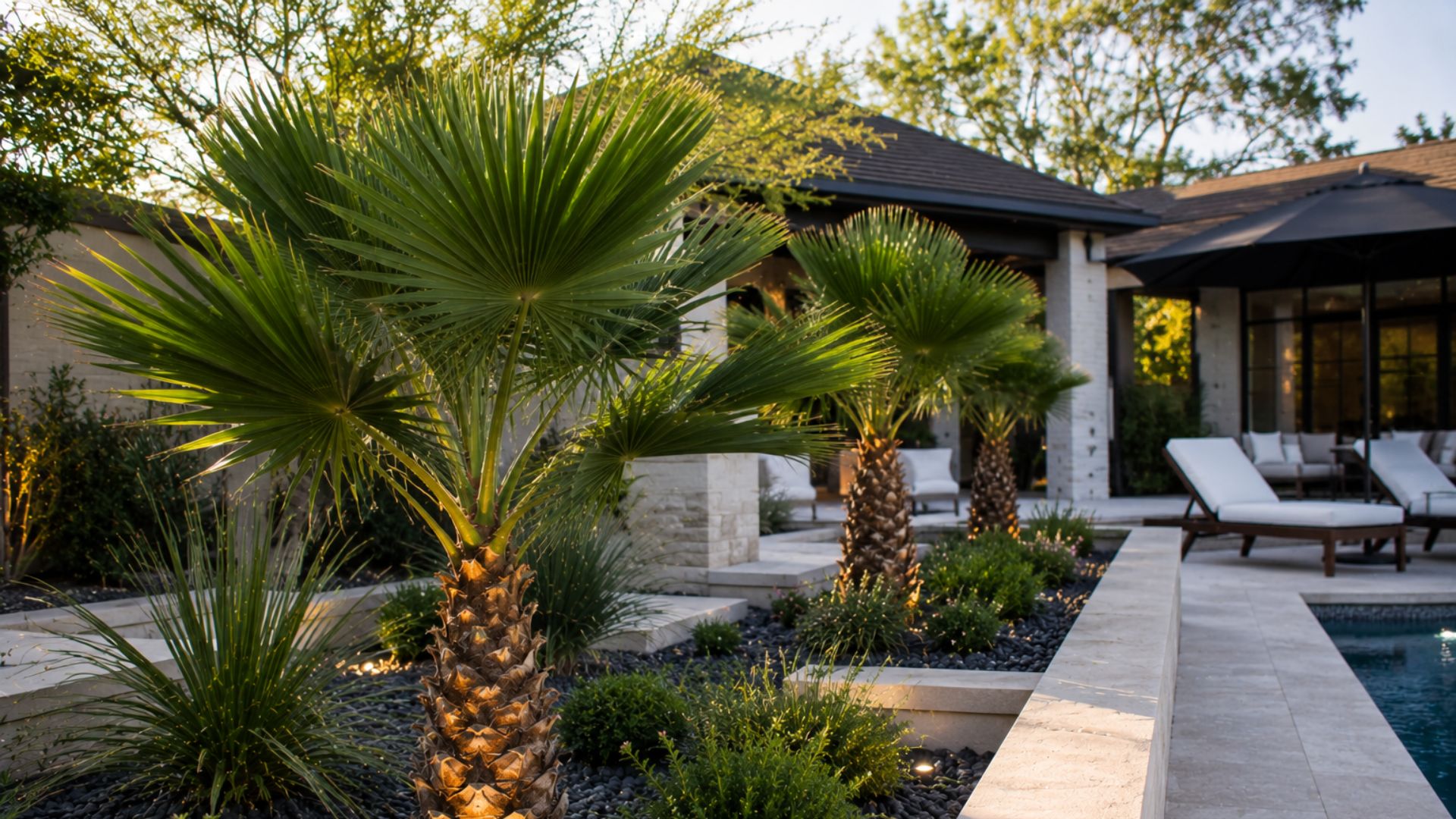
Sabal Palm (Sabal palmetto), also known as Cabbage Palm, is an iconic evergreen palm recognized for its large fan-shaped leaves and classic tropical appearance. As the palm matures, it develops a tall, sturdy trunk topped by a rounded crown of green fronds, creating an unmistakable resort-style silhouette.
Its height makes Sabal Palm particularly effective for adding a vertical layer above pools, patios, and outdoor living spaces. Rather than creating a dense canopy like a traditional shade tree, its elevated foliage maintains open views and gives the landscape a lighter, more spacious atmosphere. In a Southlake resort-style landscape, strategically placed Sabal Palms can help transform a backyard pool area into an outdoor retreat while still complementing the architecture of the home.
Sabal Palm performs best in full sun but can tolerate some partial shade. It adapts to several soil types as long as adequate drainage is provided. Newly planted palms require consistent watering while their root systems become established, particularly during hot and dry periods.
Once established, Sabal Palms become relatively drought tolerant and require less supplemental irrigation. Older brown fronds can be removed as needed, but excessive pruning should be avoided. Healthy green fronds should remain on the palm because they are important for photosynthesis and overall plant health.
In Plano landscapes, choosing a protected planting location can be particularly important. Areas near structures or sheltered courtyards may offer additional protection from harsh winter winds and extreme cold.
Cold temperatures are one of the primary considerations when growing Sabal Palms in North Texas. Although they are significantly more cold tolerant than many tropical palms, unusually severe DFW freezes can still damage foliage and, in extreme conditions, the growing point of the palm.
Poor drainage and excessive irrigation can also cause root problems. Palms should never remain in consistently saturated soil, especially during cooler weather.
Nutrient deficiencies can occasionally cause yellowing or discoloration of the fronds. Using appropriate palm fertilizer when necessary can help correct deficiencies, but healthy soil and proper watering should always be addressed first.
If you want to play it safe with the weather, look into Evergreen Trees or Desert-style trees!
Yes, but placement matters. Sabal Palm is among the more cold-hardy palm species and can grow in parts of North Texas, although severe winter freezes remain a risk. Protected locations and established specimens generally have a better chance of handling occasional cold weather.
Yes. Its tall trunk and elevated canopy make Sabal Palm an excellent choice for resort-style pool landscaping. It provides tropical character and vertical interest without creating the dense, low canopy of many traditional trees, making it especially attractive around Southlake pools and outdoor living areas.
Established Sabal Palms are relatively low maintenance. They primarily need occasional removal of completely brown or damaged fronds, appropriate watering, and monitoring for nutrient deficiencies. Their clean vertical form makes them a practical option for homeowners who want a dramatic resort-style landscape without adding a heavily manicured plant.
You might also like