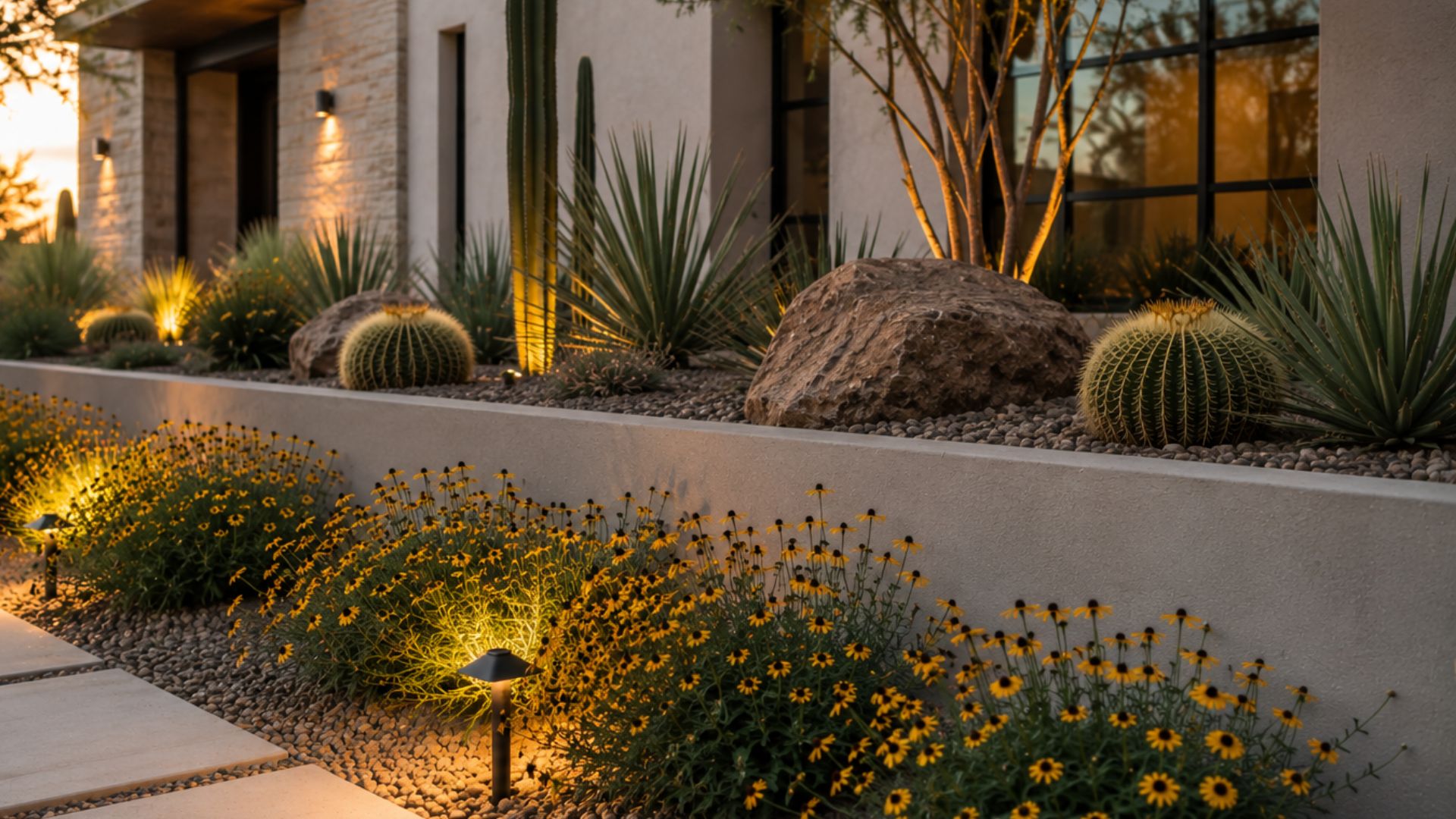
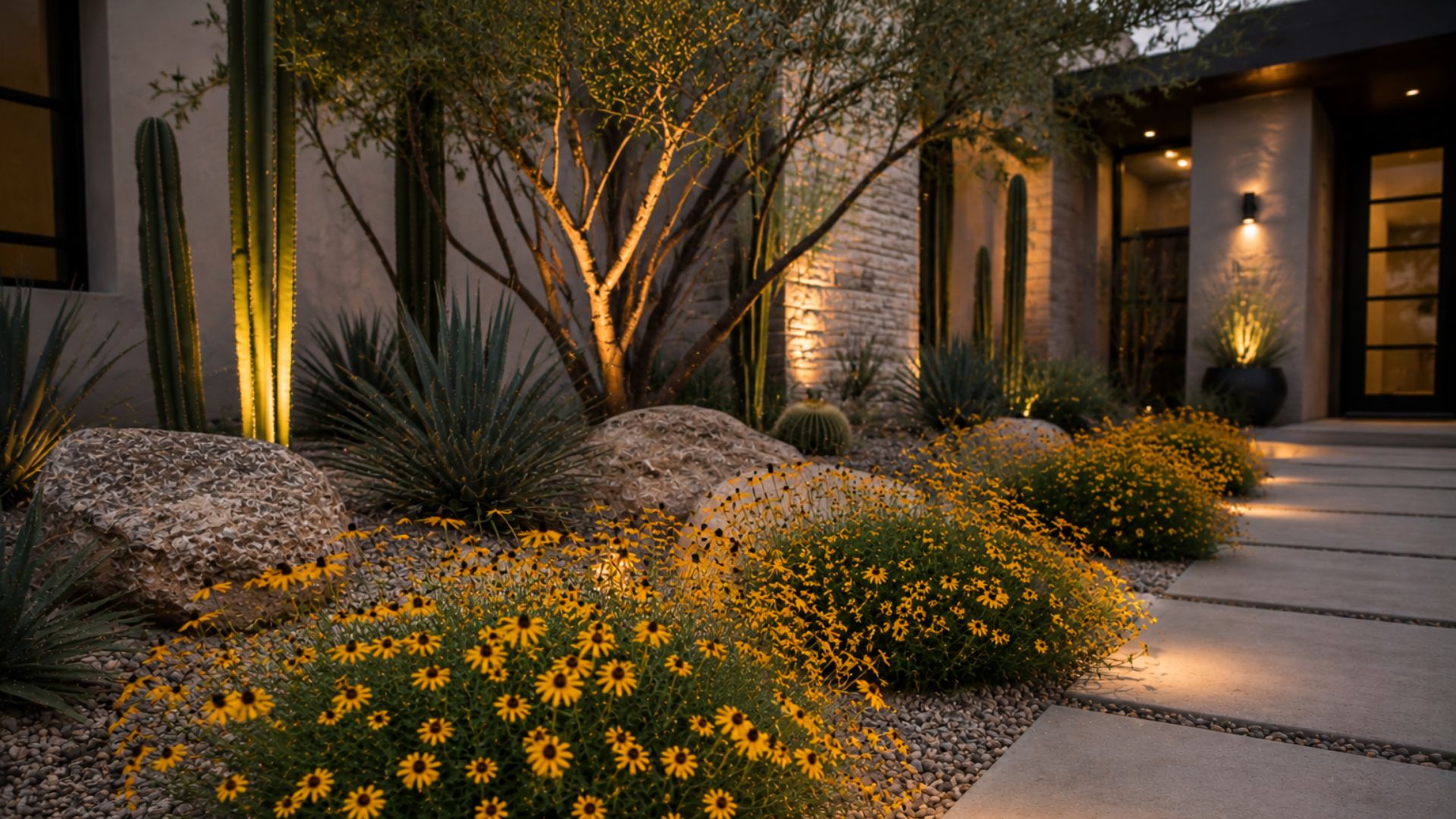
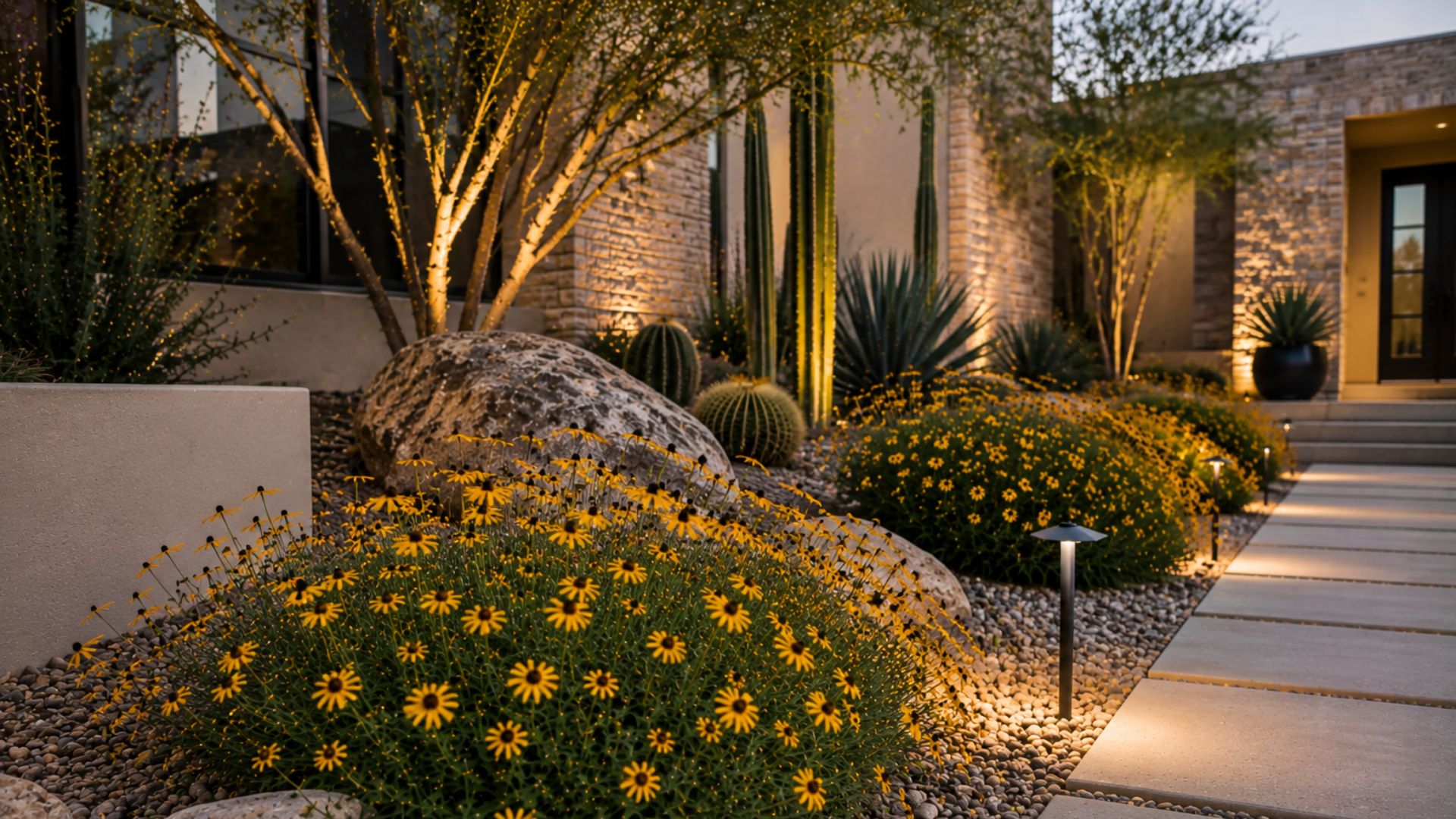
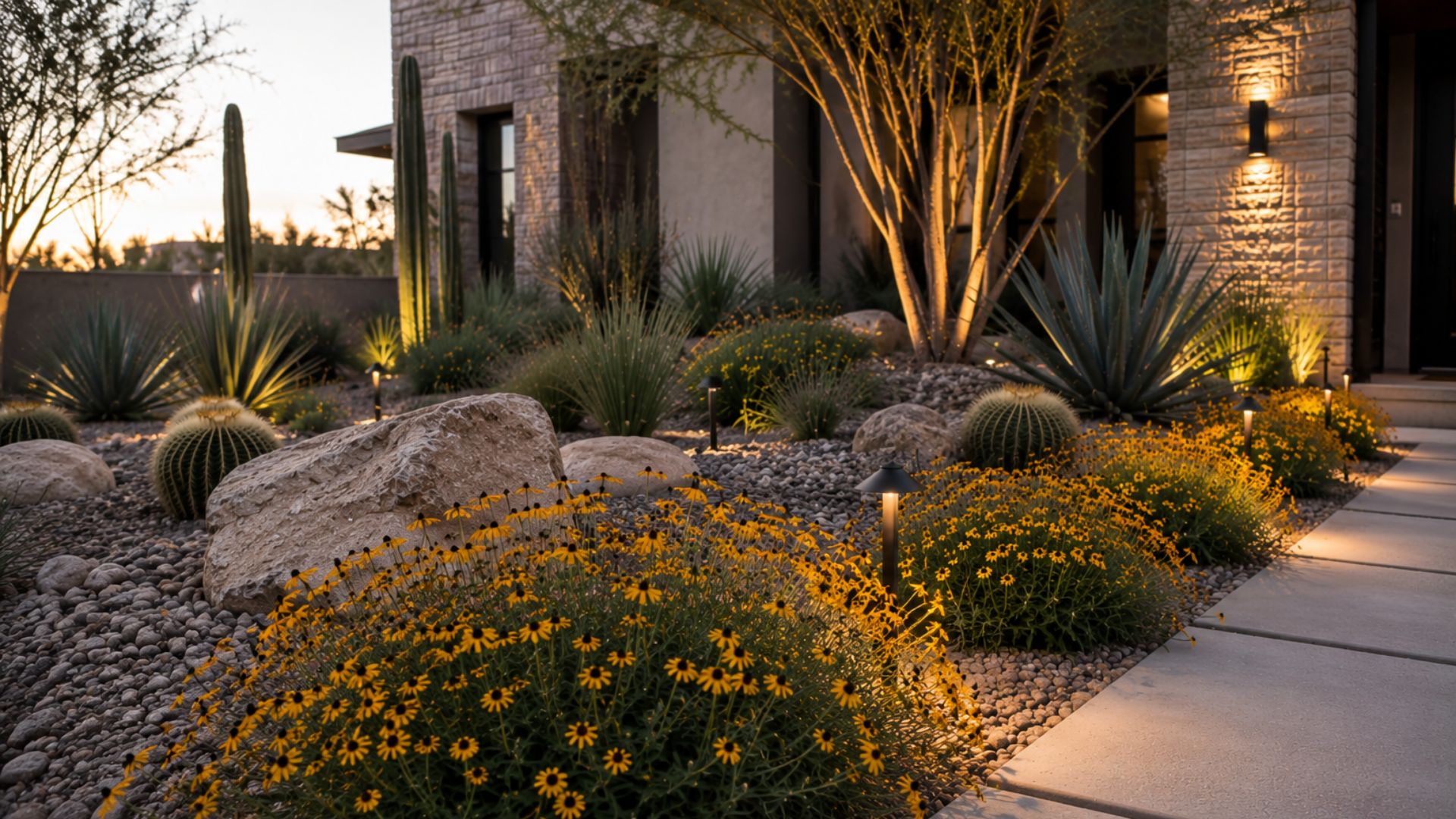


Blackfoot Daisy
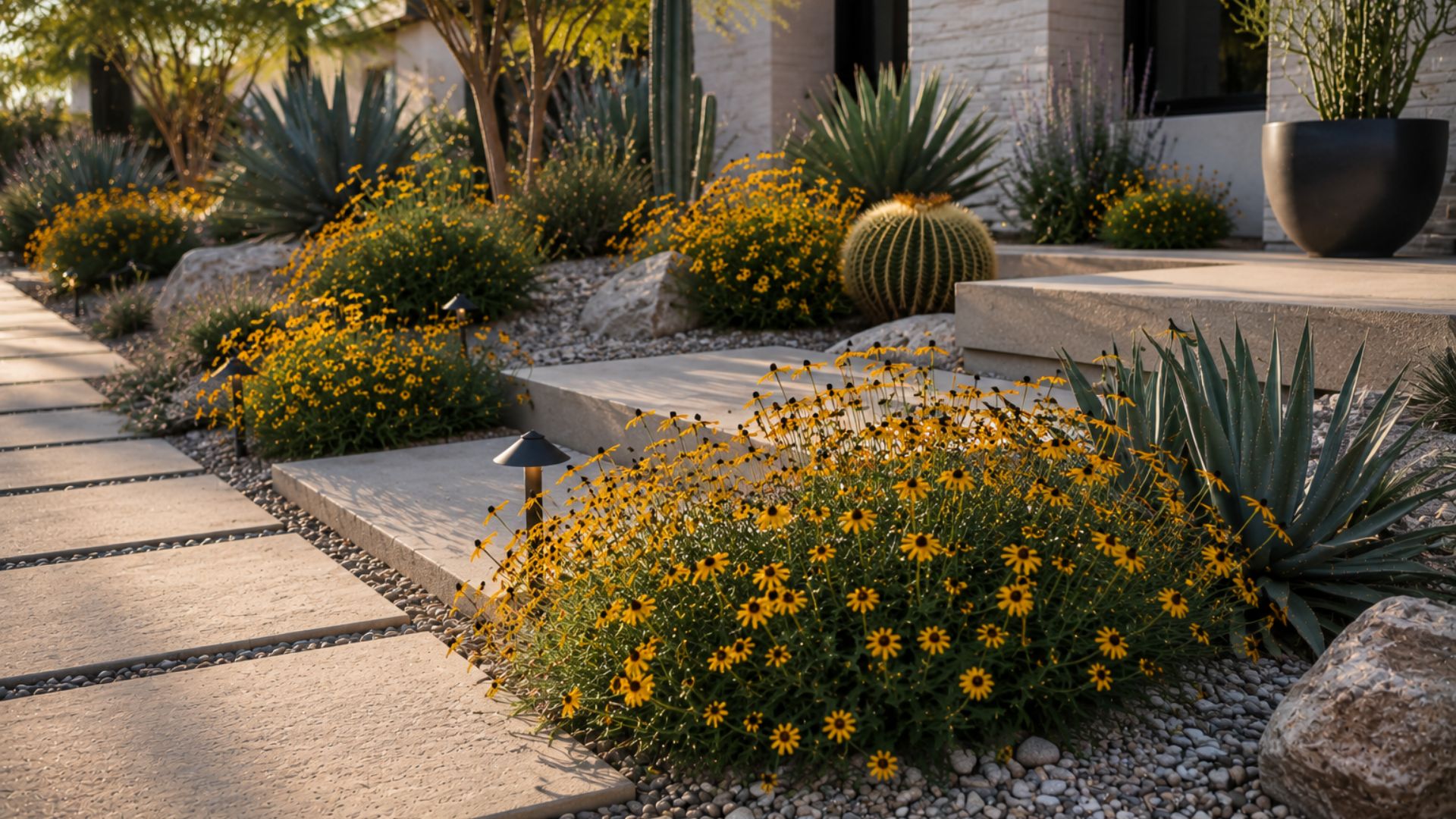
A compact, evergreen perennial covered in cheerful white daisy-like flowers that bloom from spring through fall. Typically grows 8–12 inches tall and 12–18 inches wide, making it an excellent choice for borders, rock gardens, gravel landscapes, and mass plantings. Hardy in USDA Zones 5–11, Blackfoot Daisy thrives in the heat, drought, and well-draining soils of North Texas, making it a favorite for desert-style and native-inspired landscapes in Plano, Southlake, and throughout the DFW area.
Blackfoot Daisy
Blackfoot Daisy (Melampodium leucanthum) is a hardy, low-growing perennial admired for its abundance of crisp white flowers with bright yellow centers. Blooming continuously from late spring through fall, it provides long-lasting color while maintaining a naturally rounded, tidy appearance. Its fine-textured gray-green foliage complements desert-style plantings and adds softness to gravel beds, stone pathways, and xeriscapes.
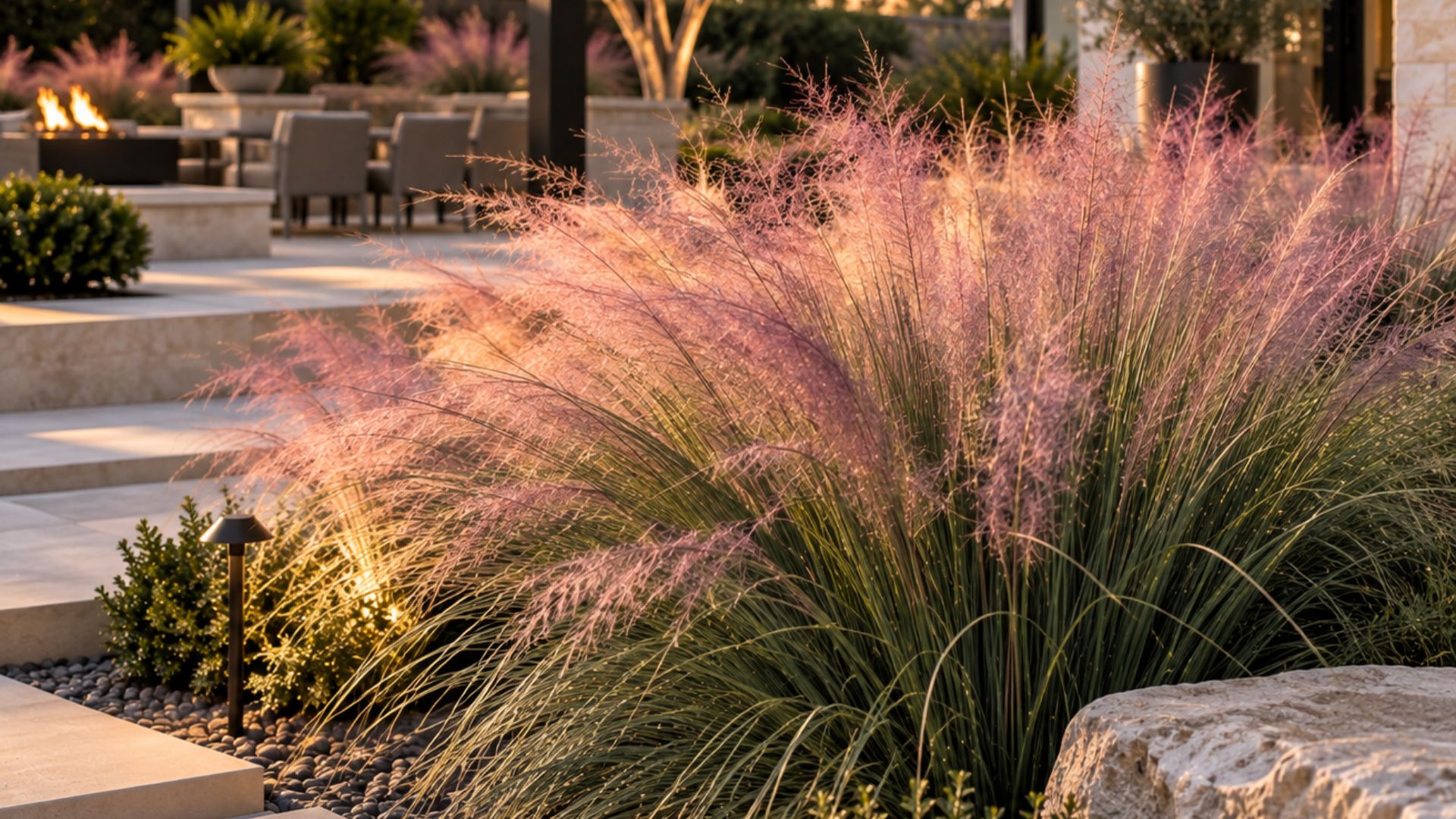
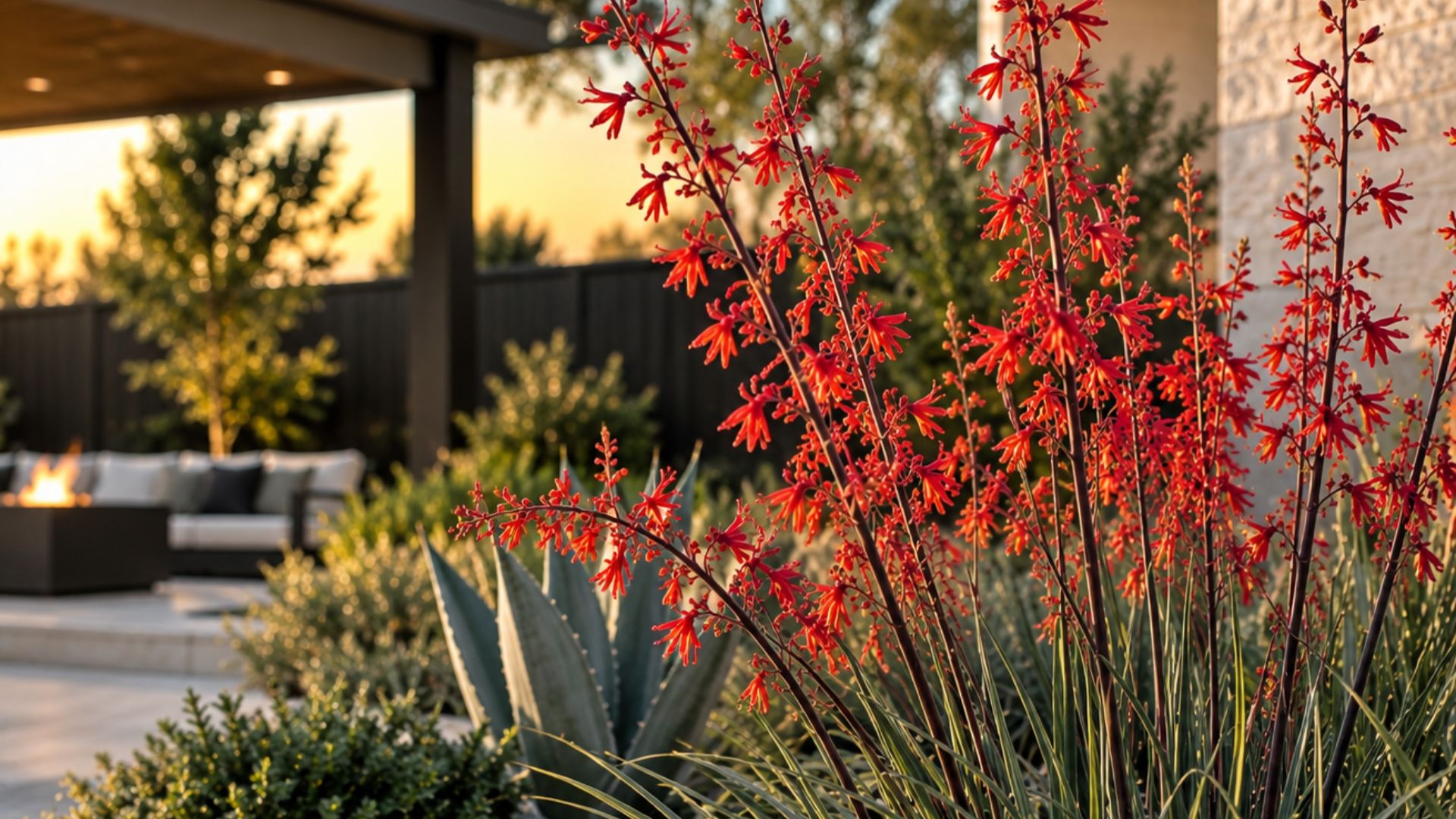
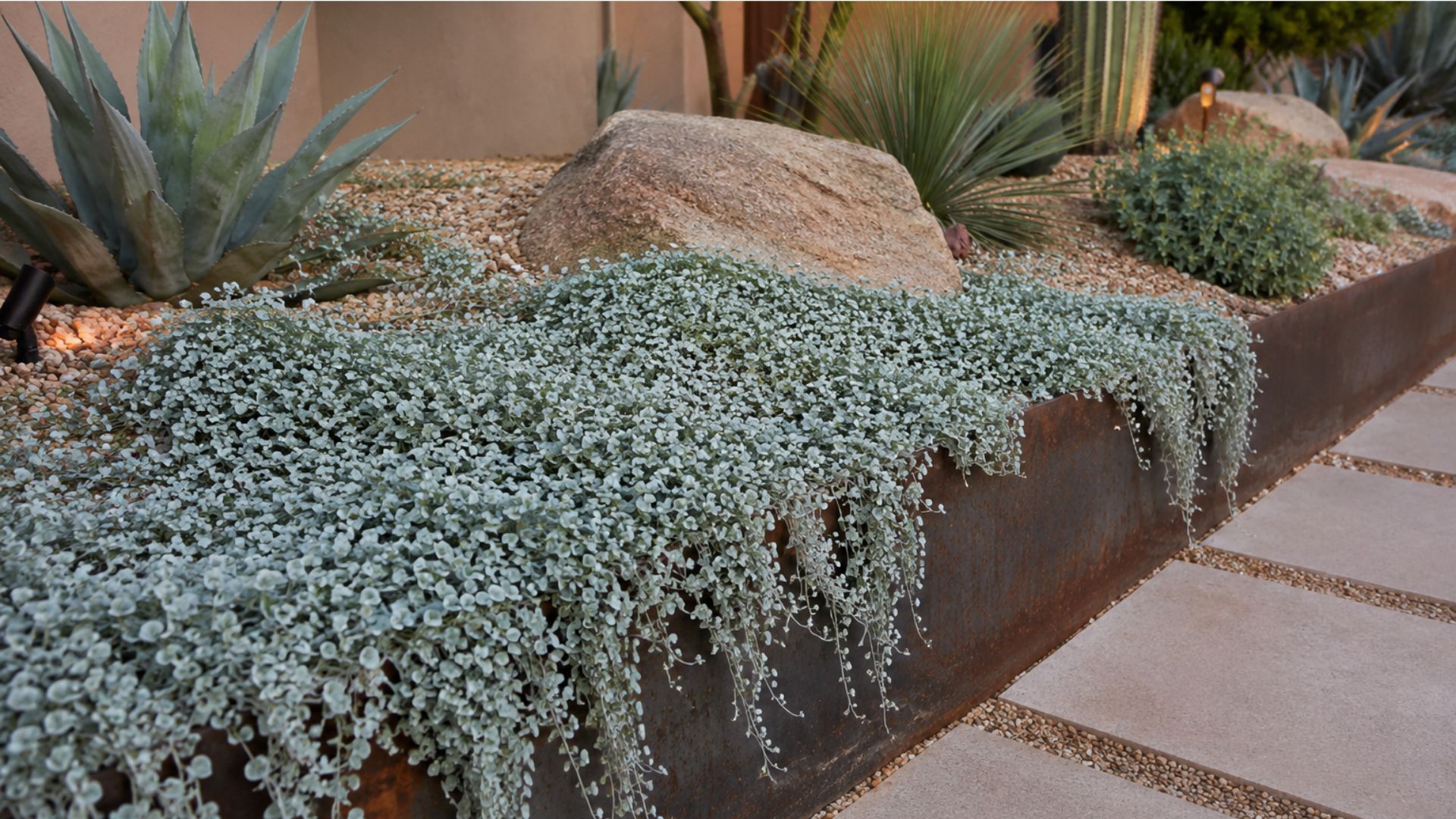
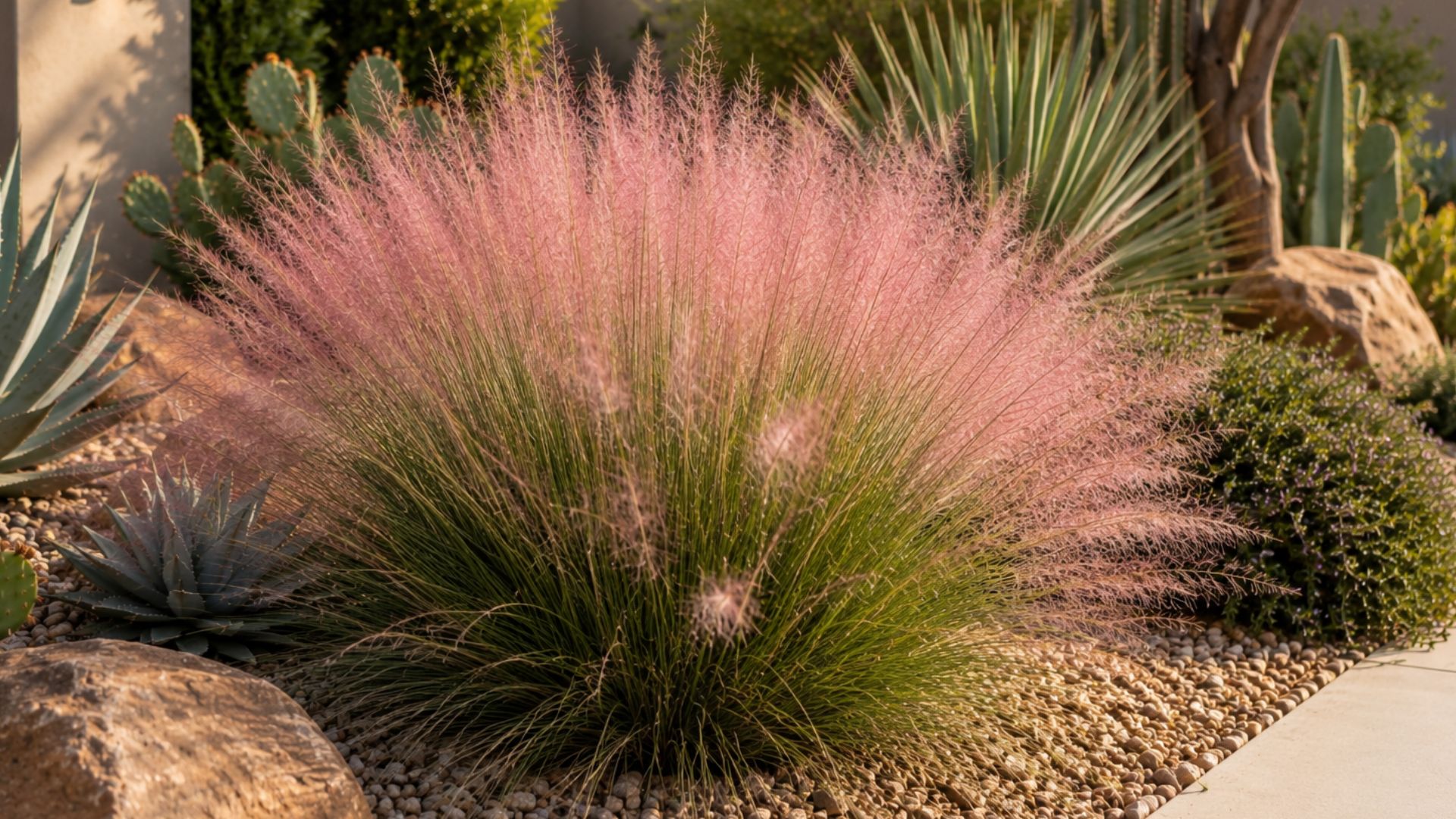
Native to Texas and the southwestern United States, Blackfoot Daisy is exceptionally well adapted to hot, dry climates. Its outstanding drought tolerance and minimal maintenance requirements make it a popular choice for homeowners seeking sustainable landscapes throughout Plano, Southlake, and North Texas. It pairs beautifully with Silver Ponyfoot, Texas Sage, Agaves, Hesperaloe, Gulf Muhly, and natural limestone to create elegant, water-efficient outdoor spaces.
Blackfoot Daisy thrives in full sun and requires at least six hours of direct sunlight each day for the best flowering performance. It prefers well-draining soils and performs exceptionally well in sandy, rocky, or limestone-based soils. Once established, it requires very little supplemental irrigation, making it ideal for xeriscapes and drought-tolerant landscapes across the DFW area.
Maintenance is minimal. Occasional trimming after heavy flowering encourages fresh blooms and helps maintain its compact shape. Avoid excessive watering or overly fertile soil, as these conditions can reduce flowering and shorten the plant's lifespan. With proper drainage and plenty of sunshine, Blackfoot Daisy provides reliable color with very little effort.
Poor drainage is the most common cause of problems for Blackfoot Daisy. Heavy clay soils or consistently wet conditions can lead to root rot and reduced vigor. Planting in raised beds or amending soils with gravel or sand greatly improves long-term performance.
Although highly resilient, extended periods of shade may result in fewer flowers and a more open growth habit. The plant is generally resistant to deer, rabbits, and most insect pests, making it one of the easiest flowering perennials to maintain in North Texas. During unusually wet seasons, improving air circulation and avoiding overwatering will help keep plants healthy.
Yes. Blackfoot Daisies is a hardy perennial in warm climates, returning year after year with beautiful white blooms from spring through fall. Its long flowering season and drought tolerance make it a favorite for low-maintenance, desert-style landscapes.
Blackfoot Daisy is generally considered non-toxic to dogs and other pets. While it is regarded as a pet-friendly landscape plant, it's always best to discourage pets from eating ornamental plants, as consuming large amounts of any plant material can cause mild stomach upset.
Yes. Blackfoot Daisies are considered deer resistant because their aromatic foliage is less appealing to browsing deer. While no plant is completely deer-proof, they are an excellent choice for landscapes where deer occasionally visit.
You might also like