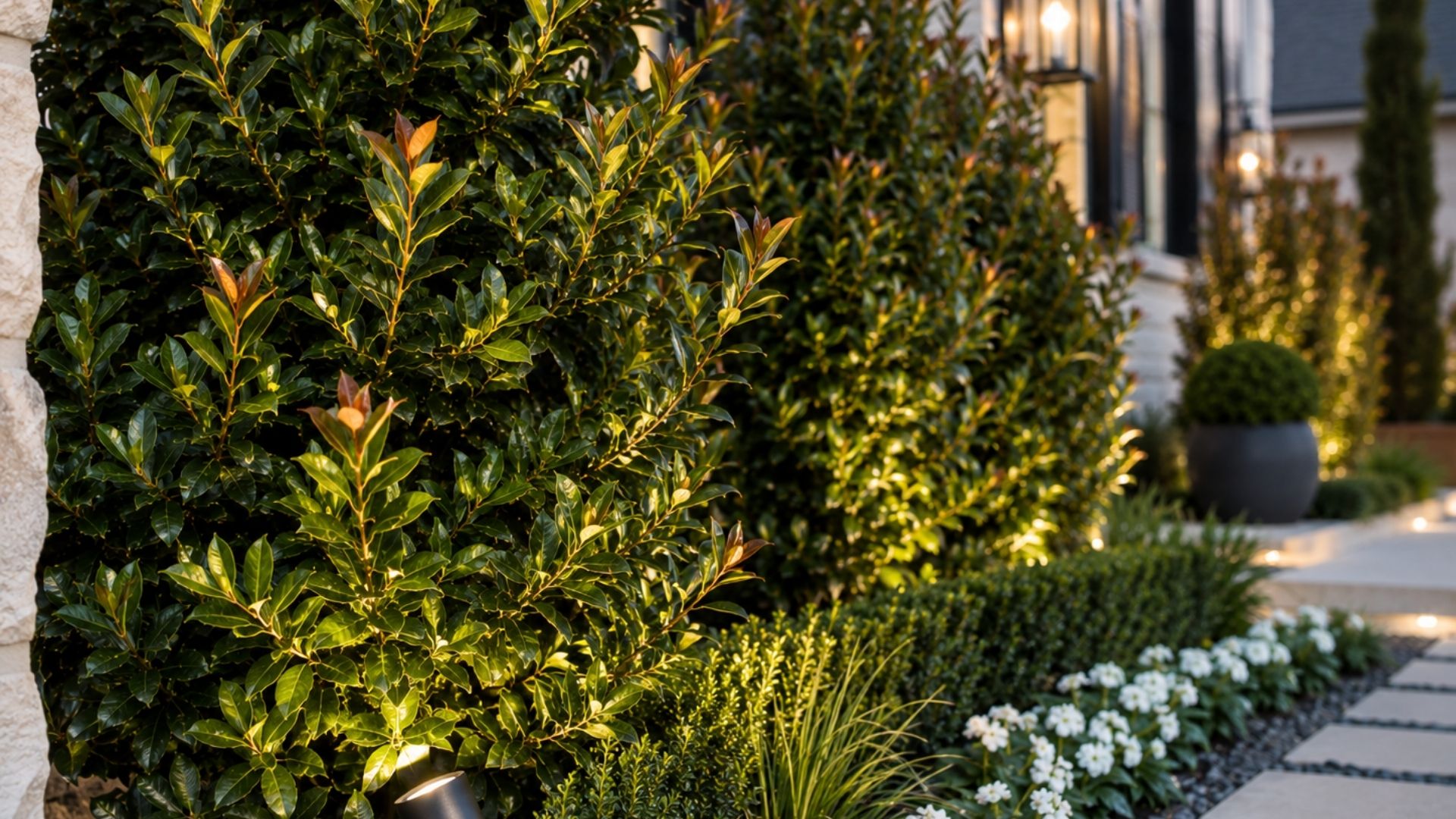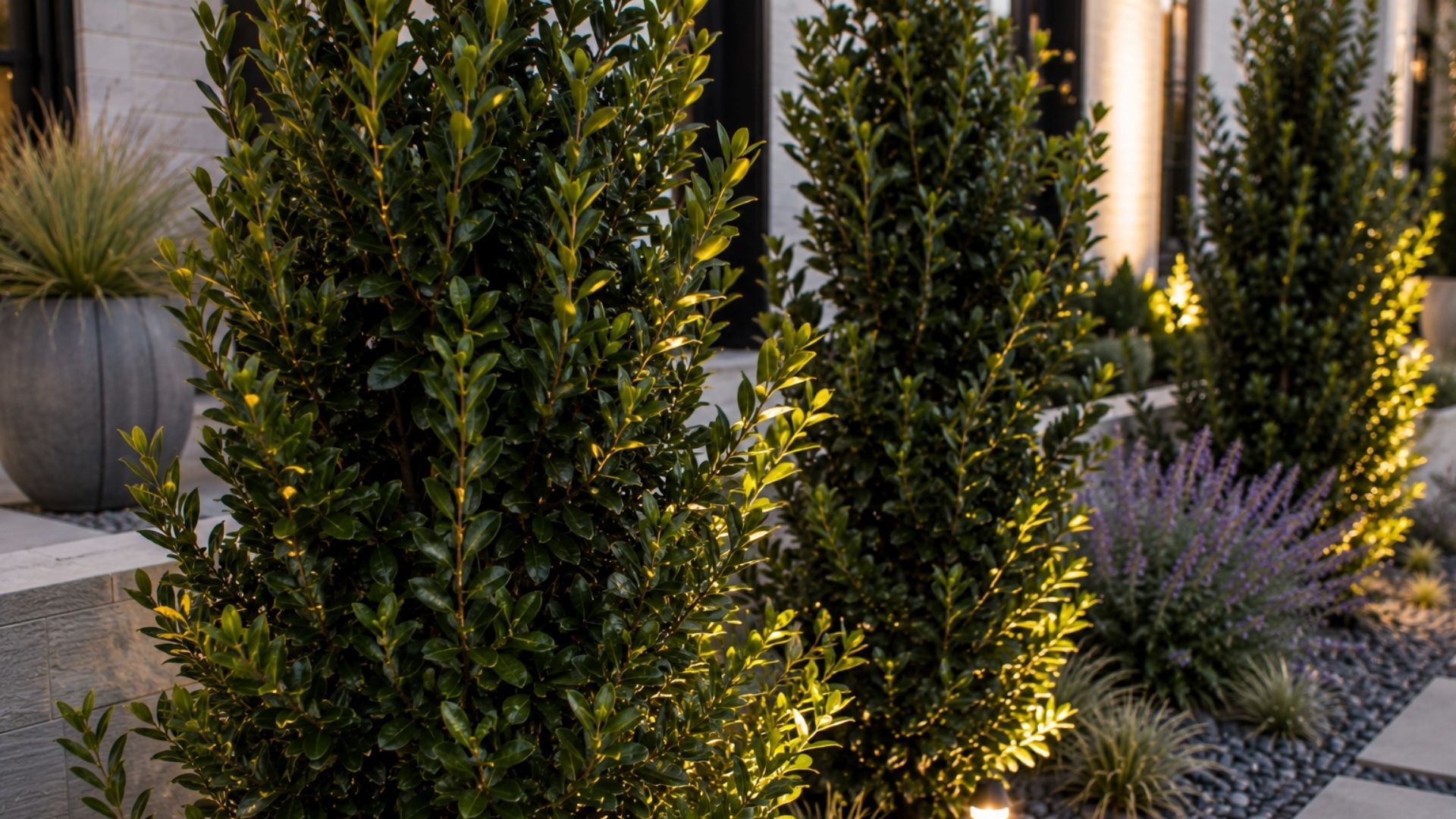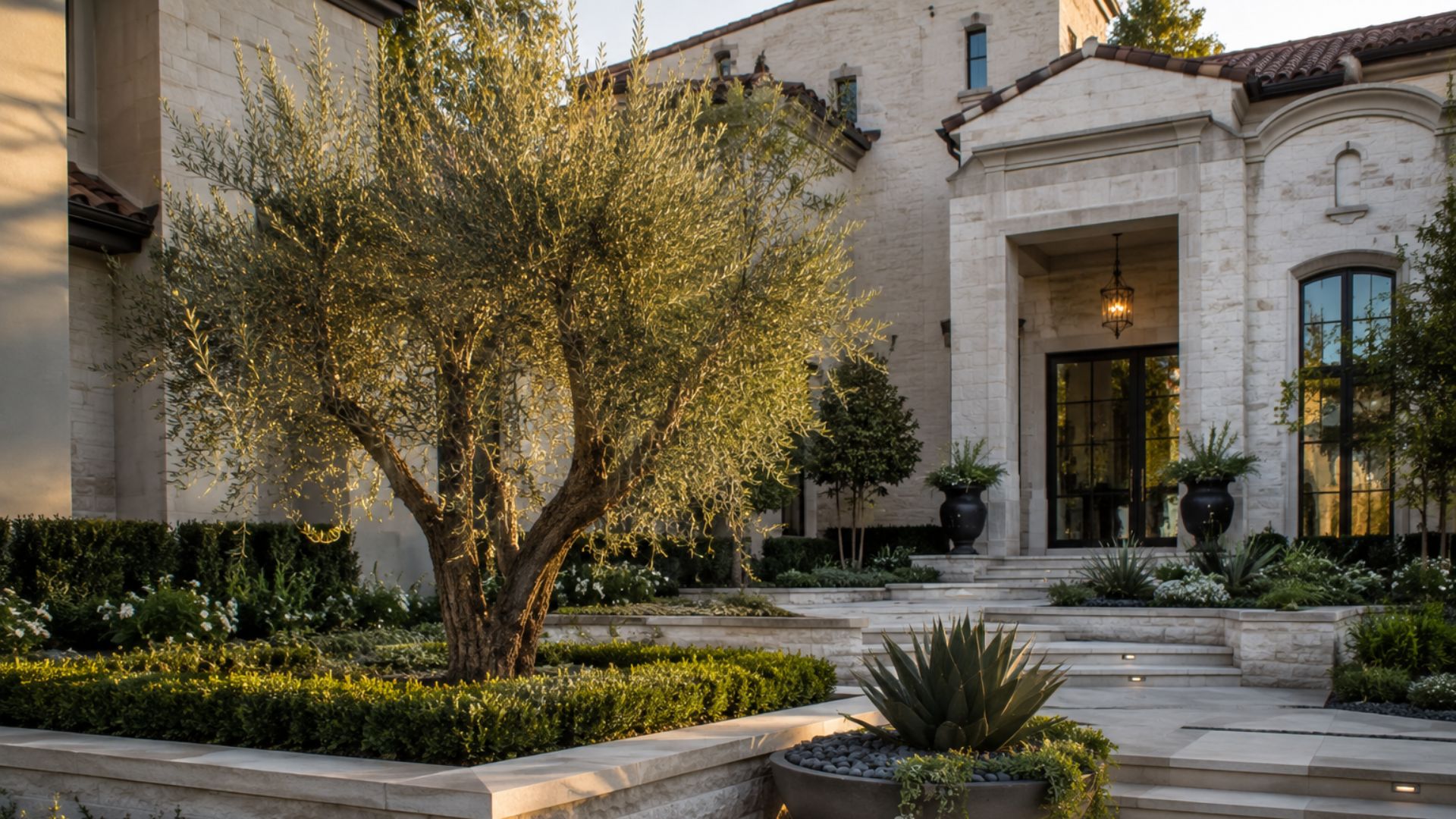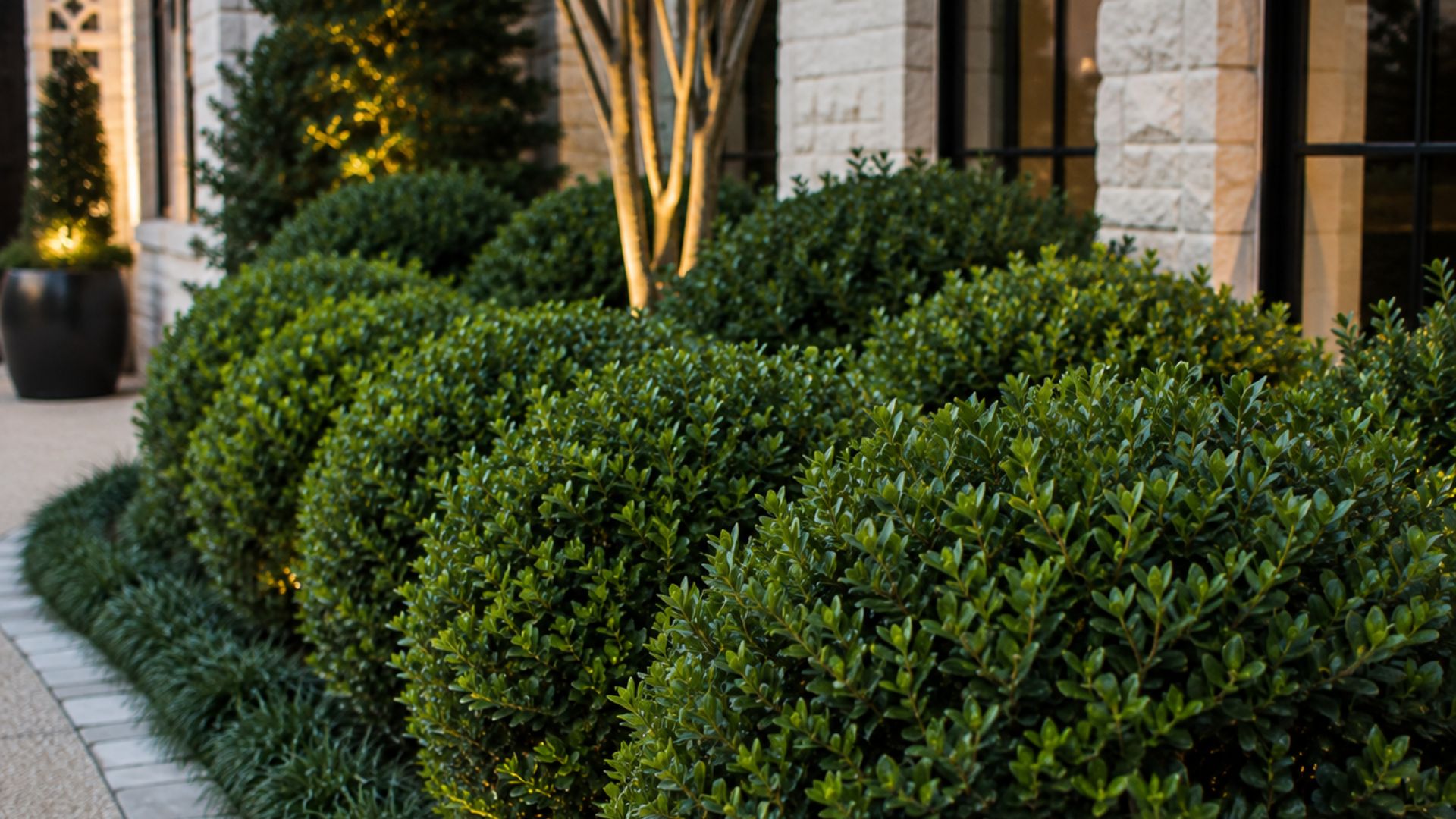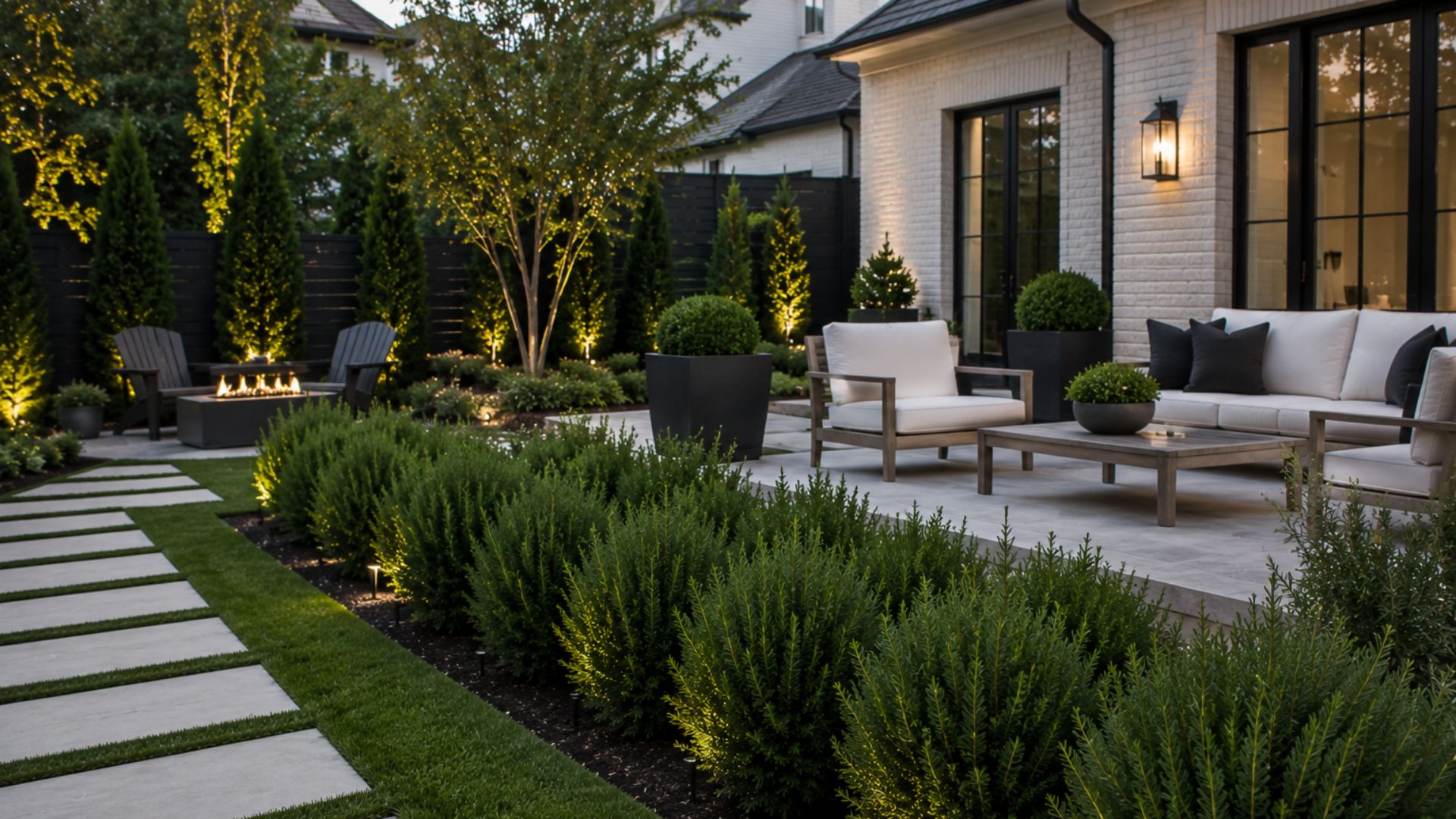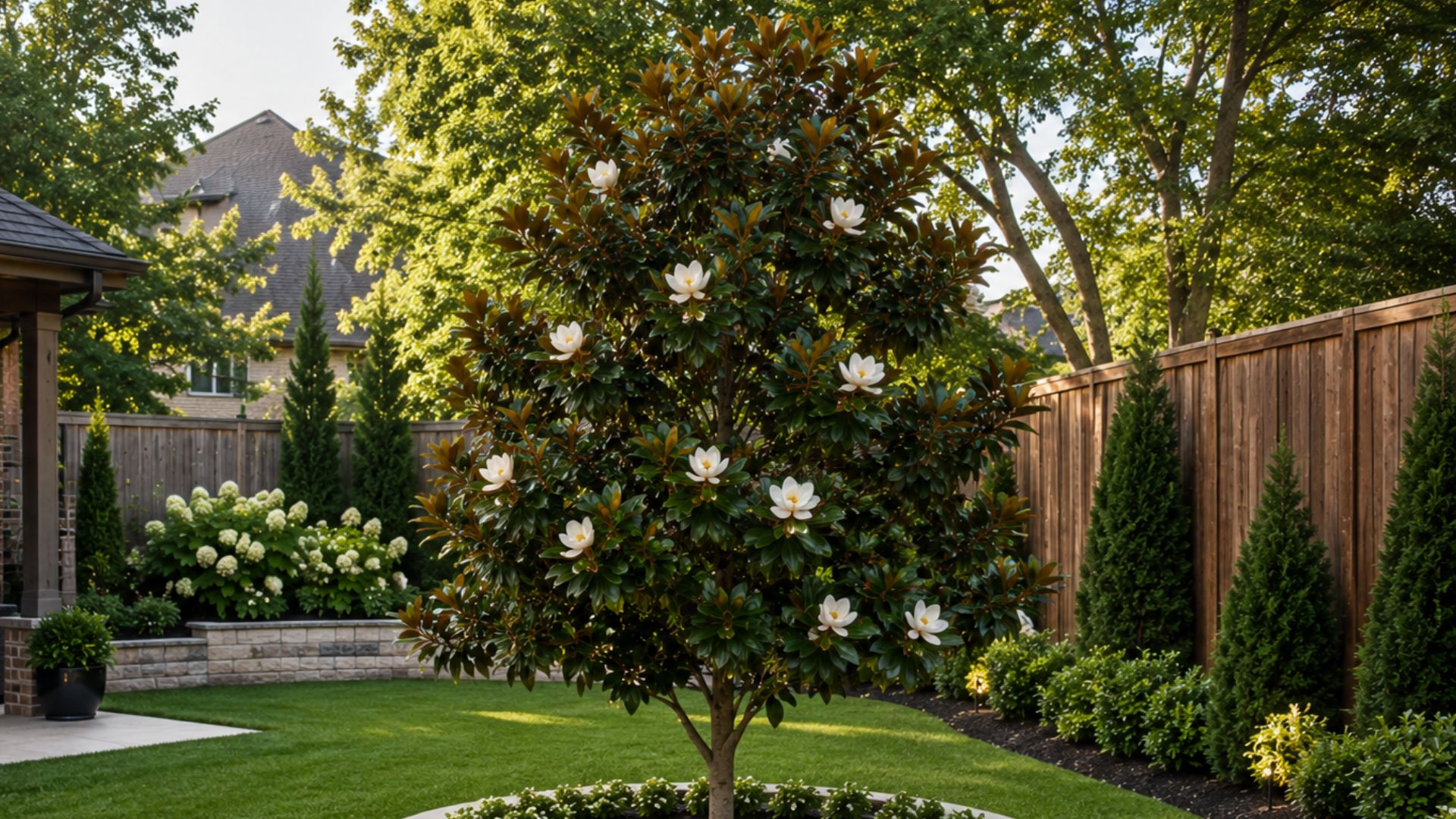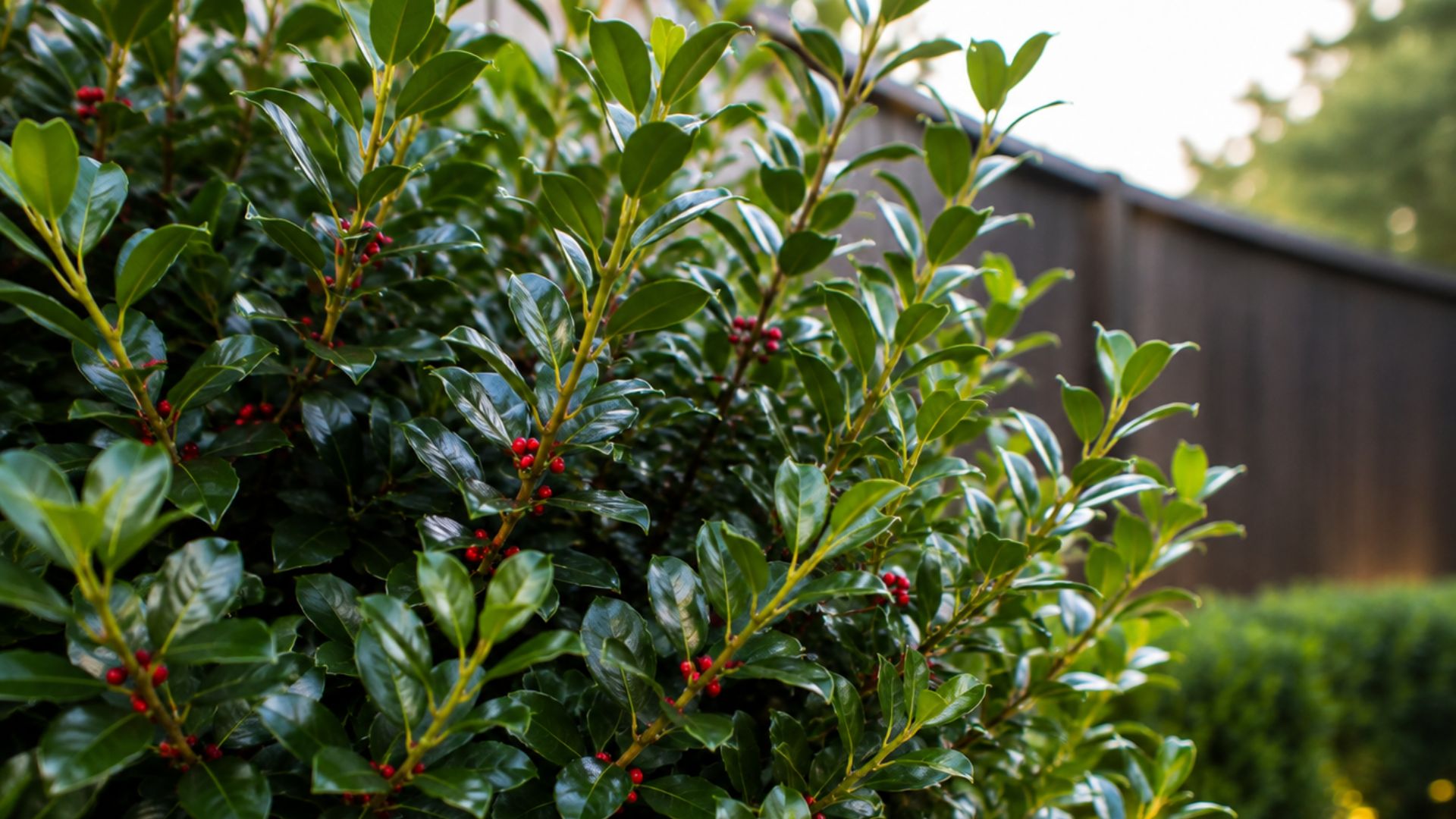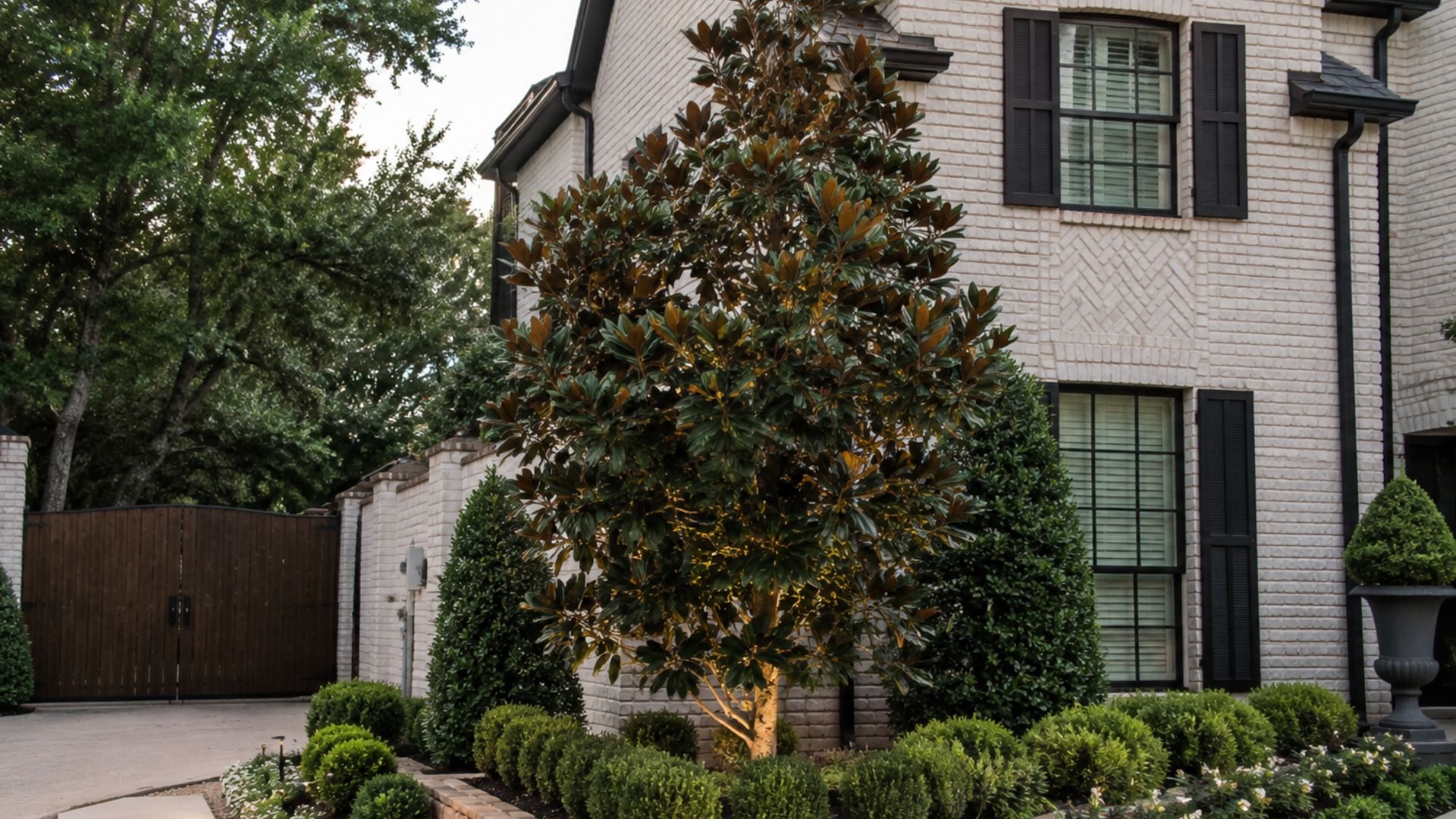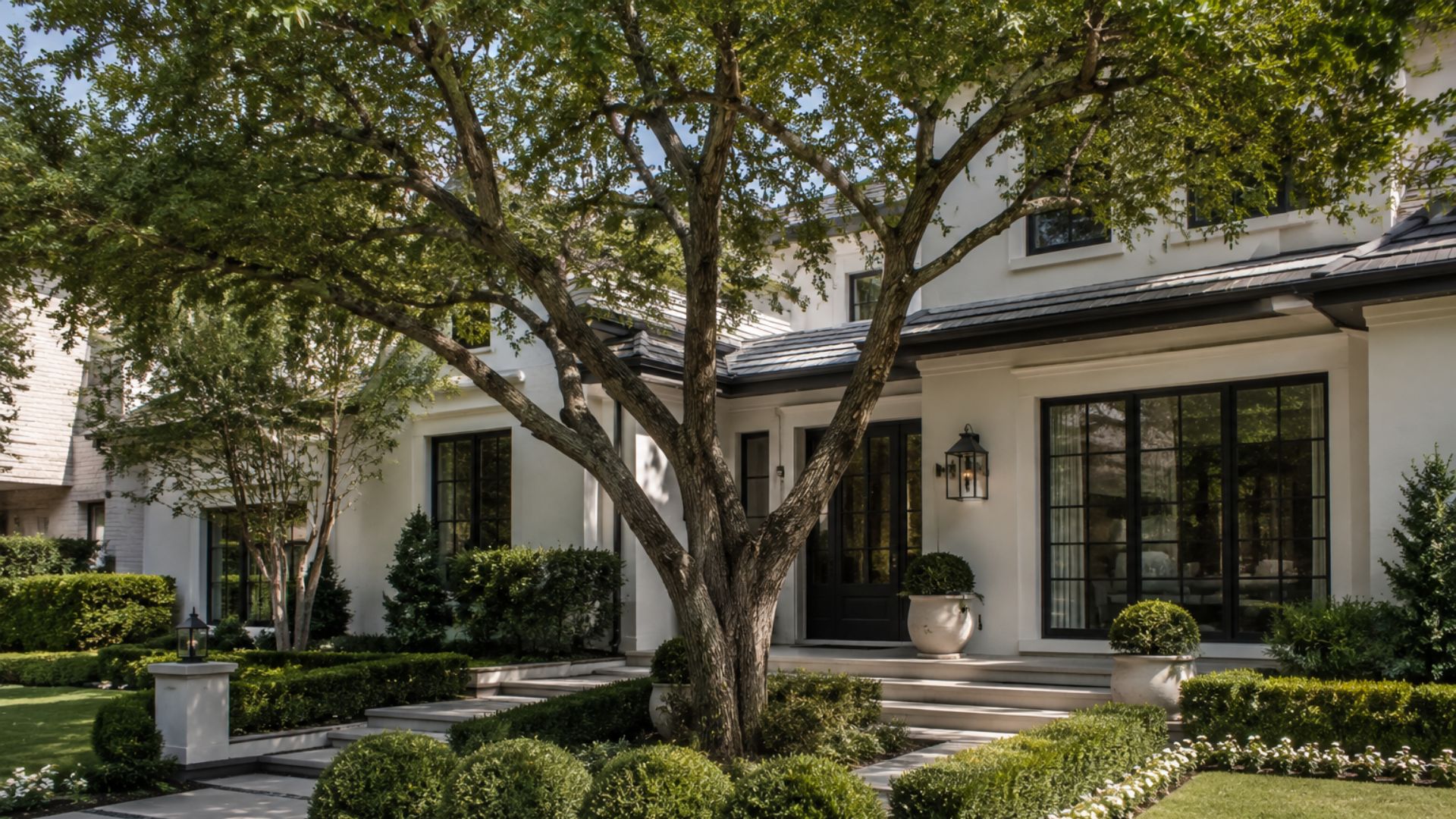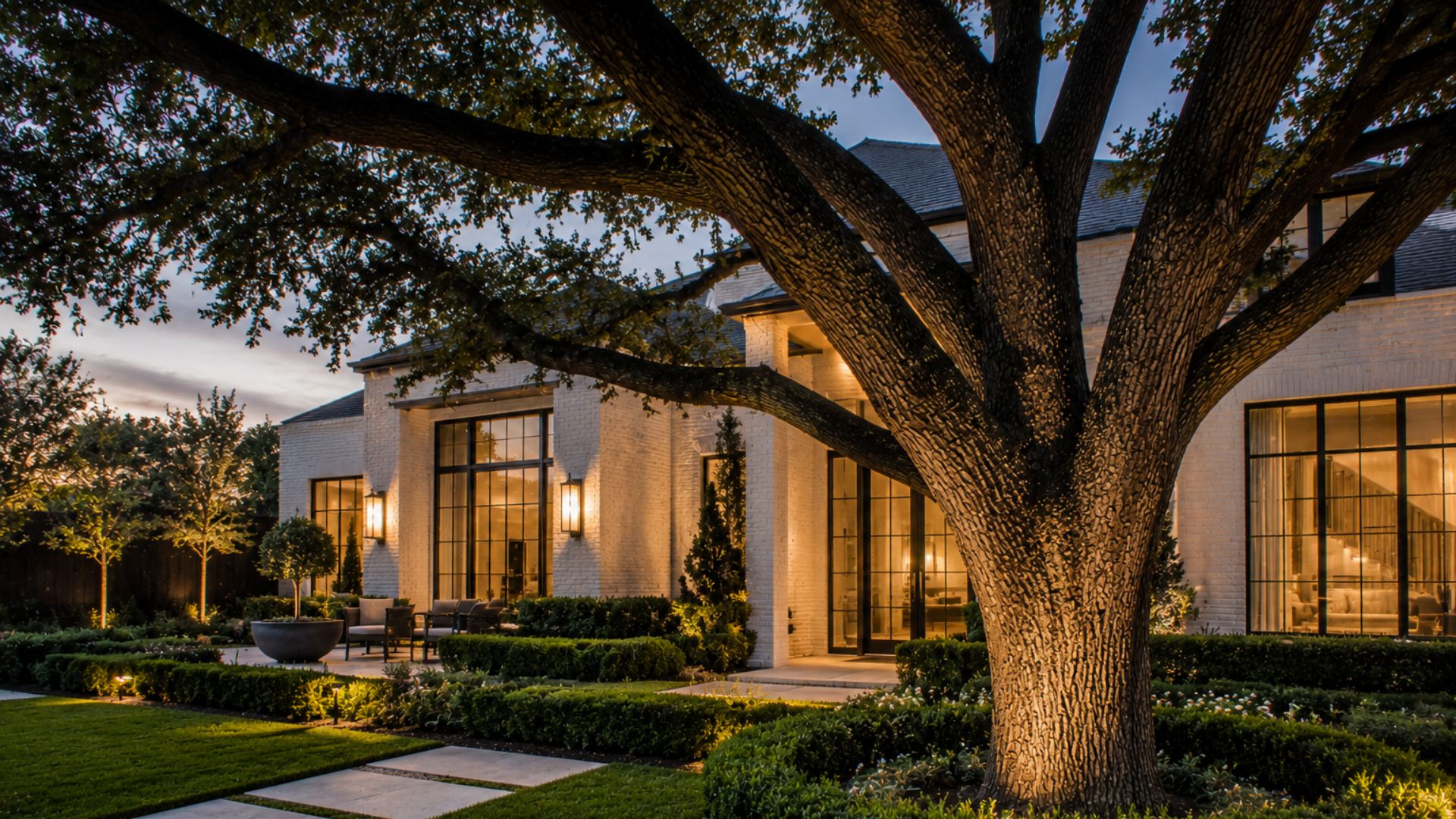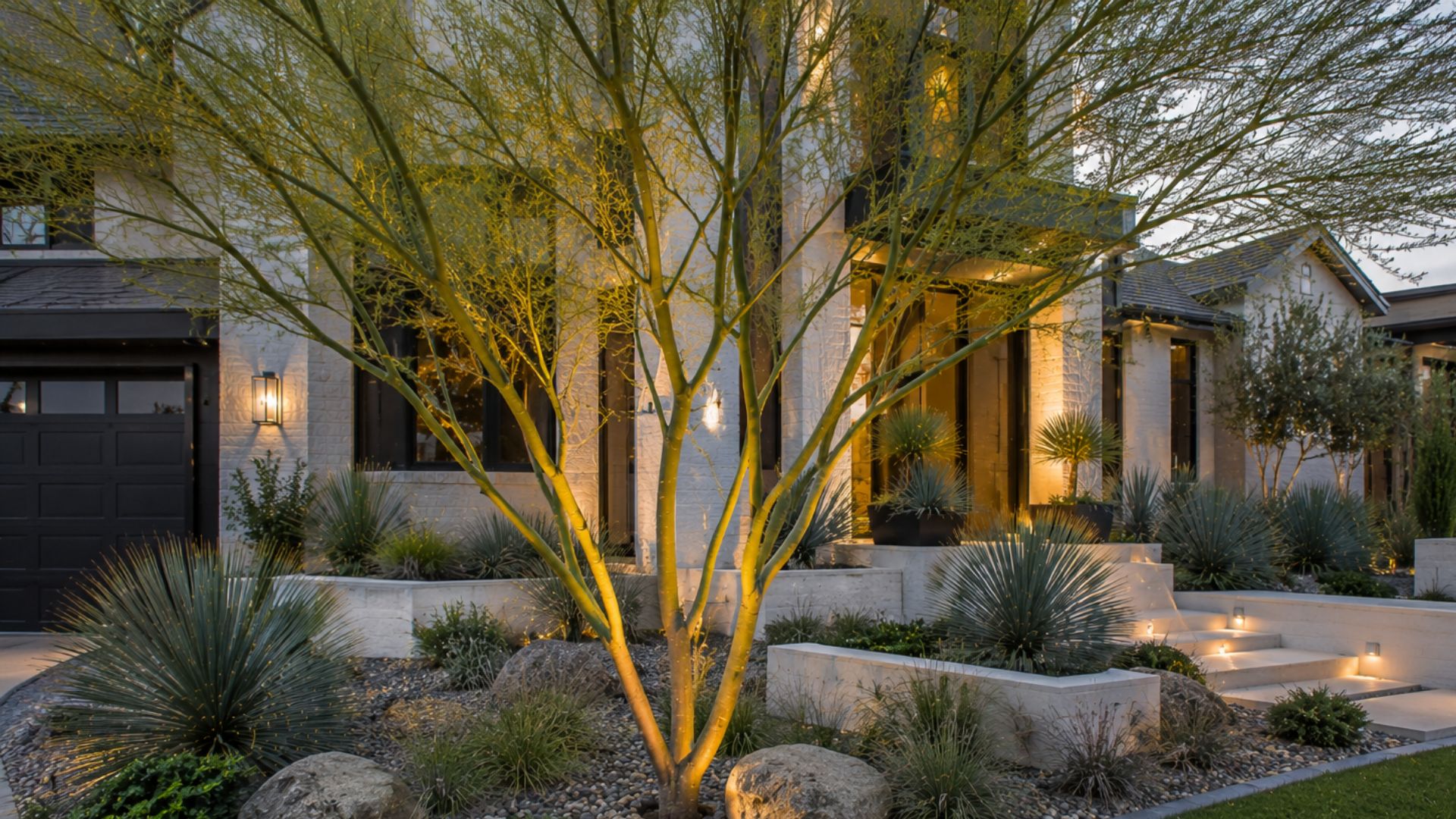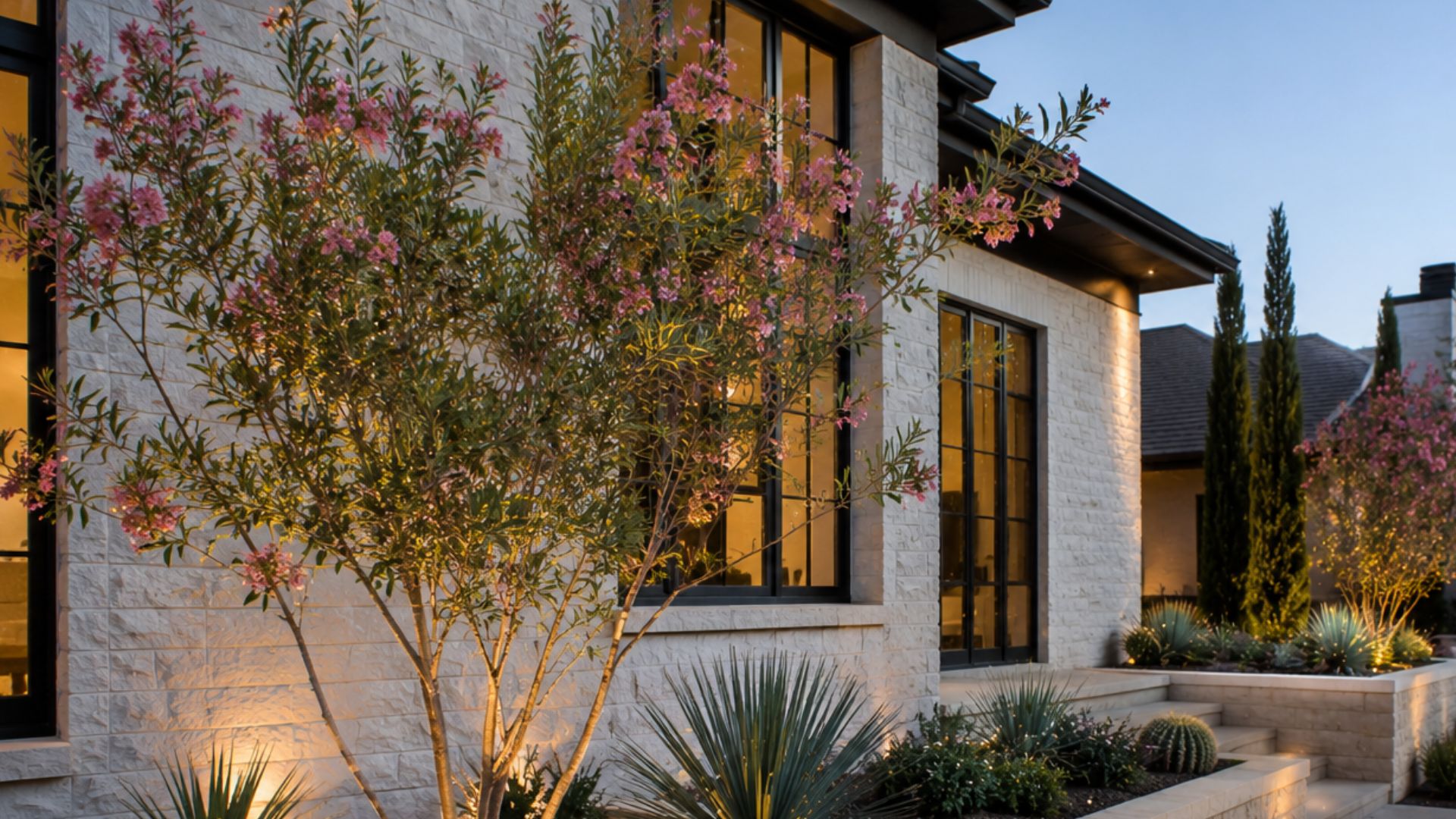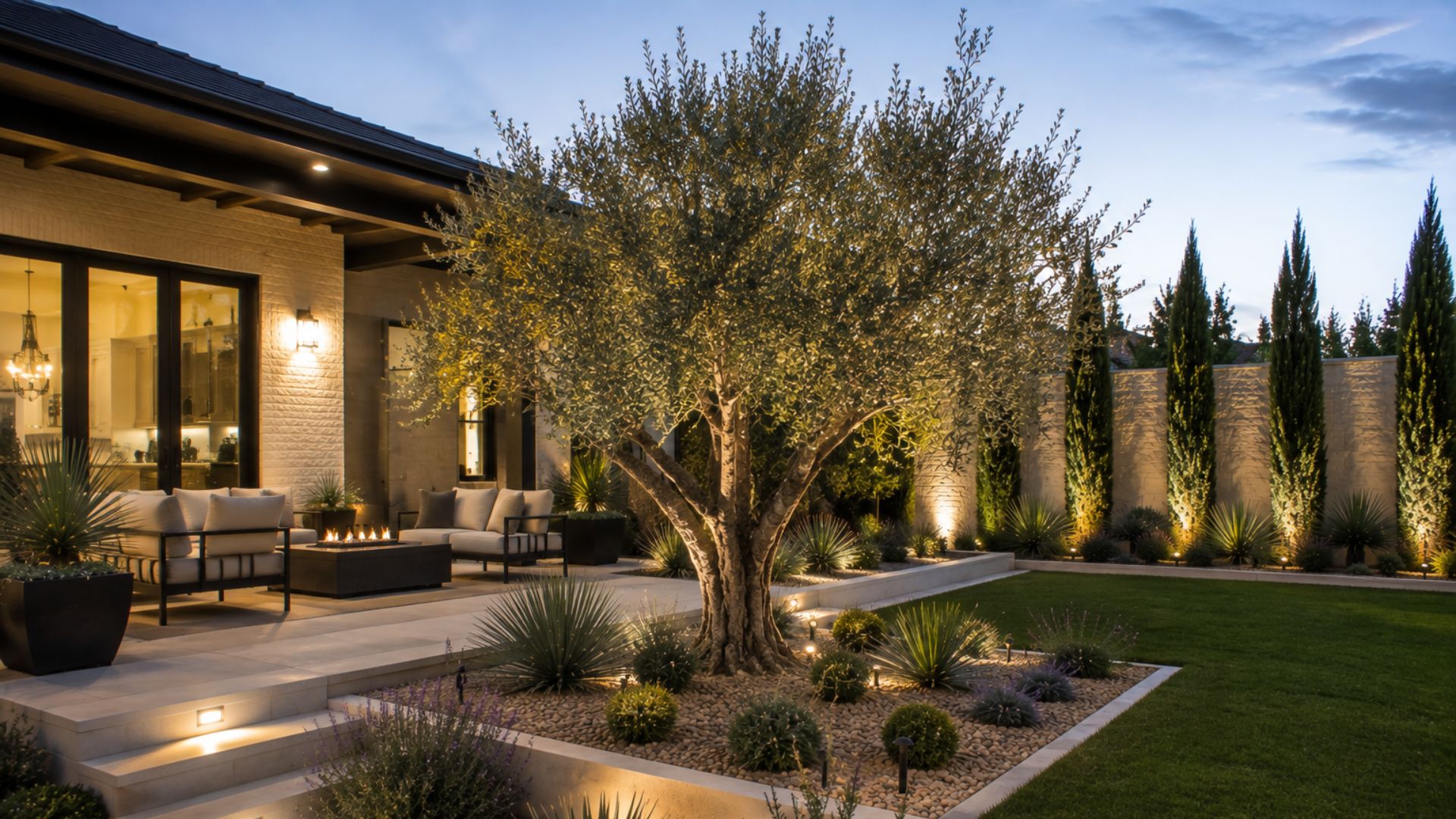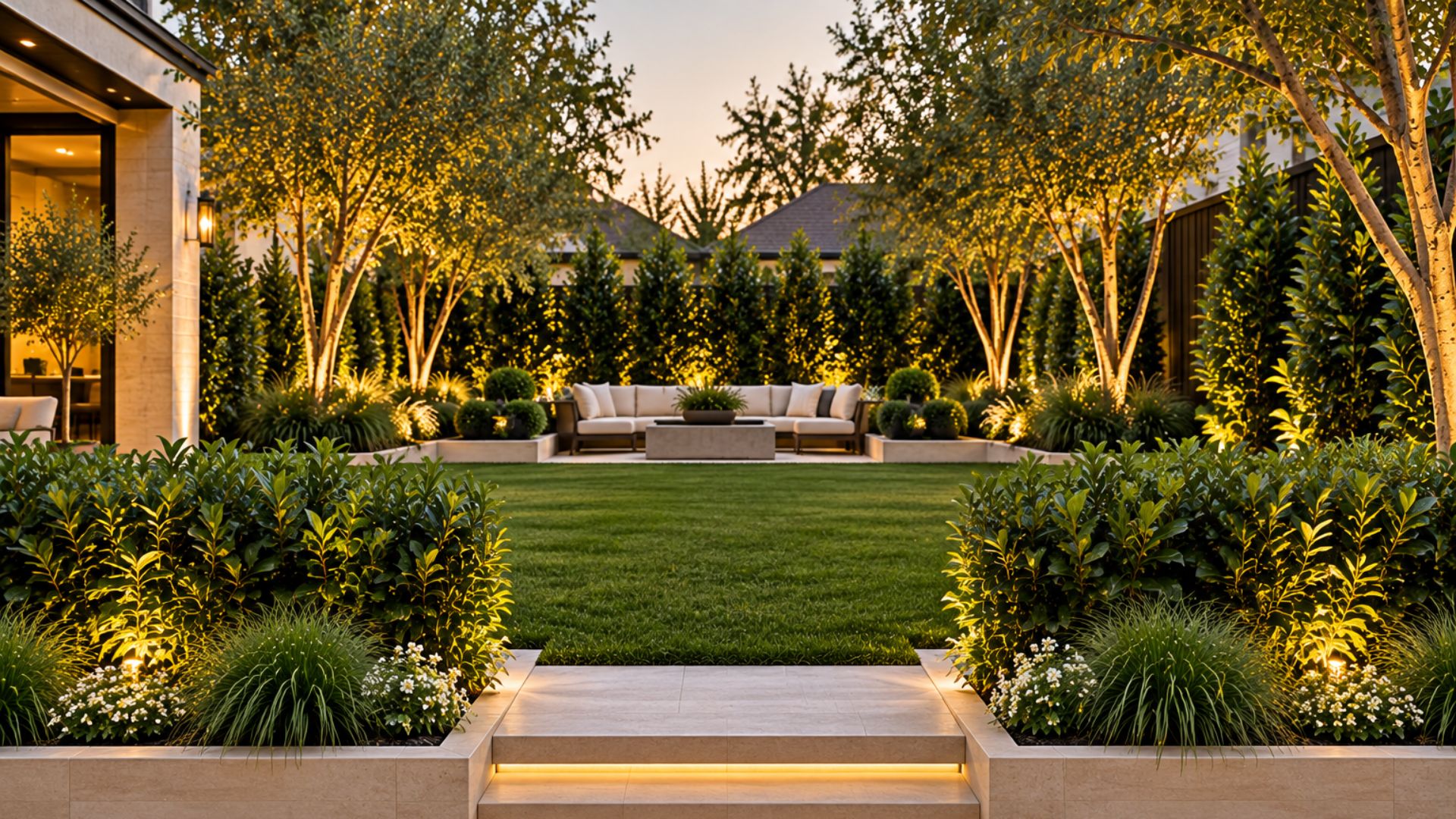
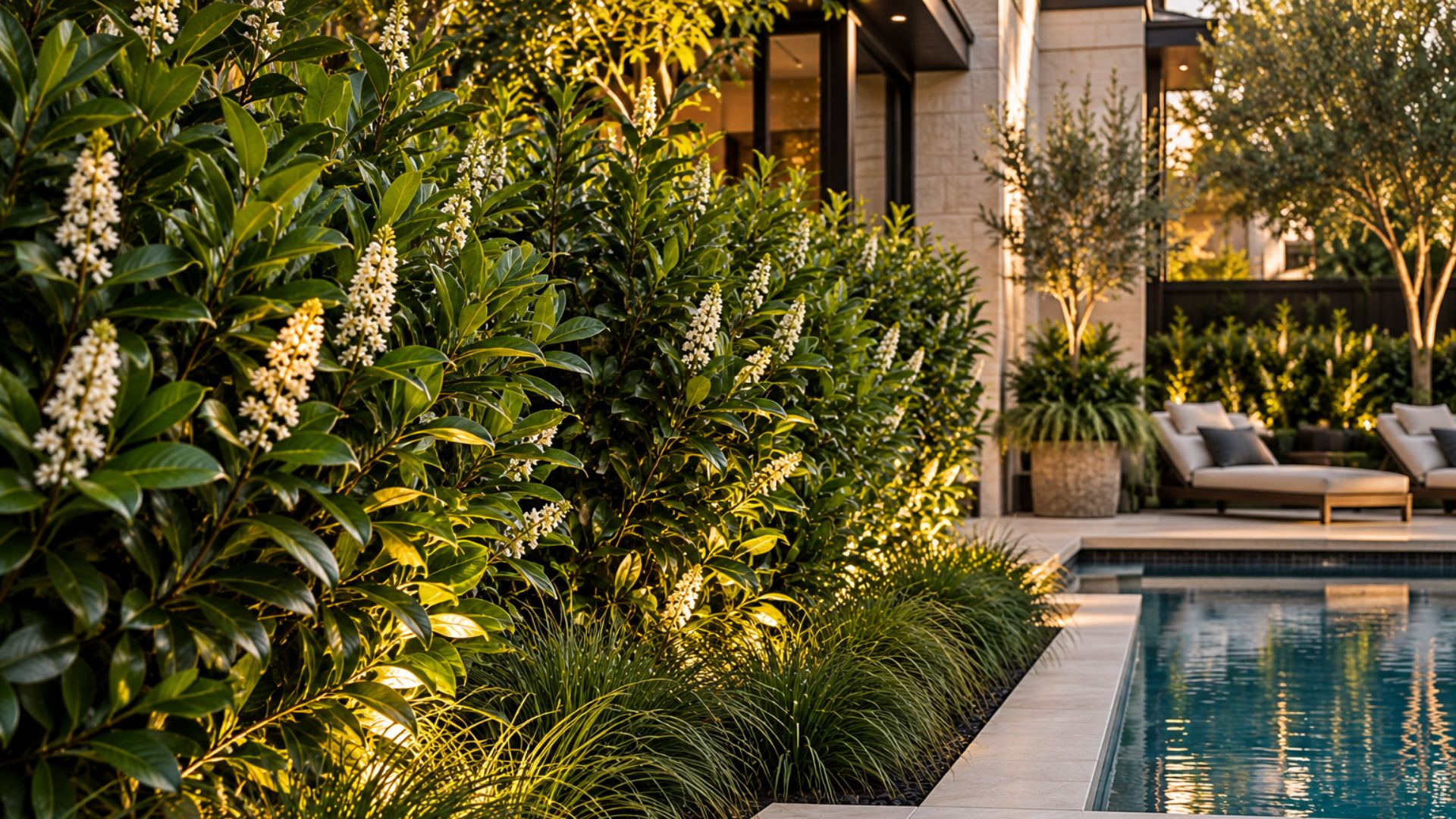
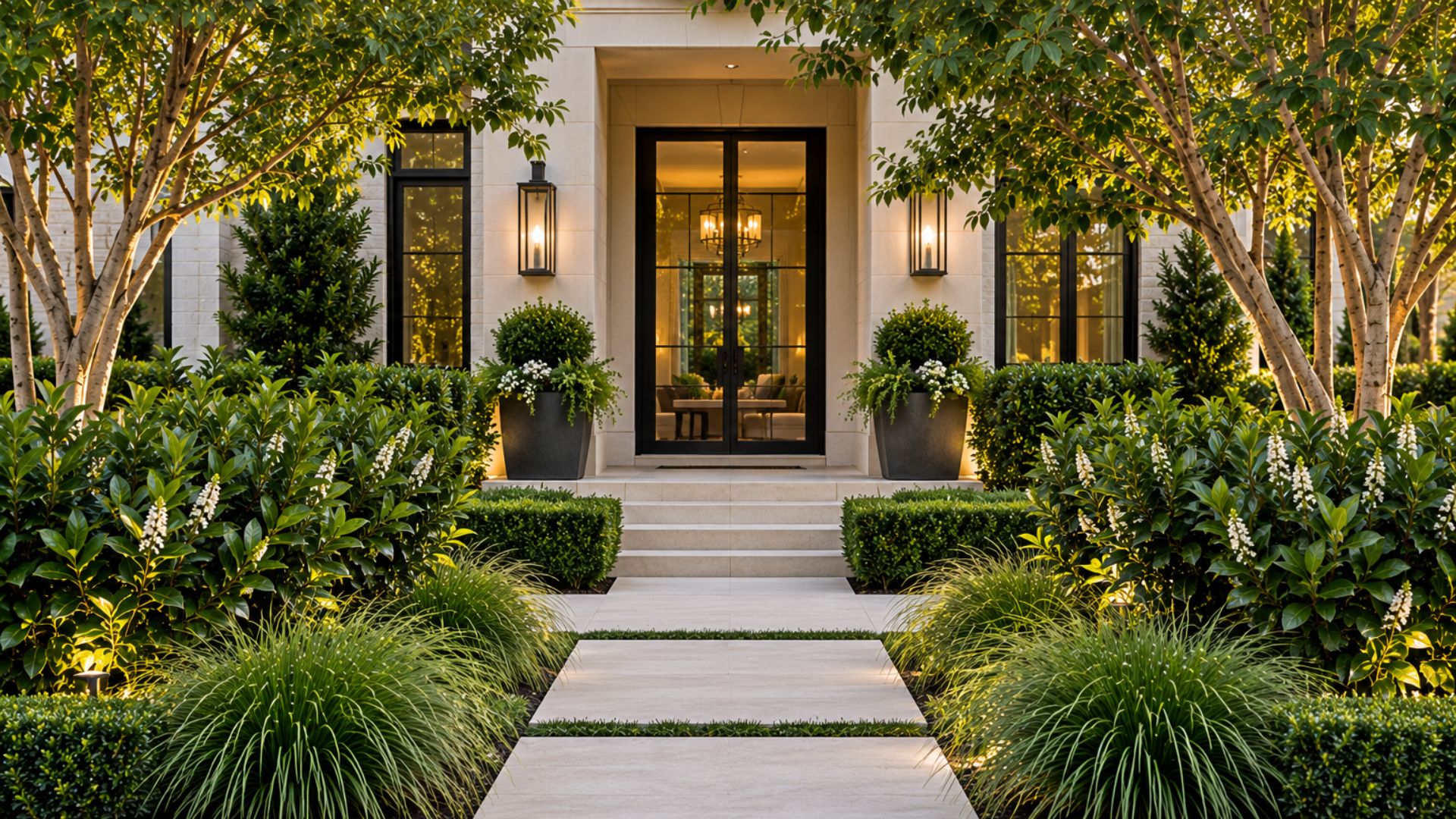
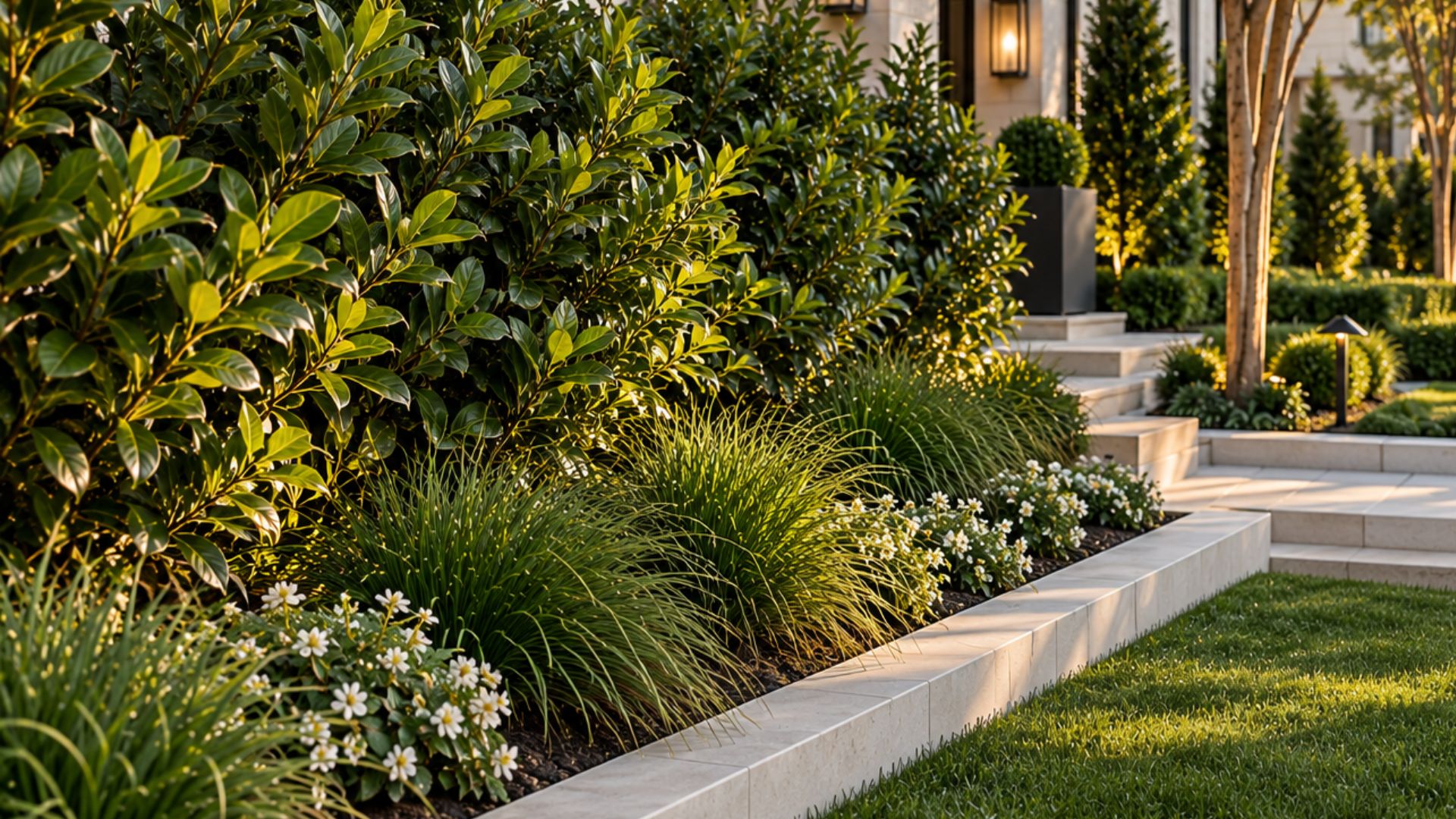


A lush evergreen shrub or small tree with glossy dark-green foliage, dense branching, and a naturally rounded canopy that creates a refined, resort-inspired atmosphere. Typically grows 15–25 feet tall and 10–20 feet wide, although pruning can maintain a smaller, more controlled shape. Hardy in USDA Zones 7–10, Cherry Laurel is well suited to North Texas landscapes and provides year-round greenery, privacy, and structure around pools, patios, and outdoor living spaces.
Cherry Laurel (Prunus caroliniana), also known as Carolina Cherry Laurel, is a versatile evergreen tree native to the southeastern United States. Its smooth, glossy leaves form a dense canopy that remains attractive throughout the year. Small clusters of fragrant white flowers appear in spring, followed by dark berries that provide seasonal interest and attract birds.
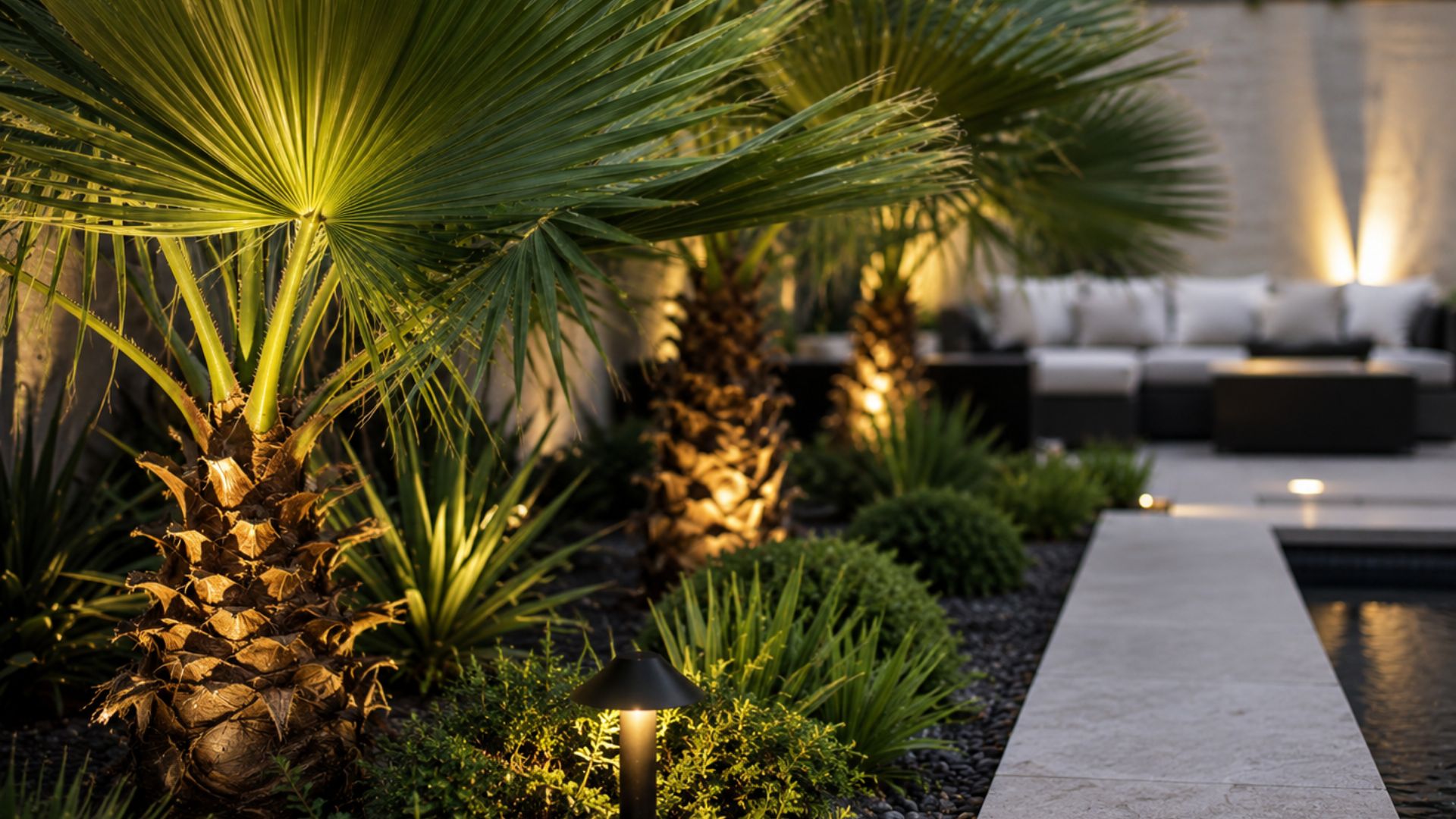
In a resort-style landscape, Cherry Laurel offers a softer alternative to traditional privacy hedges. Its naturally full canopy can create a secluded atmosphere around swimming pools, outdoor kitchens, and entertaining areas without requiring the rigid appearance of a formal screen. For Southlake landscapes, Cherry Laurel can be planted in rows to establish a lush evergreen backdrop or trained into a small ornamental tree to add height and elegance near patios and garden entrances.
Cherry Laurel performs best in full sun to partial shade and adapts to a variety of soil conditions, including the clay soils commonly found throughout North Texas. Good drainage remains important, particularly during periods of heavy rainfall.
Newly planted Cherry Laurels benefit from regular deep watering while their root systems become established. Mature specimens develop moderate drought tolerance, although supplemental irrigation during prolonged summer heat helps maintain healthy, attractive foliage.
Pruning can be tailored to the landscape design. For a natural resort-style appearance, selective trimming allows the plant to maintain its rounded canopy. When used as a privacy hedge, more frequent shaping can create a consistent evergreen screen. In Plano backyards, Cherry Laurel is especially useful where homeowners want to soften property boundaries while preserving a clean, sophisticated landscape.
Cherry Laurel is generally dependable, but poor drainage and excessive watering can contribute to root problems. Proper planting depth and allowing the soil to dry slightly between irrigation cycles help prevent unnecessary stress.
Scale insects, leaf spot, and other common landscape pests or diseases can occasionally affect the foliage. Maintaining good airflow and avoiding excessive overhead irrigation can reduce the likelihood of fungal problems.
Another consideration is fruit production. The small dark berries may drop onto surrounding surfaces and attract birds, making placement important near pool decks and patios.
Cherry Laurel leaves, stems, and seeds contain toxic compounds if ingested, so homeowners should consider placement carefully in areas frequently used by pets or young children.
You might also like