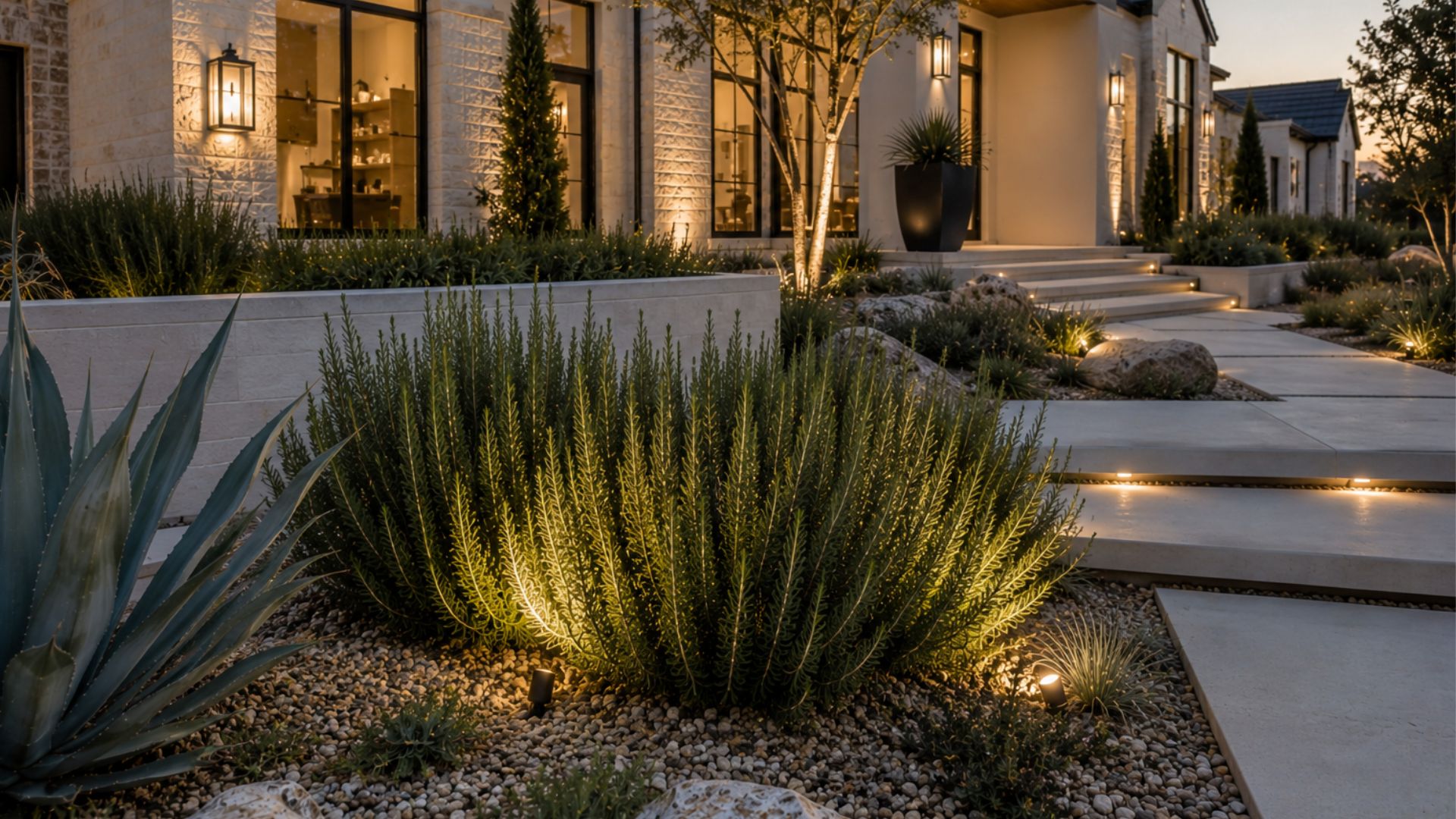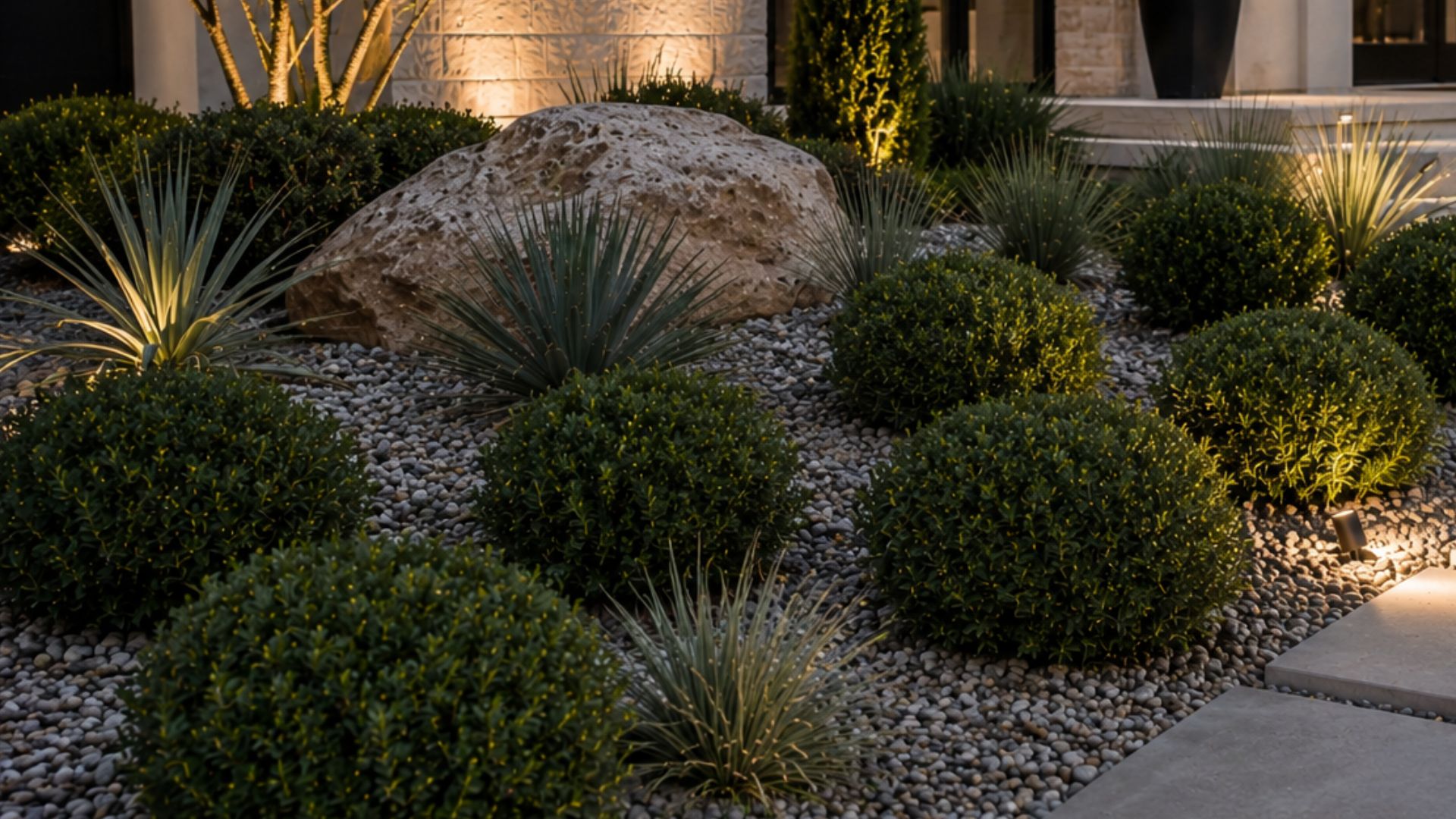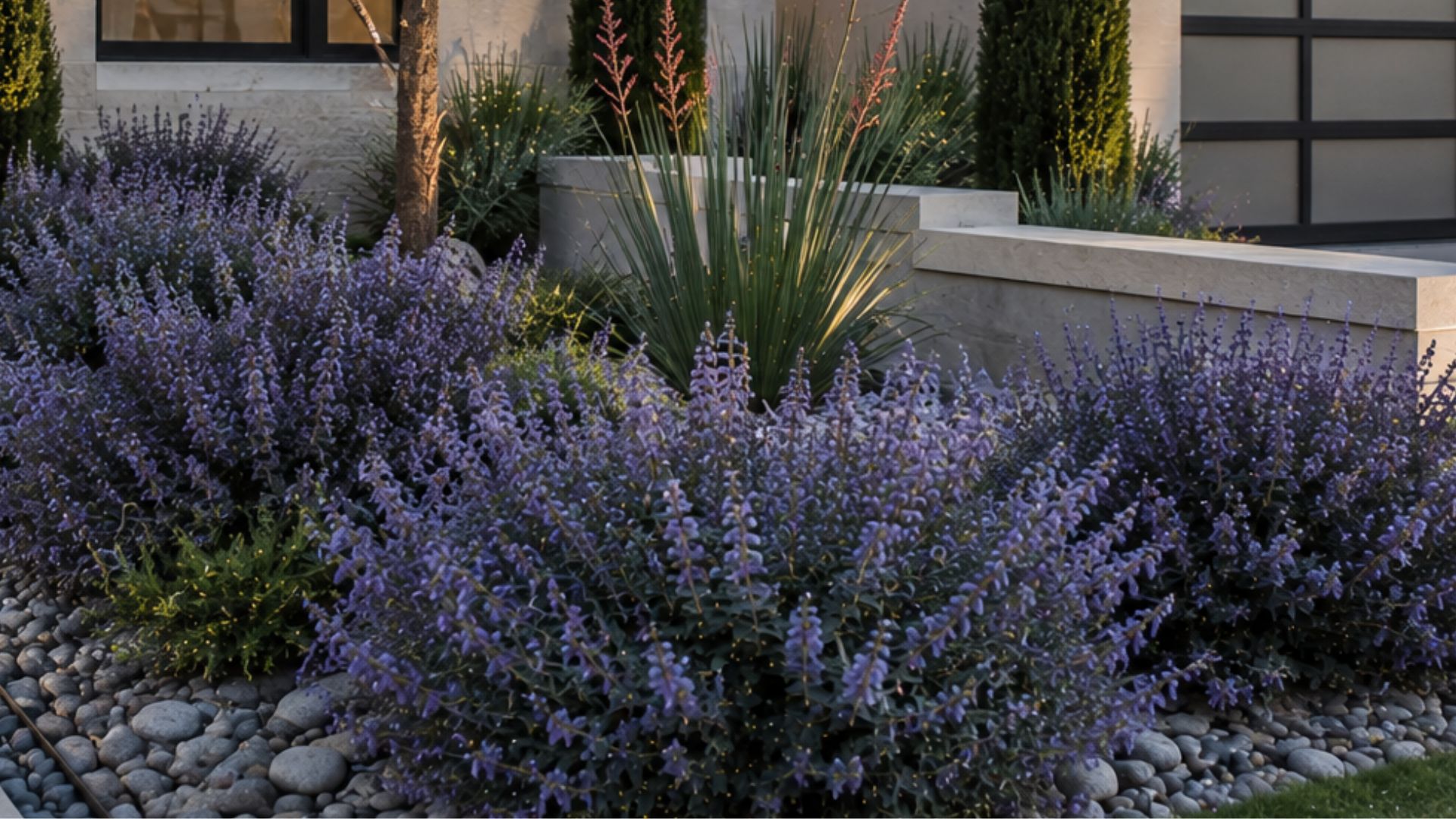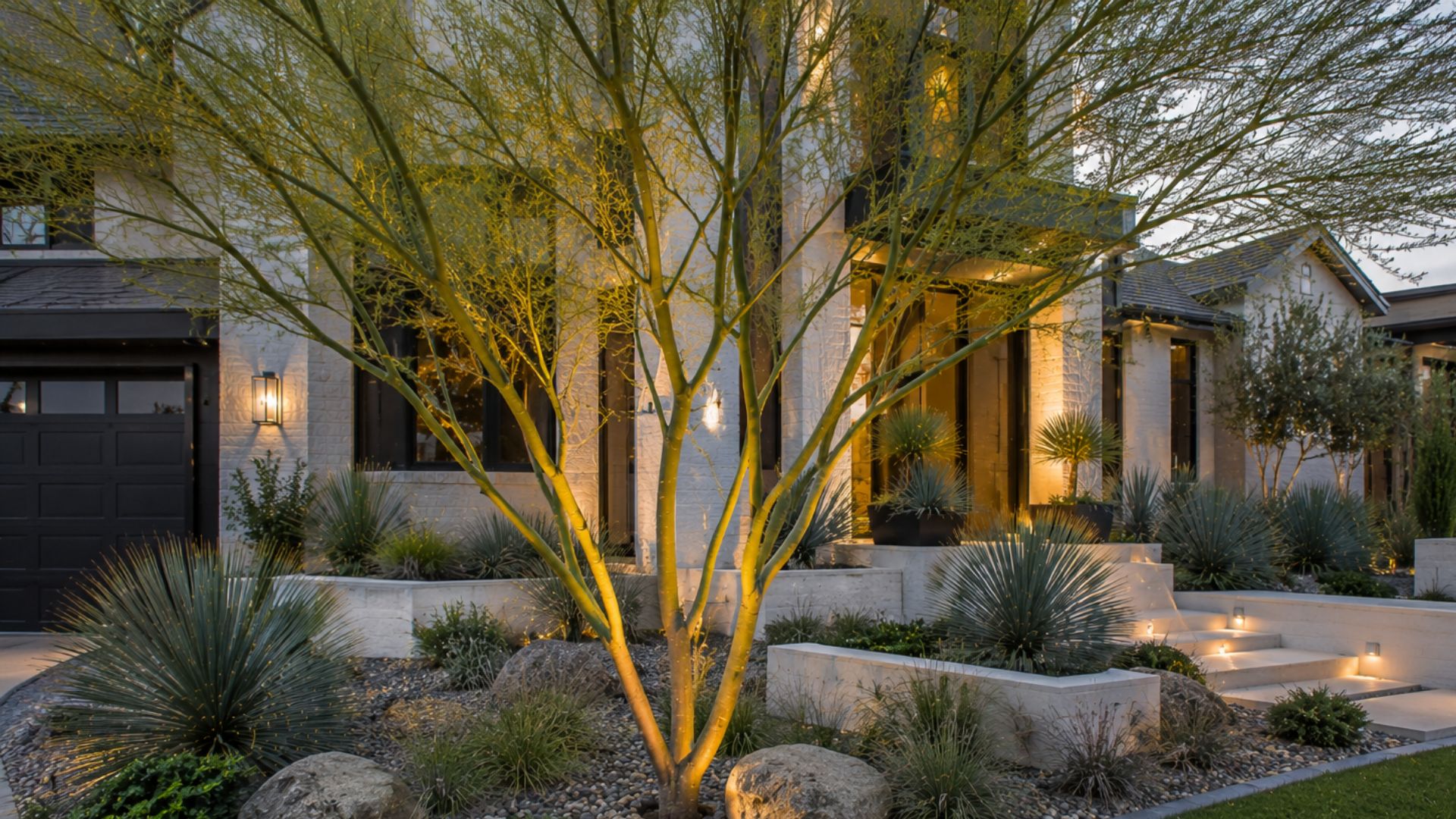


Olive Tree
A sophisticated evergreen tree with silvery-green foliage, an airy canopy, and sculptural branching that becomes more distinctive with age. Typically grows 15–30 feet tall and 15–25 feet wide, depending on the variety and pruning style. Hardy in USDA Zones 8–10, Olive Trees bring the relaxed elegance of Mediterranean resorts to North Texas landscapes while offering excellent heat and drought tolerance.
Olive Tree
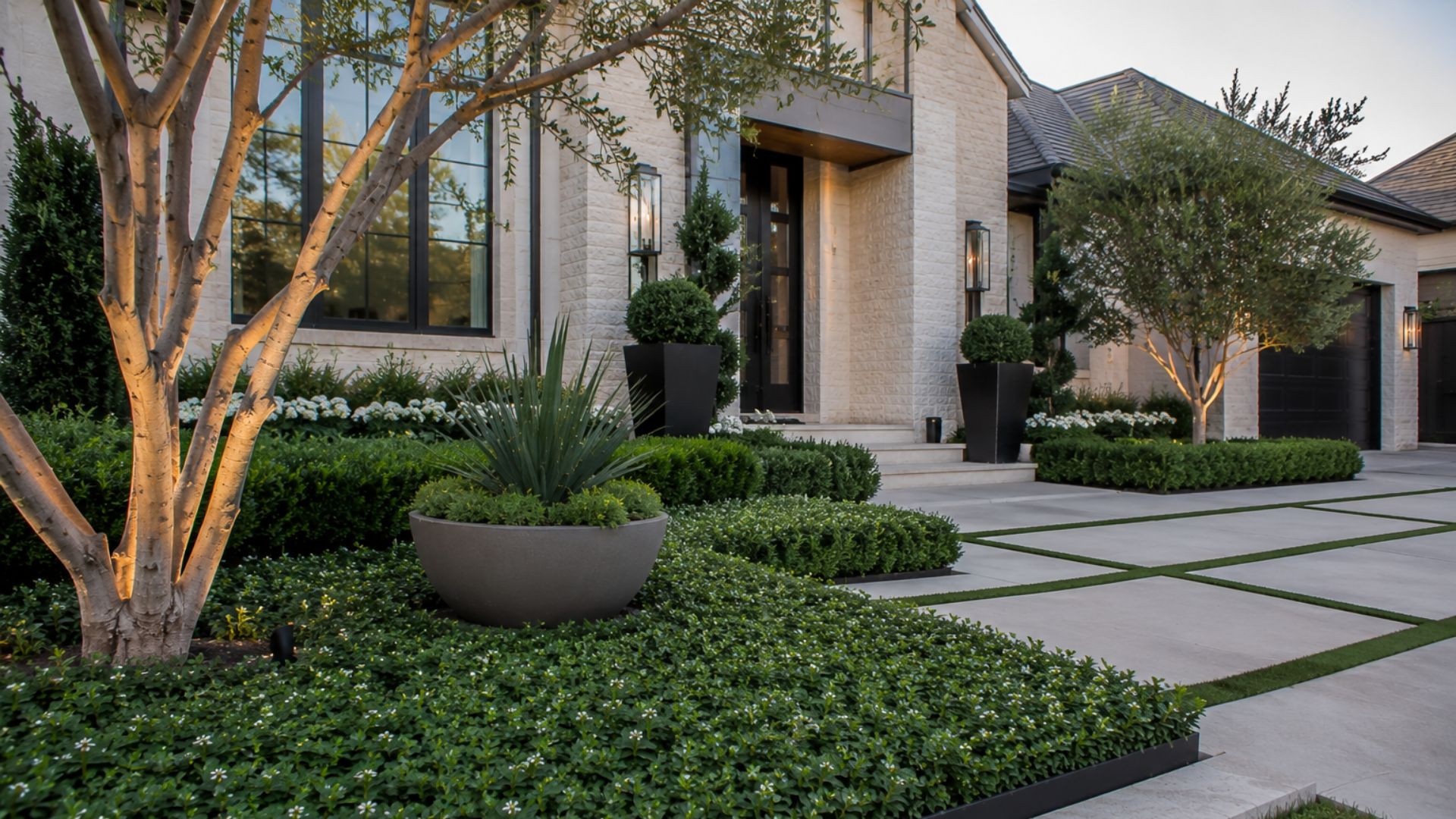
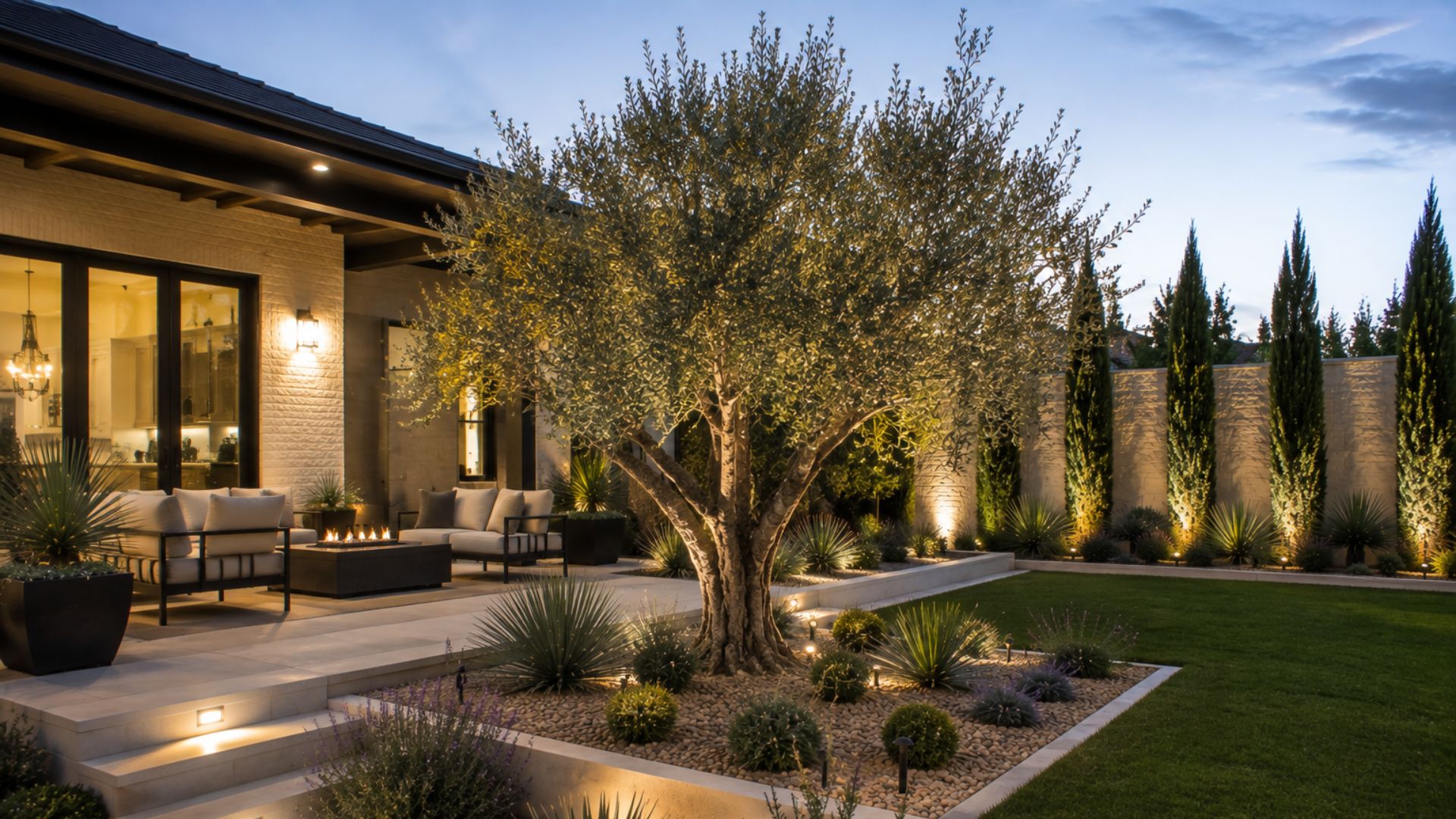
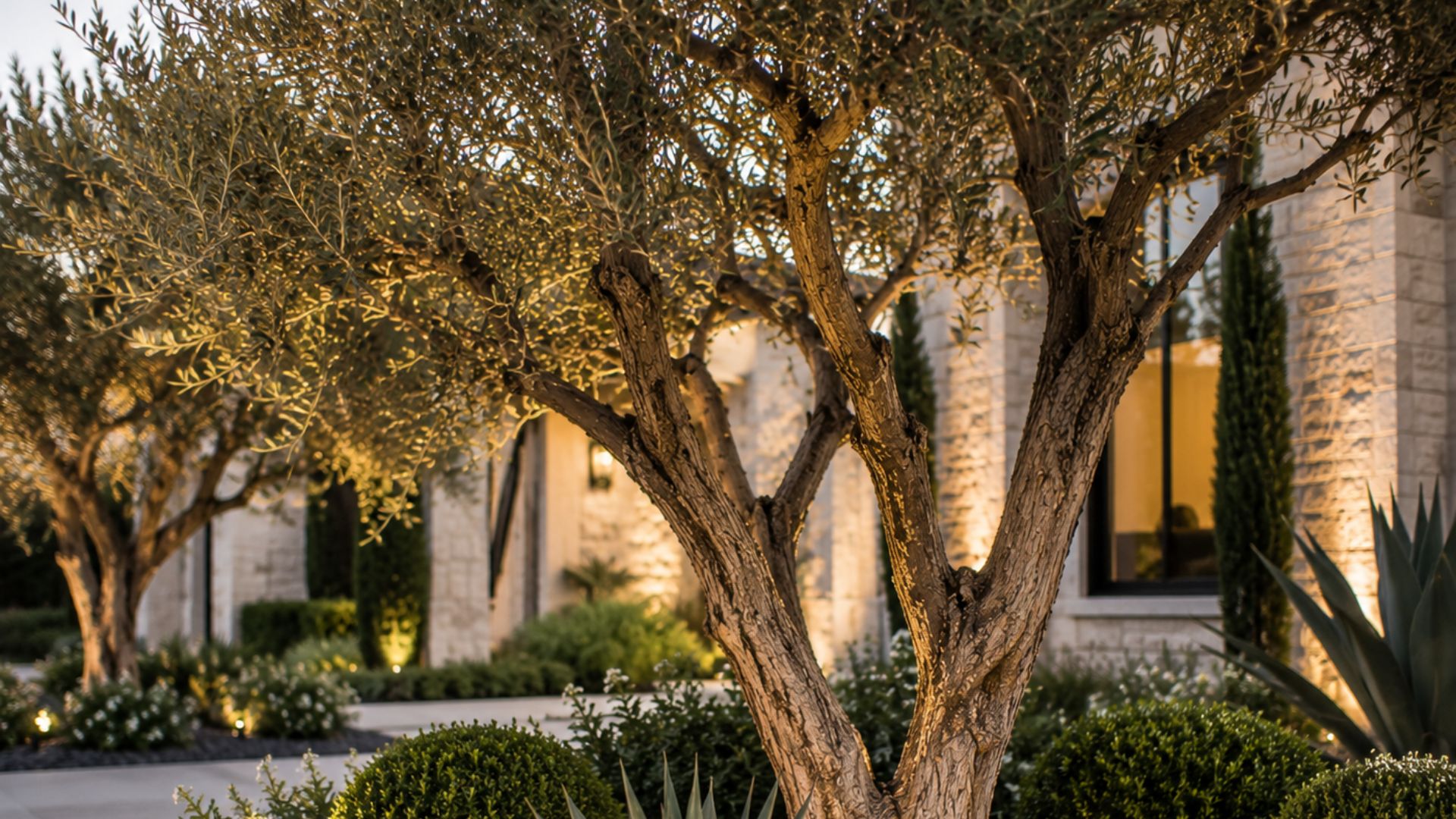
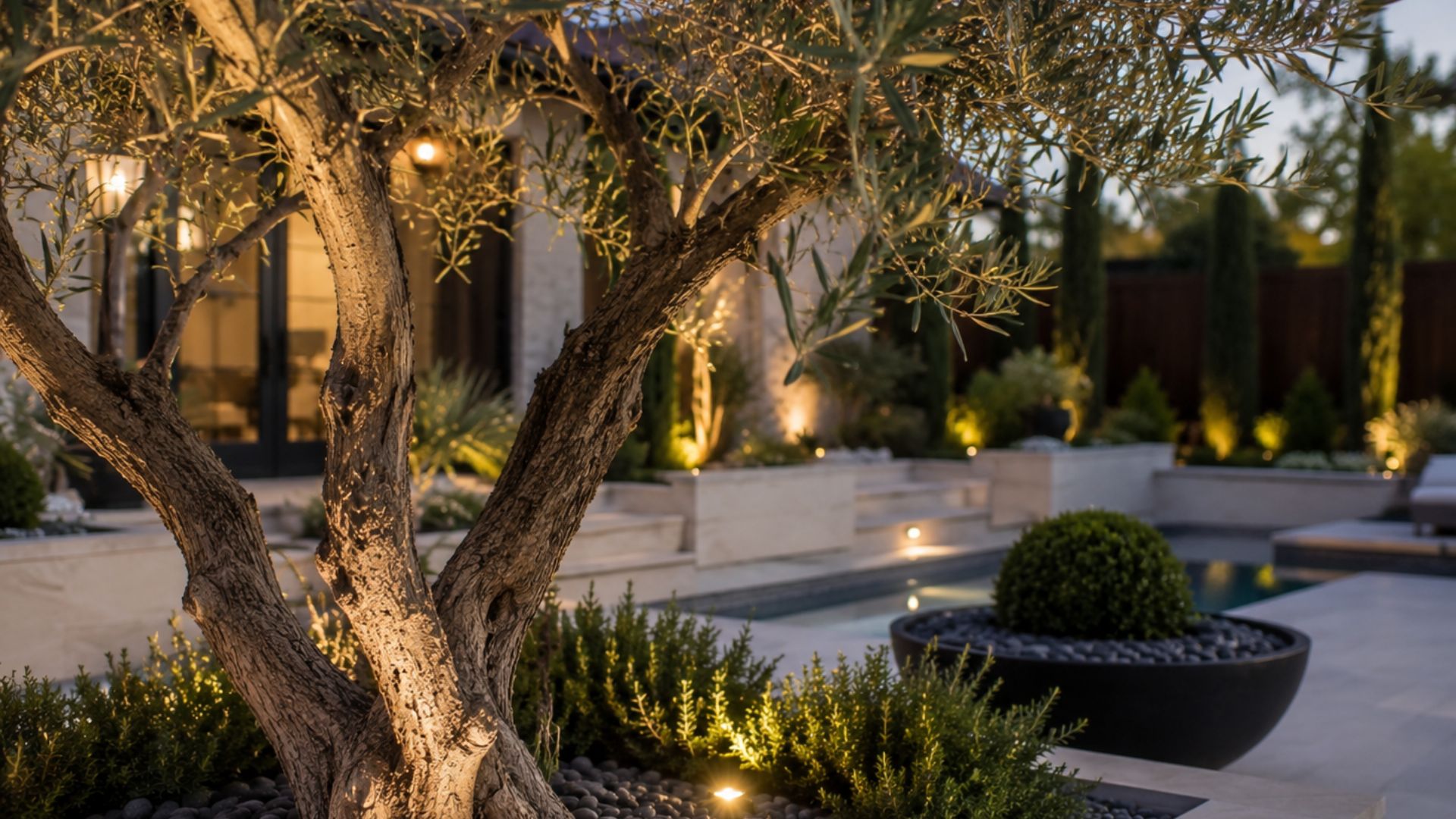
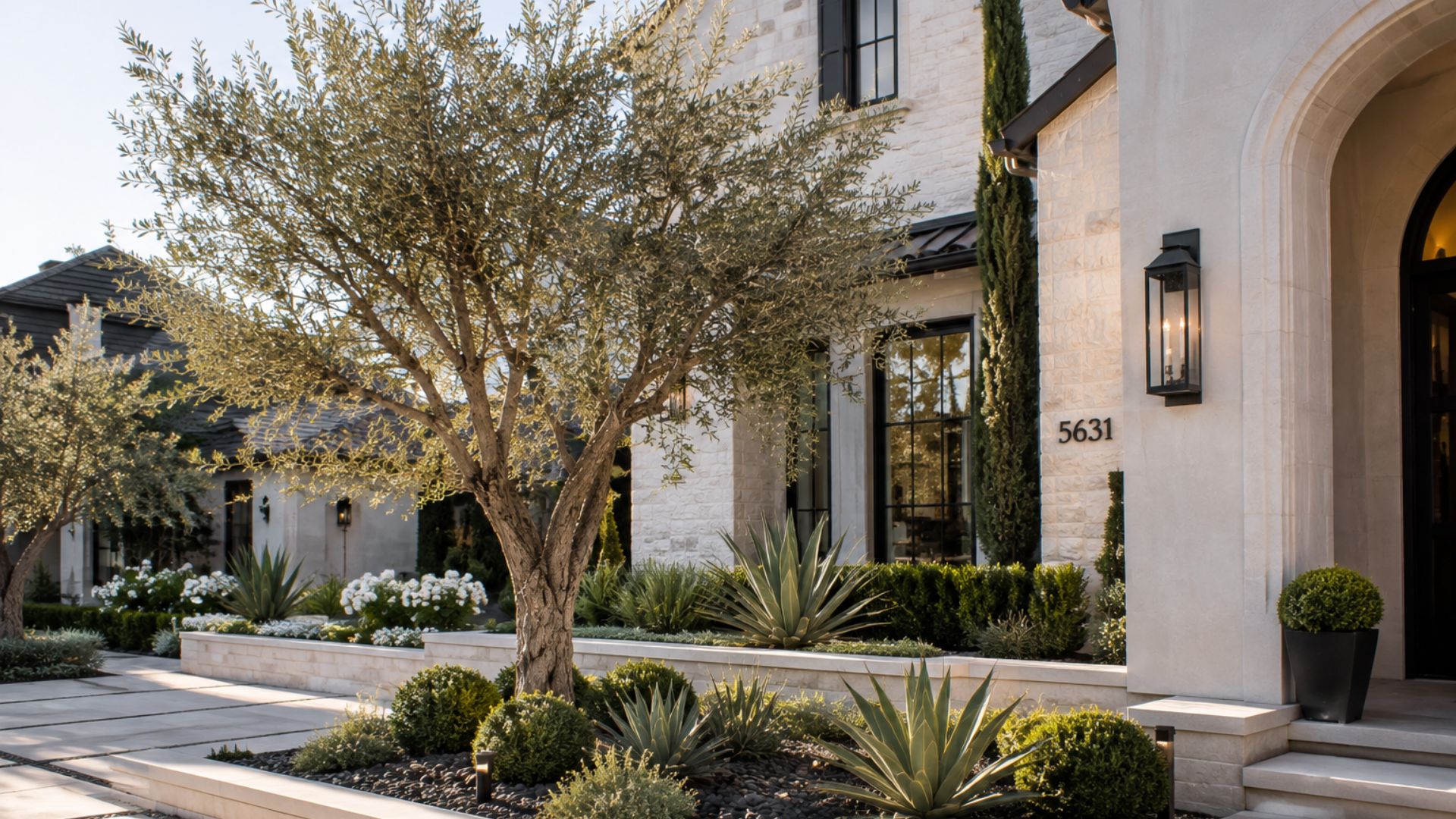
The Olive Tree (Olea europaea) brings a distinctly Mediterranean character to resort-style landscapes. Its narrow silver-green leaves catch the sunlight and create a soft contrast against darker greenery, while the trunk gradually develops the textured, weathered appearance that makes mature Olive Trees so desirable. The result is a tree that feels established and elegant rather than overly formal.
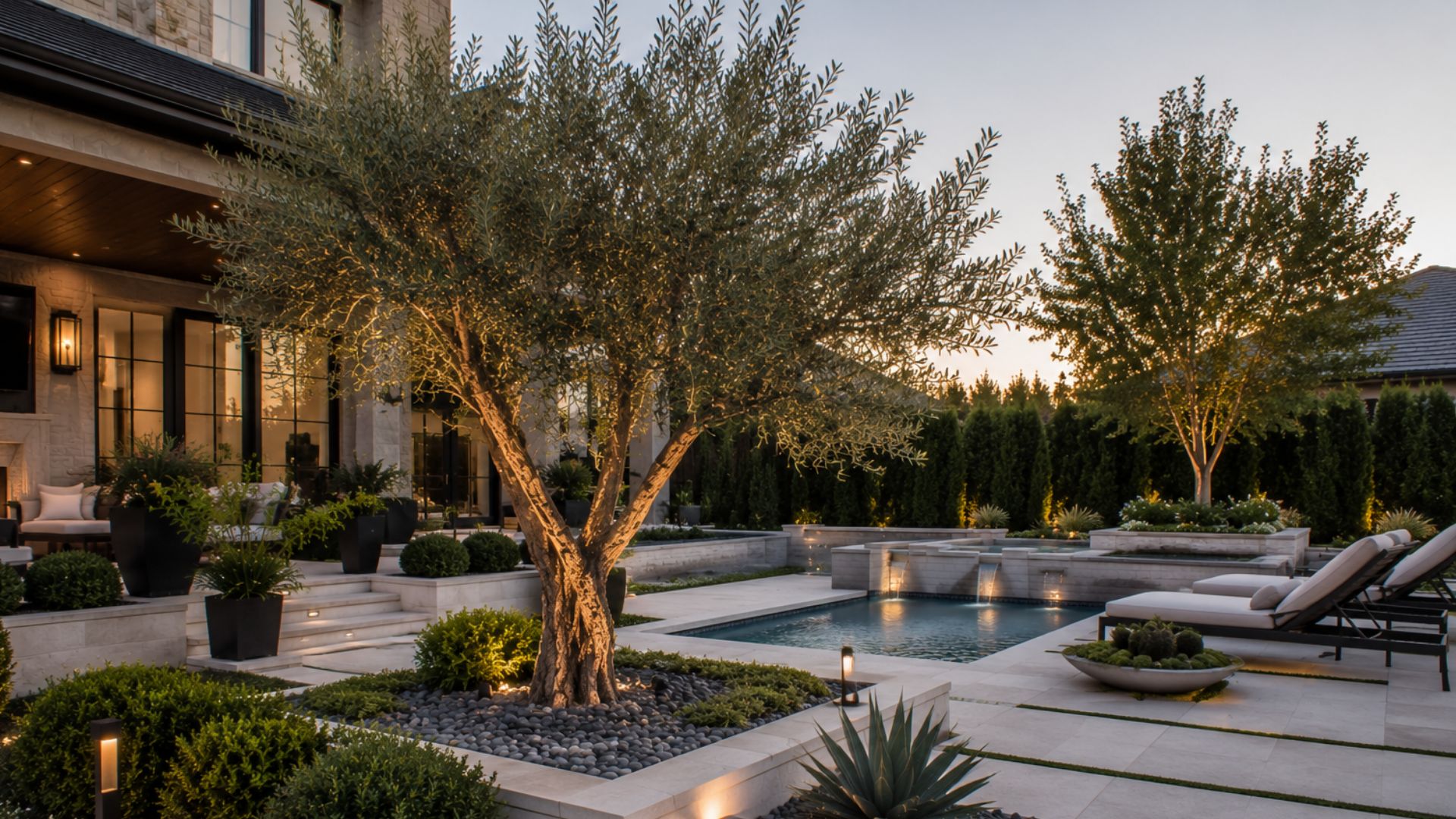
Around pools and outdoor living spaces, Olive Trees can create the atmosphere of a Mediterranean courtyard or luxury resort without making the landscape feel tropical. Their open canopy allows light to filter through while providing enough height and structure to anchor surrounding plantings. For Southlake homes, an Olive Tree can become a beautiful focal point beside a pool, outdoor kitchen, courtyard, or modern patio where its distinctive form can be appreciated from multiple angles.
Olive Trees perform best in full sun, ideally receiving at least six to eight hours of direct sunlight each day. Excellent drainage is particularly important, as these trees naturally prefer dry Mediterranean conditions and do not perform well when their roots remain consistently wet.
During the establishment period, regular deep watering encourages healthy root development. Mature trees become highly drought tolerant and generally need only occasional supplemental irrigation during prolonged North Texas dry spells.
Light pruning can be used to open the canopy and highlight the tree's natural branching structure. This is especially effective in Plano resort-style landscapes, where Olive Trees are often selected as architectural specimens rather than traditional shade trees.
The biggest challenge for Olive Trees in North Texas is the combination of heavy clay soil and winter cold. Poor drainage can contribute to root problems, so raised planting areas or properly amended soil may be beneficial depending on the site.
Extreme freezes can also damage branches, particularly on younger or less cold-hardy varieties. Choosing an appropriate cultivar and a protected location can improve long-term performance in the DFW climate.
Fruit production is another consideration around patios and pools. Traditional Olive Trees may drop fruit that can stain hardscape or require cleanup. For resort-style residential landscapes, fruitless Olive Tree cultivars are often preferred because they provide the same distinctive foliage and sculptural appearance with significantly less mess
Yes. Olive Trees are particularly attractive around pools because their silvery foliage and sculptural trunks create a sophisticated Mediterranean resort aesthetic. Fruitless varieties are generally preferable near pool decks and patios because they minimize fallen fruit and cleanup.
Yes, certain varieties can perform well in North Texas when planted in full sun with excellent drainage. However, unusually severe freezes can cause damage, so cultivar selection and placement are important when incorporating Olive Trees into a permanent landscape design.
Olive Trees work beautifully with layered evergreen foliage, ornamental grasses, flowering perennials, and architectural plants. Around a Southlake outdoor living space, combining their silver foliage with clean stonework, textured greenery, and softer plantings can create the relaxed, upscale atmosphere associated with Mediterranean resorts.
You might also like