





Trailing Rosemary
A fragrant, evergreen shrub with graceful trailing stems that spill beautifully over retaining walls, raised planters, and containers. Typically grows 1–2 feet tall and spreads 4–8 feet wide, providing year-round texture, aromatic foliage, and seasonal blue flowers. Hardy in USDA Zones 8–10, Trailing Rosemary thrives in the hot, dry conditions of North Texas, making it an excellent choice for desert-style, Mediterranean, and water-wise landscapes in Plano, Southlake, and throughout the DFW area
Trailing Rosemary
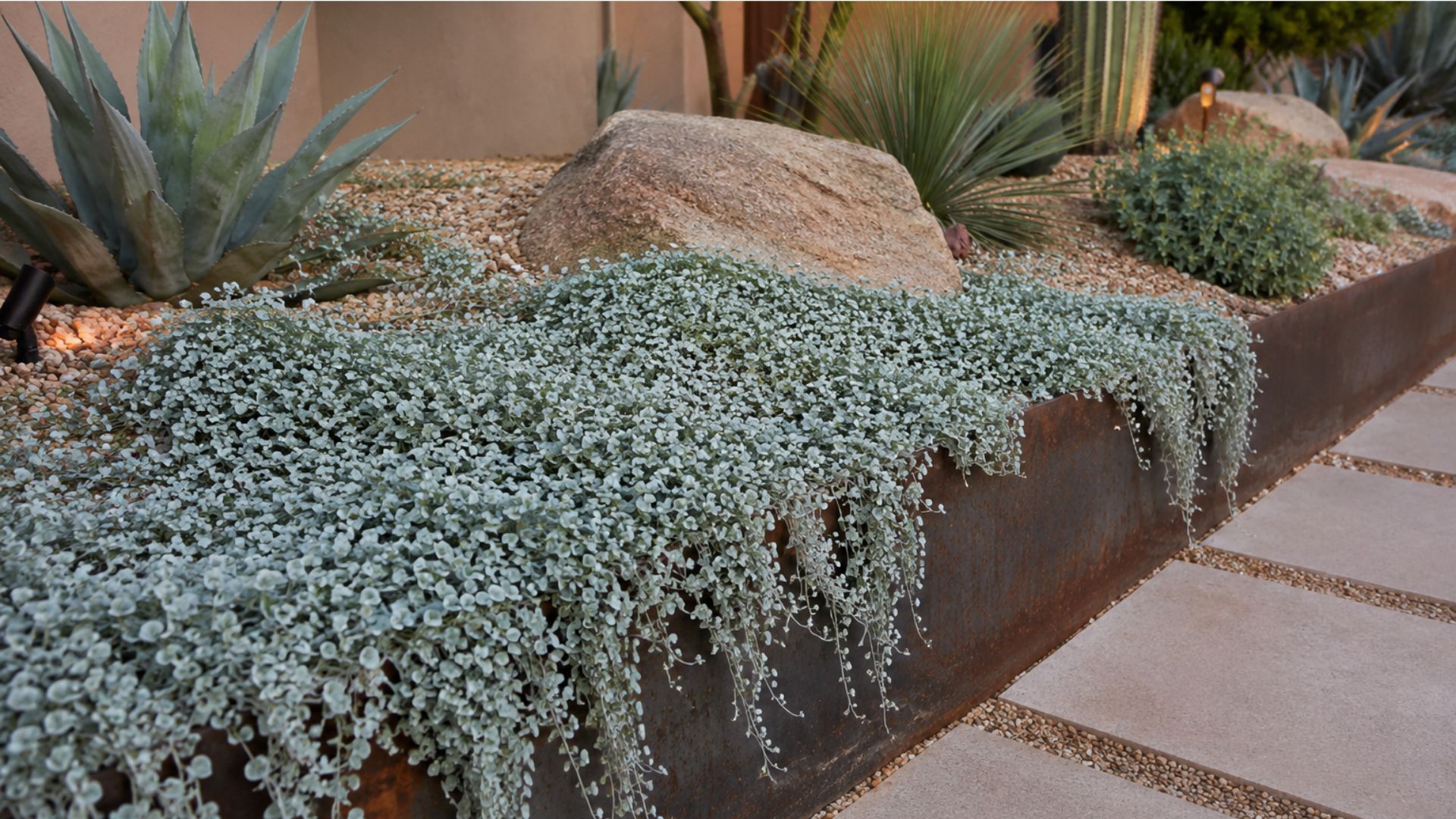
Trailing Rosemary (Salvia rosmarinus 'Prostratus') is a low-growing, cascading evergreen shrub prized for its fragrant foliage, drought tolerance, and graceful spreading habit. Unlike upright rosemary varieties, it naturally drapes over retaining walls, raised planters, stone borders, and containers, making it an excellent choice for adding texture and movement to the landscape. Its aromatic blue-green foliage remains attractive year-round, while clusters of soft blue flowers appear from late winter through spring and may continue blooming intermittently throughout the year in mild climates.
Because of its ability to thrive in hot, dry conditions, Trailing Rosemary is a favorite for desert-style landscapes, Mediterranean gardens, and modern xeriscapes throughout Plano, Southlake, and the greater DFW area. It pairs beautifully with boulders, decomposed granite, limestone, ornamental grasses, agaves, and Texas-native plants, creating a refined, low-maintenance landscape that performs exceptionally well in North Texas.
Trailing Rosemary performs best in full sun, requiring at least six hours of direct sunlight each day to maintain dense foliage and abundant flowering. Well-draining soil is essential, as overly wet conditions can lead to root problems. Once established, it requires very little supplemental irrigation and is highly tolerant of drought, making it an ideal choice for water-wise landscapes in North Texas.
Minimal maintenance is needed beyond occasional pruning to maintain its shape and encourage fresh growth. Avoid excessive fertilization, as overly rich soil can reduce flowering and create weak, leggy growth. When properly planted in sunny locations with good drainage, Trailing Rosemary remains an attractive, evergreen groundcover that provides year-round interest for homeowners in Plano, Southlake, and surrounding communities.
The most common problem affecting Trailing Rosemary is poor drainage. Heavy clay soils or excessive irrigation can lead to root rot, particularly during prolonged periods of wet weather. Planting on slopes, raised beds, or amended soils greatly improves long-term success.
Insufficient sunlight may cause sparse foliage, fewer blooms, and elongated stems. While generally resistant to pests, occasional spider mites or aphids can appear during extended hot, dry conditions. Good air circulation, proper watering practices, and routine inspections help keep plants healthy. In North Texas, protecting young plants during unusually severe winter freezes can help prevent cold damage, although established plants typically recover well.
Yes. Trailing Rosemary is an edible variety of rosemary, and its fragrant leaves can be used to season meats, vegetables, breads, sauces, and other dishes. For the best flavor, harvest tender sprigs and use them fresh or dried.
Yes. Once established, Trailing Rosemary is highly drought tolerant and performs beautifully in low-water landscapes. It prefers full sun and well-draining soil, making it an excellent choice for desert-style gardens, raised planters, and rocky slopes.
Trailing Rosemary is considered deer resistant. Its strongly scented foliage is generally unappealing to deer, although no landscape plant is completely deer-proof when food is limited.
You might also like