
Xeriscape Plano Front Yard Design
A xeriscape front yard is not just a rock bed. It is a planned, water-wise landscape that uses shape, texture, mulch, hardscape, and climate-fit xeriscape plants. The goal is simple: better curb appeal with less watering and less work.
What makes a xeriscape front yard look good?
A xeriscape front yard looks best when it feels like a garden, not an empty space.
Strong xeriscape landscape design starts with structure: clear walks, layered beds, focal points, and open space where the eye can rest.
Gravel, stone, and mulch can all look good, but they work best with live plants, mixed heights, and a simple plan.
Many people mix up xeriscaping with zeroscape landscaping, which often means mostly rock and very few plants. Real xeriscaping is different. It cuts water use while still giving you color, shade, seasonal change, and softness around the house.
Start with a clear front yard plan
Before you buy materials, sketch a basic xeriscaping drawing of your yard. Mark the driveway, front path, windows, utility boxes, slopes, sunny spots, shady corners, and any trees already in place.
The sketch does not need to be pretty. It only needs to help you make smart choices.
Good xeriscape front yard plans often split the yard into zones. The space near the front door may need more color and detail, while the outer edges can stay simple and low care.
If you are using xeriscape design templates or browsing xeriscaping examples, look for ideas that fit your yard size, slope, sun, and home style. Do not copy a plan that does not fit your climate.
A useful planning checklist includes:
- Main path: Make one clear route from the sidewalk or driveway to the front door.
- Focal point: Use a specimen plant, boulder, bench, large pot, or small tree to hold the eye.
- Planting zones: Group xeriscape plants by water need so watering is more efficient.
- Mulch strategy: Choose gravel, decomposed granite, bark, or other mulch based on heat, drainage, and style.
- Maintenance access: Leave room to prune, weed, and reach irrigation lines without stepping through plants.
Simple xeriscape ideas that still feel polished
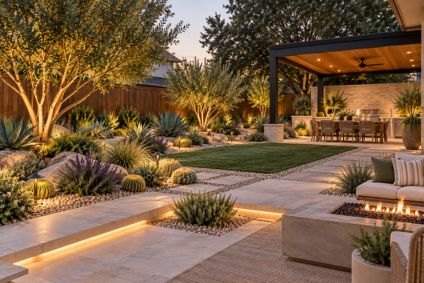
A simple xeriscape front yard often works better than a busy one.
Repeat a few plants and materials to give the space a calmer, more finished look. Instead of using many plants, pick a few: one groundcover, a couple of perennials, some grasses, and a couple of shrubs.
Easy xeriscape ideas include a curved gravel path, a dry creek bed, a boulder cluster, or a low-water border. These features make the yard feel designed even before the plants fill in.
When replacing a xeriscape front lawn, leave some open space with mulch or permeable paving to avoid a crowded feel.
For a refined look, repeat materials already found on your home. Warm stone may pair well with brick or stucco, while cool gray gravel can fit modern siding, concrete, or metal accents.
Which plants work best in a xeriscape garden?
The best xeriscape plants fit your local climate, soil, sun exposure, and winter weather.
Consider plants that can withstand drought, like perennials, grasses, native shrubs, succulents, and small trees.
Strong xeriscape garden design uses plants for texture as much as for flowers.
Think in layers xeriscape ideas for small front yard:
Low groundcovers can soften the edge of a walkway.
Mid-height perennials can add color near the entry.
Taller grasses or desert style shrubs can frame windows, screen utilities, or balance the front facade.
This approach makes a xeriscape garden feel full without depending on high-water turf.
Popular design roles include:
- Evergreen structure: Shrubs or hardy succulents that stay attractive through the year.
- Seasonal color: Flowering plants that bloom at different times instead of all at once.
- Movement: Grasses that add softness and catch the wind.
- Contrast: Spiky, rounded, fine, and broad textures placed near each other.
- Shade and height: Small trees or large shrubs used with care near the home.
Xeriscape ideas for small front yards
A xeriscape small front yard benefits from restraint.
When space is tight, too many colors, rock sizes, edging styles, or plant types can make the space feel busy. Great xeriscape ideas for small front yards often include a single path, a focal point, and grouped plants.
Use curves sparingly in a compact yard. A gentle bend can make a walkway feel natural, but too many turns may waste space.
For narrow beds, choose plants with tidy mature sizes so they do not spill into paths or block windows.
Helpful xeriscape front yard ideas for smaller homes include:
- A single ornamental tree surrounded by low groundcovers
- A gravel court with large pots near the entry
- A dry creek bed that manages runoff and adds movement
- Matching plant clusters on both sides of the walkway
- Low shrubs under windows with flowering perennials in front
Xeriscape landscaping for front yards focuses on guiding attention to the entryway, not away from it.
Xeriscape landscaping ideas front yard for slopes, corners, and hard spaces
A xeriscape hillside needs extra care because water moves downhill fast.
Terracing, boulders, deep-rooted plants, and mulch can slow runoff and reduce erosion. Instead of fighting the slope, utilize it to create layers of planting that are visible from the street.
Awkward corners can become small feature beds. A large boulder, upright shrub, or cluster of grasses can turn an unused patch into a designed moment.
For hot strips along driveways or sidewalks, choose tough plants and mulch that can handle reflected heat.
These xeriscape yard ideas are especially useful when the front yard has spots where turf struggled. Instead of forcing grass to survive in poor conditions, shape each problem area around what it naturally supports.
Bringing the same style into the backyard
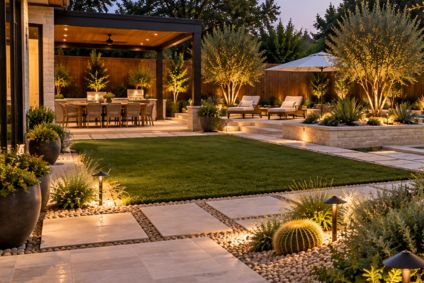
Although the front yard creates first impressions, many xeriscape landscaping ideas also work behind the home.
A xeriscape backyard may include patios, seating areas, raised beds, shade trees, and low-water borders. Backyard xeriscape ideas can feel more relaxed, while the front yard usually needs a bit more structure for curb appeal.
To connect both spaces, repeat a few materials or plants. The same gravel, edging, or ornamental grass can make the whole xeriscape yard feel unified.
You do not need identical designs. You only need enough visual consistency for the landscape to feel planned.
A practical design process to follow for xeriscape garden ideas
If you are comparing xeriscape front yard designs or xeriscape landscape plans, use them as ideas, not rules.
Every yard has different light, drainage, architecture, and maintenance needs. Design the best xeriscape landscape by building it from the site outward.
Follow this basic process:
- Observe the yard at different times of day to learn where sun, shade, wind, and runoff show up.
- Remove or reduce lawn where it takes too much water or work.
- Draw the main lines for paths, beds, seating, and focal points.
- Choose plants by zone so high-need plants are not mixed at random with low-water plants.
- Install hardscape first, then irrigation, then plants, then mulch.
- Leave room for growth so the design improves over time instead of getting crowded.
Final takeaways for a better xeriscape yard
The best xeriscape front yard balances beauty and function.
It uses fewer high-water areas, but it does not give up color, comfort, or personality. Start with a plan. Choose the right xeriscape plants. Repeat materials purposefully for a polished landscape all year.
Do you need a basic xeriscape front yard, a full xeriscape garden, or new ideas for a tough space? Start with the layout.
Paths, focal points, layers, and smart plant choices will do more for curb appeal than gravel alone ever could.
Q&A
Question: Is xeriscaping the same as covering the yard with gravel?
Short answer: No. A strong xeriscape front yard may use gravel, stone, or mulch, but it also includes live plants, layered beds, clear paths, focal points, and texture. The goal is to cut routine watering while still creating a garden with color, softness, shade, and seasonal interest.
Question: How can a small xeriscape front yard avoid looking crowded?
Short answer: Use restraint. A small yard usually looks best with one clean path, one focal point, and repeated plant groups. Limit the number of colors, rock sizes, edging styles, and plant types. Choose plants with mature sizes that fit the space so they do not block windows or spill into walkways.
Question: What kinds of plants are best for a xeriscape garden?
Short answer: The best plants depend on local climate, soil, sun exposure, and winter weather. Good choices often include drought-tolerant perennials, ornamental grasses, native shrubs, climate-fit succulents, and small trees. A mix of plants like groundcovers, perennials, grasses, shrubs, and trees can fill the yard without needing much water.
Question: How should a xeriscape design handle slopes or problem areas where grass struggles?
Short answer: Work with the site instead of fighting it. On slopes, use terracing, boulders, deep-rooted plants, and mulch to slow runoff and reduce erosion. In hot strips near driveways or sidewalks, choose tough plants and heat-tolerant mulch. Awkward corners can become feature beds with a boulder, upright shrub, or grass cluster.
