
Beautiful Outdoor Desert Plants for Desert Gardens
Desert gardens can be simple to care for in a hot, dry climate. The best outdoor desert plants handle heat, dry soil, and full sun. With the right layout, a desert landscape can have color, shade, and texture without much upkeep.
Whether you are fixing a small front yard or planning a full desert landscape design, plant choice matters. For low maintenance desert landscape plants, choose species that fit your site and climate. These xeriscaping ideas can help you build a yard that looks good and works with your space.
Which outdoor desert plants are best for a long-lasting garden?
Many desert plants handle low rainfall, strong sun, and poor soil. The best choices for desert gardening blend into the site and still add shape.
When you choose plants, think about mature size, spines, and water use. Also think about how the plants will grow together over time.
Desert Willow is a small to medium tree that gives filtered shade to a patio. Its narrow leaves and airy flowers make it a good choice near outdoor seating.
Give it room to grow and keep it away from thirsty plants.
Palo Verde trees are a classic part of desert landscaping. Their green trunks and open canopies create dappled shade and a clear desert look.
In xeriscape planting, they often act as the top layer over boulders, shrubs, perennials, and gravel. Pick a variety that fits the space and will not drop too much mess near paths or walls.
Agave is one of the most useful modern landscape plants for dry yards. Its rosette form adds structure and a strong focal point to an entry or patio.
Leave room around each plant. Many Agave types have sharp spines, so keep them away from walkways, drives, and play areas.
Red Yucca is a tough perennial with arching stems, narrow leaves, and tall flower spikes in red, purple, or white. It gives a softer look than many desert plants.
Use it in groups along paths, on slopes, or near dry streambeds. It pairs well with gravel, boulders, grasses, and low shrubs.
Prickly Pear Cactus
Prickly Pear Cactus is one of the hardiest cacti. Its paddle-shaped stems give it a unique form, and it can add flowers and fruit in several colors.
Use it as an accent plant or in groups. Keep it away from seating, tight paths, child play areas, and pet routes because of the sharp spines and tiny glochids.
Barrel Cactus
Barrel Cactus is compact and sculptural. Its round shape adds contrast next to upright Yucca and wide Agave.
Repeat small plants in clusters for more impact. Give each one room and use gravel or decomposed granite mulch around it.
Creosote Bush
Creosote Bush is a classic desert shrub with small leaves and an open canopy. It helps air move through the plant and dries quickly after rain or irrigation.
Use it as a single plant or group it with other drought-tolerant shrubs. It fits native plant gardens and larger desert landscaping plans.
Brittlebrush
Brittlebrush is a low shrub with silver foliage and bright yellow flowers. It softens hard-edged plants such as Agave, cactus, and Yucca.
Use it in informal groups on slopes, in dry washes, or in front yards. It is a good option for people who want a less formal desert landscape.
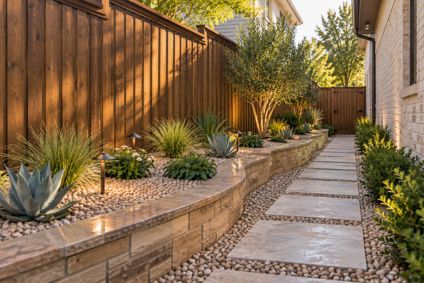
Smart xeriscaping ideas for arranging desert succulents
Xeriscaping is more than choosing plants that need less water. Good desert gardening also looks at sun, water, mature size, and how people use the yard. This reduces waste, cuts yard work, and keeps the space attractive.
When planning your layout, keep these points in mind:
- Group plants with similar water needs.
- Layer plants by height. Trees first, then shrubs, then accent plants, perennials, and groundcover.
- Plan for mature size so plants do not crowd each other.
- Keep spiny plants away from walkways, driveways, patios, and play areas.
- Use rock and mulch well. Gravel, decomposed granite, boulders, and dry streambeds can cover bare soil and add shape.
- Use focal points. A single Agave, Palo Verde, or Barrel Cactus often has more impact than filling every open spot.
How to choose plants for your desert climate?
Choose outdoor desert plants based on local heat, winter lows, elevation, drainage, and sun. A plant that does well in one dry region may fail in another if nights are colder or the soil stays wet.
Watch your yard's microclimates. West-facing walls, dark paving, courtyards, windy spots, and low areas that hold water can all change how a plant grows.
Arizona's low deserts need heat-tough plants. California deserts vary more, so they need plants that handle changing conditions. Even in one yard, a plant near a stucco wall gets more heat than one under a tree.
Start with a small test area. After one full hot season, see what worked and repeat that plan. This slower method often leads to a healthier yard and better results over time.
When to hire a landscaper for xeriscaping
A landscaper for xeriscaping is useful when a project includes grading, new irrigation, heavy boulders, or a full front yard redo.
You do not need a pro for every bed. But for larger, long-term projects, xeriscaping services can save time and help avoid mistakes. Some services also help with plant choice and irrigation planning.
The best desert landscaping balances plant health, water use, maintenance access, shade, privacy, and curb appeal. If you hire help, make sure the team knows local desert plants and can give you a clear irrigation plan.
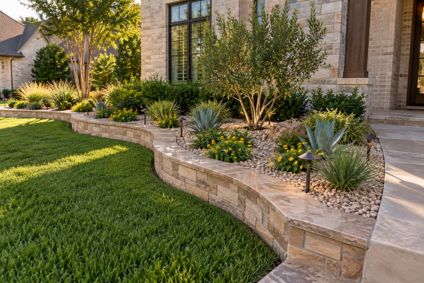
A resilient garden starts with restraint
The most useful desert gardens do not copy a lawn and then add cactus at random. They use a few strong plants and repeat them with purpose.
- Leave room around sculptural plants so they can stand out.
- Use stone, shade, and texture to make the yard feel calm, not sparse.
Start with a few anchor trees. Then add desert style shrubs. Around them, place cacti, succulents, perennials, and xeriscape groundcovers. With the right plants and a simple plan, desert gardening with outdoor desert plants can be beautiful, practical, and easy to maintain.
Q&A
Question: What makes a desert garden low-maintenance?
Short answer: A low-maintenance desert garden uses plants that fit the local climate, soil, sun, and water supply. Grouping plants with similar water needs, leaving space for mature growth, using gravel or decomposed granite mulch, and keeping the design simple all help lower upkeep.
Question: Which desert plants are best for adding structure to a yard?
Short answer: Agave, Barrel Cactus, Palo Verde trees, Desert Willow, and Red Yucca all add structure in different ways. Trees create height and shade, Agave and Barrel Cactus work well as sculptural accents, and Red Yucca adds upright flower spikes and soft movement.
Question: Where should spiny desert plants be placed?
Short answer: Spiny plants such as Agave, Prickly Pear Cactus, and Barrel Cactus should be placed away from walkways, driveways, patios, seating areas, play areas, and pet routes. They are best used as accents or focal points where they can be seen without being brushed against.
Question: Why is mature plant size important in xeriscaping?
Short answer: Many desert plants look small at first but can become wide, woody, thorny, or tree-like later. Planning for mature size prevents crowding, keeps paths and buildings clear, protects the design, and helps each plant stay healthy.
Question: When is it worth hiring a landscaper for a desert garden?
Short answer: Hiring a landscaper is most useful for larger xeriscape projects that involve grading, irrigation planning, heavy boulders, or a full yard redesign. A skilled pro can also help choose plants for the local desert climate and build a clear irrigation plan.
