
Trending Plants in Modern Desert Landscape Style
Modern desert landscaping is not only beautiful but also eco-friendly. The modern desert style landscape uses drought-tolerant plants to turn dry landscapes into thriving gardens.
These water-efficient plants are perfect for arid landscapes and come in all shapes and sizes, including succulents and cacti. Many of these plants are low maintenance, which is great for busy people. The Foxtail agave is a modern desert plant that is very trendy right now and very easy to care for.
By using native plants in your landscape, not only will you be supporting the local ecosystem but also using less water.Take a look into modern desert landscaping and learn how to create a beautiful and sustainable landscape.
What Is Modern Desert Landscaping?
Modern desert landscaping designs create a lush and beautiful garden in dry and challenging environments. The desert plants are celebrated in these modern designs, using drought-tolerant and native plants to create a beautiful outdoor space.
These plants thrive in the design and require less maintenance and less irrigation than traditional plants.
Modern desert landscapes use a number of key elements, including:
- The xeriscaping design principles to conserve water
- Gravel, rocks, and sand to create texture in the garden
- The use of outdoor living spaces, such as patios
Modern desert landscapes are not just about the plants in the garden. Hardscapes are used to add contrast and depth to the garden, including stone pathways, retaining walls, and even artwork.
This style of landscaping design uses simplicity to bring beauty to the arid landscape, blending nature with design.
Key Principles of Desert Modern Landscape Design
Desert modern landscape design focuses on balance between natural elements and man-made objects. The beautiful and sustainable landscapes created through desert modern landscaping designs give utmost importance to water conservation. Following the principles of xeriscaping, modern desert landscaping utilizes drought-resistant plants and wise plant design.
Minimalism plays a very important role in creating a peaceful space within a desert landscape. Wise use of space, using clean lines and simple forms, creates the unique appearance of modern landscapes.
Important principles of desert modern landscape designs are:
- Sustainability and low water usage
- Native and very climate-adapted plants
- Hardscapes that are of functional use
In modern landscapes made in the desert, use of stone and gravel creates great contrast with other elements and, at the same time, blends very well with the natural surroundings. These elements together create a great and sustainable landscape that is of great beauty and is also very functional and thus can be used in every desert environment.
Trending Plants for Modern Desert Landscapes
Sustainable Desert Landscaping Features Best Plant Picks for Modern Desert Landscapes
Many of the trending plants for modern desert landscapes are very low maintenance and very beautiful. Most of these desert plants can be used to create very sustainable landscapes that will provide many years of beauty with very little watering and maintenance.
Some of the best plant picks for modern desert landscapes include many species of succulents and cacti, the Foxtail Agave, Golden Barrel Cactus, Red Yucca, Blue Fescue Grass, and Desert Marigold.
Here is a photo of a great modern desert landscape using some of these trending plants.
As mentioned above, there are many plants that can be used for a modern desert landscape. Many of these desert plants are very drought tolerant and can be used in a sustainable landscape. It is very important to choose the right plants for your landscape. There are many desert plants that can be used, and they can be used in many different ways. The key is to pick the right plants for your yard and then use them in a creative way to create a very sustainable landscape that will provide many years of beauty and be very low maintenance.
Here is a photo of a great example of a modern desert landscape using many different species of drought-tolerant plants.
Choosing the right plants for your sustainable desert landscape is very important. It is not enough to just pick plants that are drought tolerant. The best plants for your landscape must also fit within the overall design or theme of your yard. Many sustainable landscapes use native plants because they already thrive in the local environment. In addition to being well adapted to the local climate, native plants also provide a source of food for local wildlife.
Many species of cacti and succulents are also native to the deserts of the world and are therefore a great choice for a sustainable desert landscape. Using native and drought-tolerant plants in your modern desert landscape is one of the best ways to create a sustainable landscape that is very beautiful and will require very little maintenance or watering.
Here is a photo of a great example of a modern desert landscape using many different species of native and drought-tolerant plants.
Foxtail Agave Landscaping: A Modern Favorite
The Foxtail Agave is one of the best plants for modern desert landscapes. This succulent is a favorite of landscapers because it is very low maintenance and can be used to create a very modern and dramatic-looking desert landscape. The smooth, curved leaves of the Foxtail Agave are blue-green in color and can grow to be 5–6 feet tall. This agave is perfect for use as a single specimen plant or as a mass-planted groundcover. Because the Foxtail Agave is very drought tolerant, it can be used in very water-conscious landscapes and is a great choice for water conservation landscapes.
The Foxtail Agave is also very hardy and can tolerate extremely high temperatures and full sun. It is also cold hardy and can tolerate frost and freezing temperatures. This makes the Foxtail Agave the perfect choice for use in landscapes throughout the hot desert climates of the world.
Here is a photo of a great example of a modern desert landscape using the Foxtail Agave. Learn how to tace care of Agave succulents!
Succulent Plants Garden Design: Creative Ideas
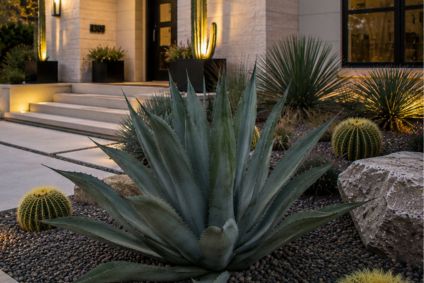
There are many creative ways to design a garden that features succulent plants. The following are just a few examples of succulent garden designs that can be very beautiful and provide many years of interest in your yard.
- Create a vertical succulent garden by attaching the succulents to a wall or other vertical surface.
- Use succulents to create a geometric design in your yard.
- Mix succulents with rocks to create a natural-looking succulent garden.
Succulent plants are very easy to care for and can be used to create a very beautiful, modern-looking garden that will thrive in poor soil and full sun.
Here is a photo of a great example of a modern succulent garden design.
Succulent Plants for Containers.
Using succulents in containers is a great way to add depth and interest to your yard. Many succulents are perfect for use in containers because they are very small and can thrive in a small amount of soil. Because most succulents are very drought tolerant, they are also perfect for use in container gardens where the soil can quickly dry out.
There are many different species of succulents that can be used in container gardens. Some of the most popular succulents for containers include Aloe Vera, Echeveria, Sedum, and Agave. All of these succulents are very easy to care for and can thrive in a wide variety of conditions. They are the perfect choice for anyone who wants to create a modern-looking container garden that is very easy to maintain.
Here is a photo of a great example of a modern succulent container garden.
Native and Drought-Tolerant Plant Choices
There are many different species of native plants and drought-tolerant plants that can be used for a modern desert landscape. Some of the best native plants for landscapes include the Prickly Pear Cactus, the Desert Willow, and the Apache Plume. These plants are all very drought tolerant and can thrive in landscapes with very little watering.
They are also very beautiful and provide many different colors and textures to choose from. Native plants are also very environmentally friendly because they already thrive in the local environment and therefore require very little care or maintenance. In addition to native plants, there are many other species of plants that are also very drought tolerant and can be used for a modern desert landscape. These plants are perfect for water conservation landscapes and can be used to create a very sustainable landscape that is also very beautiful.
Here is a photo of a great example of a modern desert landscape using native and drought-tolerant plants.
Using native and drought-tolerant plants in your modern desert landscape is a very smart choice for both the environment and for saving water. These plants are well adapted to the local climate and can thrive in landscapes with very little watering or care. Many native plants also provide a source of food for local wildlife, which can be very beneficial to the environment. In addition to providing food for wildlife, native plants also help to support the local ecosystem and can provide many other benefits. Because native and drought-tolerant plants are so well adapted to the local environment, they require very little maintenance or care.
They can tolerate extreme heat and drought and can thrive in poor soil. These plants are perfect for anyone who wants to create a sustainable landscape that is also very beautiful. They can be used to create modern desert landscapes that inspire and delight for years to come. Here is a photo of a great example of a modern desert landscape using native and drought-tolerant plants.
Hardscaping and Materials in Desert Style Landscaping
Hardscaping is a fundamental element in creating a beautiful desert landscape. Gravel, rocks, and sand create depth and texture in any outdoor space. Hardscaping can be used to create both form and function in your yard.
One of the most popular hardscaping elements is gravel and sand pathways. These walkways are great for leading your guests through your landscape while adding beauty to your yard. Gravel and sand pathways are also very low maintenance and can be paired with almost any type of plant selection.
Stone elements such as boulders or pebbles can add natural forms to your desert garden. Large boulders can be used as focal points in your yard and can also provide structure to your garden.
Other hardscaping elements include:
- Gravel and sand pathways
- Stone patios and seating areas
- Rock gardens with native stones
Mixing up different textures in your hardscaping and plants can add a lot of interest and make for a very modern desert landscape. Combining smooth stones with sharp cacti and grasses can create an interesting contrast in your yard.
The hardscaping elements that you choose for your yard can also be very functional while being beautiful. Many hardscaping elements are very sustainable and can require very little maintenance. The elements are also built to last in harsh desert weather. A well-planned hardscape in your yard can be very beautiful and also very functional for years to come.
Design Tips for a Modern Desert Landscape
Modern desert landscaping attempts to balance aesthetic considerations with sustainability in order to create a beautiful and functional garden. The initial step in creating such a garden is to choose a color palette that complements the existing environment and to select plants of the corresponding type.
Next, create layers in your garden by using a variety of different plants of different heights and textures. This is a great way to add interest and to increase the depth of your garden.
Outdoor living spaces, including patios and seating areas, can be included in the design in order to make your garden functional and beautiful.
Here are a few design considerations:
- Use clean lines in your hardscapes in order to create a minimalist look for your desert landscape.
- Incorporate reflective surfaces into your design in order to manage heat.
- Use lights to draw attention to specific areas or features of your garden.
Use your hardscapes and softscapes creatively in order to create a space that is both beautiful and practical. A well-designed space can increase enjoyment of the area and make it more usable.
Sustainable Practices in Desert Style Landscaping Design
Sustainability is at the core of desert landscaping style. In incorporating environmentally friendly practices into your landscaping, you can work to reduce environmental impact. By choosing water-friendly plants for your yard, you can conserve water by employing smart irrigation practices.
This can include the use of systems such as drip irrigation, which delivers water directly to the root zones of your plants to prevent waste. Collecting rainwater in a pool or cistern to use for irrigation during times of drought or when water is in short supply can also be very effective.
Additionally, by choosing to use natural or recycled materials for your landscaping features, you can decrease your use of resources and be more environmentally responsible, and also create very authentic landscape features.
Some more sustainable practices for your yard are:
- Use organic mulches to keep your soil healthy
- Practice xeriscaping
- Use compost to enhance the health of your soil
By practicing sustainability in your landscaping, you can be working to conserve resources and promote biodiversity in your yard. The goal of sustainable landscaping is to create a landscape that will last for long periods of time, be healthy, and continue to thrive.
Bringing It All Together: Here are some Sample Desert Modern Landscape Design Ideas.
Designing a cohesive modern desert landscape requires thoughtfully integrating a variety of elements, including plants and hardscapes, to create beautiful spaces that flow well and function well.
Using native and adaptive plants of varying textures and incorporating them into your garden will add visual interest to your spaces. Strategically using hardscaping elements to define areas and add structure to your spaces will be an important component of your design.
To give you some inspiration for your design, here are a few modern desert landscape design ideas.
- Mix in some gravel with colored stones to create a dramatic base for your plants.
- Use architectural plants as focal points for your spaces.
- Create beautiful outdoor rooms and spaces with seating and shade.
Modern desert landscaping can be very beautiful and be a wonderful expression of one’s personal style, and can also be very serene as well.
Finding Desert Landscape Near Me: Working with Professionals
Partnering with local professionals and incorporating their knowledge into your desert landscaping will only enhance your overall experience. These professionals have in-depth knowledge of the area and can provide key insight into how your new landscape will thrive in its environment.
A great local professional can help select plants and design a landscape that best fits their client’s needs and specifications. They can also provide advice on how to best lay out a yard to create optimal results. By finding the right professional for the job, you can streamline your design process and reach the best results for your hard-earned money.
When looking for a professional to bring your yard to life, follow these steps:
- Research local landscapers that have experience with desert landscaping
- Check out their past work and read reviews from previous clients
- Discuss your budget and vision with potential candidates
Partner with knowledgeable professionals to create a stunning and sustainable desert landscape that will last for years to come. They can turn any vision into a beautiful garden that is perfect for the arid climate.
Conclusion: Embracing the Beauty of Modern Desert Landscaping
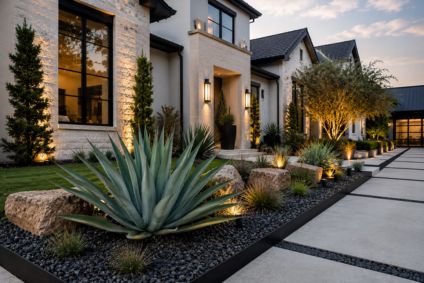
Modern desert landscaping can be incredibly beautiful and sustainable, providing options for amazing landscapes that use minimal water.
Not only will your new sustainable landscapes enhance your curb appeal and support the local environment; they will also provide the opportunity to express your personality and bring you a beautiful garden that will flourish throughout the year. Modern desert landscaping is incredibly adaptable, providing stunning, vibrant landscapes using the natural elegance of the arid landscape as the backdrop.
Frequently Asked Questions
Q: What is modern desert landscaping, and why is it great for dry climates?
A: Modern desert landscaping is a way to transform any arid or water-deficient space into a beautiful, lush, and low-maintenance garden that celebrates the best of drought-tolerant and native plants.
Using a minimalist approach with clean lines and open space, modern desert landscapes follow the principles of xeriscaping to conserve water and use hardscapes of natural stone, such as gravel, rocks, and sand, to add texture and interest to the space. Features such as stone walkways, retaining walls, and patios are also incorporated to create functional and beautiful outdoor spaces. With the right selection of plants, modern desert landscapes can be not only beautiful to look at but also support local wildlife and conserve precious water resources in dry climates.
Q: Which plants are currently trending for modern desert landscapes, and why are they so great?
A: For modern desert landscapes, there are many species of succulents and cacti that are currently trending. These water-stingy plants are not only low-maintenance but also add dramatic form and interest to any space. Other species such as the Foxtail Agave, with its smooth blue-green skin and architectural form, are currently a favorite among designers and gardening enthusiasts. Ornamental grasses are also very popular because of their movement and ability to soften harsh lines and edges of hardscapes.
Last but not least, native wildflowers are currently trending because of their ability to provide color during the plant’s natural blooming periods of the year and to support local biodiversity. Some of the plants that are currently featured in our guide are the already-mentioned Foxtail Agave, the stunning Golden Barrel Cactus, the Red Yucca, the Blue Fescue Grass, and the beautiful and delicate Desert Marigold. All of these species are not only great for modern desert landscapes because they are low-maintenance and can reduce the need for irrigation but also because of their unique textures and forms that can add diversity to any garden.
Q: Why is foxtail agave a modern favorite, and how do you use it in your designs?
A: The Foxtail Agave is currently one of the most popular species for modern desert landscapes. This stunning plant has very smooth skin that is a beautiful blue-green color and is very architectural, which makes it a perfect choice for any contemporary space. Designers and gardening enthusiasts love this species not only because of its unique look but also because it is extremely low-maintenance and can thrive in very harsh conditions with minimal watering once established.
In terms of design, the Foxtail Agave can be used as a single specimen to highlight a particular area of the yard; it can also be used in mass plantings to repeat a line or to create a certain rhythm in the garden. In addition, this species can also be used in combination with rocks and gravel to create a very natural and desert-like look. Because of its very modern look, the Foxtail Agave can also be used in very sleek and contemporary designs as well as in more rustic themes, which makes it a very versatile species for any type of landscape design.
Q: How can hardscaping materials enhance a desert-style landscape?
A: Hardscaping in a desert-style landscape provides the structure, texture, and durability that any garden needs. While plants in a desert landscape can provide color and interest, hardscaping materials such as gravel, rocks, and sand can create depth and interest in a yard and also provide easy-to-maintain pathways. In addition, stone such as flagstone or bluestone can be used to create beautiful patios and seating areas that extend the living areas of homes into the outdoors.
Large boulders or even pebbles can also be used to anchor compositions and provide a natural focal point in the yard. Above all, the contrast between the smooth surfaces of hardscaping materials and the sharp, spiky, or rough surfaces of desert plants and grasses provides the visual interest that is at the heart of a modern desert landscape. Hardscaping in a desert landscape also provides sustainability because it requires very little maintenance and can withstand the harshest of conditions.
Q: What are the key sustainable practices that should be used in a modern desert garden?
A: For a modern desert garden, there are several key sustainable practices that should be used. First, water-wise, native, and climate-adapted plants should be selected to reduce irrigation and support local ecosystems. In addition, smart irrigation systems, such as drip irrigation that delivers water directly to the roots of the plants, should be used. Also, rainwater harvesting can be used to supplement irrigation during times of rainfall.
Building soil health using compost and retaining moisture using organic mulches are also important practices. Xeriscaping principles, which were originally designed for water-conserving landscapes in arid regions, should also be followed. Finally, hardscapes should be made from natural or recycled materials to conserve resources and reduce waste. By incorporating these sustainable gardening practices into a modern desert garden, it is possible to create a beautiful and functional outdoor space while also conserving precious water and other resources and fostering biodiversity to create a sustainable and resilient garden for years to come.