
Landscape Design Plano TX for Easy Outdoor Spaces
What makes a landscape design work well in Plano?
Plano yards can be beautiful, useful, and tough when the plan fits North Texas heat, clay soil, shifting water needs, and the way families use outdoor space.
A strong plan blends evergreen structure, shade, seasonal color, hardscape, irrigation, and outdoor living into one setting. For landscape design in Plano TX, the best ideas are not trendy. They are built to last and easy to care for.
A good Plano landscape design starts with the site: sun, drainage, soil, existing trees, house-to-bed distance, privacy needs, and how the front or back yard will be used. North Texas yards often have dense clay soil, so plant choice and drainage matter as much as style.
Water-wise choices matter too. Plano's long-range water plan points to drought-tough plants, drip irrigation, and rainwater collection as smart steps.
That does not mean a yard has to look bare or dry. Thoughtful plano landscape design can still feel lush.
Use hardy trees, evergreen shrubs, flowering perennials, ornamental grasses, stone borders, mulch, and shaded seating areas.
The trick is to make each part do more than one job. Privacy trees can frame a patio, a walkway can guide runoff, and evergreen plants can keep curb appeal year-round.
Evergreen structure creates year-round impact
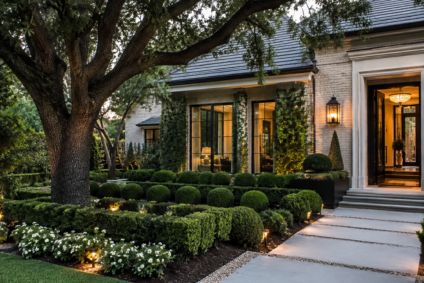
Many residential landscaping Plano projects lean on evergreens because they keep the yard from vanishing in winter. They screen views, soften fences and walls, cut visual clutter, and give a steady backdrop for plants that bloom or change color through the seasons.
In front yards, they anchor the house. In backyards, they help shape outdoor rooms.
When choosing evergreen trees for landscaping, start with the job you need them to do. A tree used for privacy along a fence needs different spacing and full size than a feature tree near the front door. A narrow side yard may need a slim shape, while a large backyard can handle broader branches and deeper shade.
Useful evergreen roles include:
- Privacy screening: Use staggered plantings instead of a stiff single row when space allows. This looks more natural and lowers the risk that one dead tree ruins the whole screen.
- Focal points: A small evergreen tree or tree-form holly near an entry can make the home feel polished.
- Wind and visual buffering: Evergreen masses can soften open patios, pool areas, and lawns.
- Background planting: Dark green leaves make flowering shrubs, grasses, and stonework stand out.
- Wildlife support: Some native or well-fit evergreens offer berries, shelter, or nesting cover, depending on the site and species.
Strong evergreen choices for North Texas yards
A good evergreen landscape and design plan should match the plant to the yard, not force a favorite into the wrong spot. In Plano, that usually means favoring heat tolerance, full size, drainage, and care needs. Local stock can change, so a designer or nursery can help confirm what fits a specific property.
Yaupon holly for flexible evergreen form
Yaupon holly is a strong pick for many Plano yards because it can work as a large shrub, small tree, screen, or sculpted accent. Texas A&M's tree selector describes yaupon as a small Texas native with evergreen leaves, red berries on female plants, wildlife value, and tolerance for drought, alkaline soil, poor drainage, and shade.
That range makes it useful near patios, along property lines, or in layered front-yard beds. Dwarf forms fit low foundation beds, while tree-form yaupons can add height without crowding a small space. For a softer look, pair yaupon with ornamental grasses, native perennials, and boulders instead of clipping every plant into a hard shape.
Eastern red cedar for screening and habitat
Eastern red cedar, often called red cedar or juniper, is valued for dense evergreen growth and its ability to handle tough conditions once it is established. It can work as a privacy screen or windbreak when it gets enough room for full growth. Dallas County AgriLife notes that evergreen trees can work well as windbreaks, and that native plants are usually set for local rainfall after they are established, though drought watering may still be needed.
Use red cedar with care in smaller suburban yards. It can become too large or too dense for tight foundation beds, narrow walks, or spots where air flow is already weak. It often works best on wider property edges, large backyards, or informal naturalized plans.
Holly varieties for polished residential landscapes
Hollies are popular because they can look formal or relaxed, based on the type and how they are pruned. Larger hollies can screen views, while compact types can define walks, frame entries, or add evergreen mass below ornamental trees. Their glossy leaves also pair well with stone borders, fresh mulch, and light-colored masonry.
The key is space. Hollies planted too close to windows, sidewalks, or each other often become high-maintenance. A better plan is to allow for full width, then layer lower plants in front while the holly fills in on its own.
Live oak and broadleaf evergreens as long-term anchors
Live oaks are not small trees, but they can be strong long-term anchors where the yard has room. They bring shade, character, and a classic North Texas feel. Because large canopy trees affect turf, patios, rooflines, and future root zones, they should be placed with a long view, not treated as a fast decoration.
For many homes, the best plan blends one major shade tree with smaller evergreen pieces nearby. That keeps the yard balanced: the canopy cools and defines space, while evergreen shrubs and small trees hold the shape beneath and around it.
How can 2D landscape design help before installation?
2D landscape design in Plano TX helps homeowners see the layout before plants, patios, beds, and walks go in. A scaled drawing can show bed shapes, tree placement, patio size, privacy screening, traffic flow, and how each part of the yard connects. This is especially helpful when a project includes both planting and hardscape, because mistakes on paper are far easier to fix than mistakes in stone, irrigation, or tree placement.
A 2D plan also helps with budget and staging. If the full project cannot happen at once, the design can show what should come first, such as drainage fixes, major trees, patio areas, or irrigation sleeves. That avoids the common problem of installing a nice planting bed, then tearing part of it out later to run utilities or expand a seating area.
A useful 2D plan should clarify:
- Traffic flow: How people move from the driveway, gate, patio, lawn, and outdoor kitchen or seating areas.
- Plant size: The full height and width of trees and shrubs, not just how they look on day one.
- Views from inside: What you see from kitchen windows, living rooms, and main bedrooms.
- Sun and shade: Where turf, bloomers, and patio seats will actually do well.
- Irrigation zones: Which plants need the same water and which beds may work best with drip lines.
- Future flexibility: Room for a play area, garden, pool, fire feature, or bigger patio later.
Outdoor living spaces feel better with layered planting
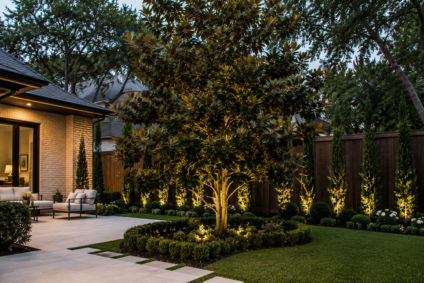
A patio without plants can feel open, hot, and cut off from the rest of the yard. Planting without a usable space can look nice but fail daily life. Strong landscape design plano tx projects bring the two together by wrapping outdoor living spaces with shade, texture, scent, privacy, and seasonal interest.
Start with how the space will be used. A family that grills several nights a week may need a direct route from the kitchen, durable paving, lighting, and planting that does not crowd the cooking area. A homeowner who wants a quiet reading spot may prefer a small paved nook wrapped in evergreen screening, soft grasses, and a water feature.
Layering makes these spaces feel planned.
- Tall evergreens or canopy trees make the back layer.
- Medium shrubs build a sense of enclosure.
- Perennials and grasses add motion and color through the year.
- Mulch, stone edging, and groundcovers finish the lower layer so the design feels complete, not empty.
Low-impact choices make care easier
Low-impact yard care in residential landscaping does not have to be hard. In Plano, it often starts with plants that handle heat, careful irrigation, and better soil before planting. Texas A&M AgriLife says drought-tough tree choices are a long-term way to lower upkeep, though no tree is truly drought-tough until it is established.
This matters because many landscape problems begin in the first year. New trees and shrubs need steady watering while they settle in, even if they will need less water later. Mulch helps hold soil temperature and moisture, but keep it off trunks. Drip irrigation can cut waste in shrub beds, while turf zones should be planned on their own because lawns and woody plants rarely need the same water.
Smart low-impact ideas include:
- Group plants by water needs instead of mixing thirsty plants with low-water shrubs.
- Use mulch in planting beds to protect soil and cut water loss.
- Choose sturdy evergreen anchors, then add seasonal color in smaller, easy-to-refresh areas.
- Improve drainage before planting trees in compacted or slow-draining spots.
- Pick the right size tree so constant pruning is not needed to protect roofs, fences, or walks.
- Consider rainwater collection where it fits the home, budget, and upkeep routine.
Native and ornamental plants both have a place
A strong landscape design in Plano TX does not have to be all native or all ornamental. Native plants can add resilience, habitat value, and a closer tie to the region. Adapted ornamentals can add shape, color, or screening when they fit the site and are not invasive.
The best plan is selective. Use native or well-fit trees and shrubs for the main frame, then add ornamental plants where they solve a design need or match the style. For example, a native evergreen screen can sit behind a polished patio bed with sculpted shrubs, blooming perennials, and clean stone edging.
Be careful with plants chosen only because they look good in a nursery pot. Fast-growing screen trees, including some cypress types, can bring disease, spacing, or upkeep issues in Texas yards. Texas A&M AgriLife lists several diseases that affect Italian cypress and related species, including Leyland cypress, so these plants need a close site review rather than an automatic yes.
Front yards need curb appeal and restraint
Front-yard design should make the home feel welcoming without hiding the architecture. A common mistake is planting too many small shrubs in a thin band along the foundation. A better plan is to extend the bed line, use one or two small ornamental or evergreen trees for height, and repeat a limited plant mix for unity.
Evergreens are especially useful here because they keep the front of the house from looking bare in winter. Pair them with seasonal bloomers, native grasses, and clean edging so the yard looks maintained without feeling overdone. Lighting can highlight a feature tree, entry walk, or textured wall while also improving night safety.
Backyards should be designed as outdoor rooms
The most useful backyards are set up as outdoor rooms. One area may support dining, another may give kids or pets a lawn, and another may become a quiet garden corner. Evergreen trees and shrubs can divide these zones without building more fences or walls.
For smaller Plano lots, scale matters most. Use tall elements where width is tight, and keep large trees away from patios, pools, and foundations. For larger properties, broad plant sweeps usually look more planned than scattered plants.
A practical path to a better Plano landscape
The most successful plano landscape design projects begin with clear goals. Decide whether the main goal is privacy, outdoor dining, lower upkeep, curb appeal, shade, or a full change. From there, the plan can choose the right evergreen frame, hardscape layout, irrigation plan, and plant style.
If you are planning a refresh, start with a site walk and a wish list. Note harsh sun, places where water collects, spots that need screening, and the areas where your family naturally gathers. With a thoughtful plan, evergreen trees for landscaping can do much more than fill space; they can shape a yard that feels calm, polished, and made for life in Plano.
Q&A
What should homeowners look at first when planning landscape design in Plano TX?
Short answer: Start with the site conditions and the main goal for the yard. Plano landscapes need to account for sun exposure, clay soil, drainage, existing trees, privacy needs, water use, and how the family will actually use the space. Once those basics are clear, it is easier to choose the right evergreen trees, hardscape layout, irrigation plan, and planting style.
Why are evergreens so important in Plano landscape design?
Short answer: Evergreens provide structure throughout the year, especially in winter when many other plants lose color or fullness. They can screen views, soften fences, frame patios, anchor front-yard beds, and create outdoor rooms in the backyard. The key is choosing evergreens that fit the space at their mature size instead of planting them too close to windows, walks, or foundations.
How does a 2D landscape design help prevent costly mistakes?
Short answer: A 2D landscape design shows the layout before installation begins, including bed shapes, tree placement, patio size, walkways, screening, irrigation zones, and future project areas. This makes it easier to fix problems on paper before money is spent on stonework, irrigation, utilities, or large trees. It also helps homeowners stage the project in the right order if everything cannot be installed at once.
Can a water-wise Plano yard still look lush?
Short answer: Yes. A water-wise yard does not have to look bare or dry. It can feel full and inviting when hardy trees, evergreen shrubs, flowering perennials, ornamental grasses, mulch, stone borders, and shaded seating areas are layered together. Grouping plants by water needs and using drip irrigation in planting beds can also support a greener look with less waste.
Should a Plano landscape use only native plants?
Short answer: Not necessarily. Native plants are valuable because they can offer resilience, habitat support, and a strong connection to the region, but adapted ornamental plants can also work well when they fit the site and are not invasive. A balanced plan often uses native or well-fit trees and shrubs as the main frame, then adds ornamentals for shape, color, screening, or style.