
Exploring the Beauty of Modern Desert Landscapes Plano TX
Exploring the Beauty of Modern Desert Landscapes in Plano
A modern desert landscape celebrates the climate instead of fighting it. In places like Las Vegas and other hot, dry regions, the best outdoor spaces use sculptural plants, clean hardscape lines, smart irrigation, shade, and carefully placed lighting to create a yard that feels stylish, livable, and water-conscious. Whether you are refreshing a front yard or rethinking a backyard gathering space, the goal is to build beauty with materials and plants that can handle desert conditions.
What makes a modern desert landscape Plano TX feel fresh and inviting?
A modern desert landscape feels fresh when it combines restraint with warmth: simple lines, intentional plant groupings, practical outdoor zones, and materials that echo the surrounding desert. Instead of filling every open space, modern design uses negative space, repetition, and strong focal points so the yard looks calm rather than empty. The result is a landscape that feels polished, low maintenance, and connected to its environment.
In a modern desert landscape Las Vegas homeowners often want curb appeal without creating a yard that looks harsh or unfinished. The difference comes from composition. Gravel alone may save water, but it can feel flat if there is no rhythm, height, texture, or shade. A modern design adds structure through pavers, edging, boulders, raised planters, and layered outdoor desert plants.
Think of the yard as a series of shapes. A straight concrete walkway, a grid of pavers, a curved bed of crushed granite, or a row of matching agaves can create order quickly. Then, a few bold focal points, such as an ocotillo, beaked yucca, sculptural cactus, or large ceramic planter, give the space personality.
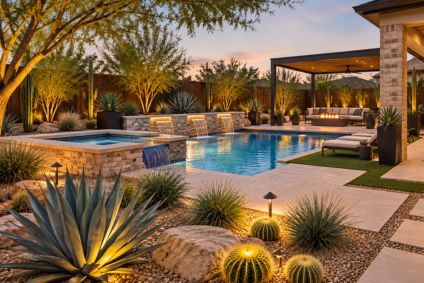
Clean lines create the modern foundation
Modern desert design often begins with hardscape because hardscape gives the yard its structure. Concrete pavers, decomposed granite, crushed rock, metal edging, stucco walls, and steel planters all help define the space before the planting begins. Neutral tones such as sand, charcoal, warm gray, rust, and soft white keep the look grounded and allow plants to stand out.
For front yards, clean lines can make a major visual impact. A walkway made from oversized rectangular pavers feels more contemporary than a narrow winding path. A driveway border finished with metal edging looks neater than an undefined gravel edge. Even a small entry courtyard can feel intentional when planters, seating, and lighting are arranged symmetrically.
A low maintenance modern desert landscape front yard does not need to look bare. The key is using fewer elements more confidently. Instead of mixing many unrelated rocks, colors, and plants, choose a limited palette and repeat it. Repetition makes the landscape feel designed, while the desert materials keep it practical.
Useful modern hardscape elements include:
- Large-format concrete pavers for walkways, patios, and geometric stepping paths.
- Crushed granite or decomposed granite to create a softer alternative to bare rock.
- Metal edging to keep gravel, planting beds, and pathways sharply defined.
- Boulders placed as sculptural accents rather than scattered randomly.
- Raised planters that add height, protect delicate plantings, and create architectural interest.
- Simple seating pads that turn decorative areas into usable outdoor space.
Which plants work best in a low-maintenance desert yard in Plano climate?
The best low maintenance desert landscape plants are drought-tolerant, heat-adapted, visually strong, and suited to the amount of sun they will receive. Agaves, yuccas, aloes, desert shrubs, ornamental grasses, and select succulents can create a modern look with less frequent pruning and lower water demand than many lush, traditional landscape plants. Choosing the right plant for the right spot matters more than choosing the trendiest plant.
For a modern style, focus on plant form. Spiky plants add drama, round shrubs soften edges, upright plants create height, and trailing succulents help containers feel full. A strong desert palette may include blue-gray foliage, silvery greens, warm yellow blooms, and occasional red or orange accents.
Consider these outdoor desert plants for a modern composition:
- Queen Victoria agave: Compact, geometric, and ideal for focal points or repeated patterns.
- Beaked yucca: Tall and sculptural, useful near entries, walls, or large gravel beds.
- Gopher plant: Soft blue-green foliage with a clean, contemporary look.
- Blue chalksticks: Low, spreading texture that works well in planters and borders.
- Desert spoon: Strong radial form that pairs well with boulders and gravel.
- Red yucca: Arching foliage and tall flower stalks that add movement without feeling messy.
- Palo verde or desert willow: Shade-friendly choices where a small tree is appropriate.
- Ocotillo: A dramatic vertical accent for larger spaces and sunny exposures.
Keep plant variety under control. A yard with five well-chosen plant types repeated in groups often feels more modern than a yard with twenty scattered specimens. Grouping plants with similar water needs also makes irrigation easier to manage and supports healthier growth over time.
A modern front yard balances curb appeal and conservation
Front yards carry extra pressure because they are seen every day by residents, neighbors, and visitors. A modern desert front yard should feel welcoming from the street, guide people clearly to the entry, and reduce unnecessary maintenance. It should also make sense in a hot climate where thirsty lawns and delicate plants can become difficult to sustain.
Start by identifying the main view. Is the entry door the focal point, or does the architecture need help from a stronger landscape feature? A row of agaves along the walkway can guide the eye toward the entry. A single sculptural tree can soften a blank wall. A large boulder paired with upright yucca can anchor an open gravel area.
If you want a low maintenance modern desert landscape front yard, avoid the temptation to cover everything in one color of rock. Mix texture instead of clutter. For example, use warm gravel in planting beds, smooth pavers for the walkway, and a darker accent rock around a focal feature. The yard will still be simple, but it will have depth.
A practical front-yard refresh might include:
- Remove tired or high-water plantings that struggle in heat or require frequent trimming.
- Map the walking route from driveway, sidewalk, and street to the front door.
- Upgrade irrigation with efficient drip lines where plants need targeted water.
- Choose a limited plant palette with repeating agaves, yuccas, shrubs, or grasses.
- Add one strong focal point near the entry, corner bed, or main sightline.
- Finish with Landscape lighting so paths, steps, and key plants remain visible at night.
Shade and outdoor living make desert spaces usable
A beautiful desert yard should not only be viewed from indoors. It should create places where people can sit, gather, cook, dine, or enjoy cooler parts of the day. In hot regions, comfort starts with shade. Without it, even the most attractive patio may sit unused for much of the season.
Shade can come from built structures or carefully selected plants. Pergolas, shade sails, covered patios, and courtyard walls can reduce harsh exposure while reinforcing the modern look. Desert-adapted trees can also create filtered light, though they need enough space and proper placement to mature well.
Seating areas work best when they feel connected to the landscape rather than dropped into it. A small gravel patio with two chairs, a fire feature, and a low planter can become a calm evening retreat. A larger backyard might include zones for dining, lounging, and play, each framed by plantings or hardscape changes.
Water features can be used sparingly, but they should be designed with the climate in mind. In many modern desert spaces, a small recirculating feature or reflective vessel is more appropriate than a large ornamental fountain. Artificial turf may also have a place when used selectively, especially in family areas, pet zones, or small patches where green softness is desired without a conventional lawn.
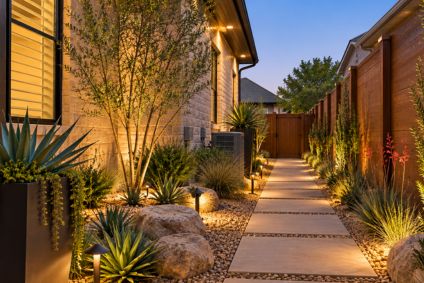
Desert landscape lighting should be subtle and strategic
Desert landscape lighting works best when it guides movement, highlights texture, and creates atmosphere without overpowering the night. Too many bright fixtures can make a yard feel commercial or washed out. A restrained lighting plan keeps the space safe and dramatic while letting shadows do some of the design work.
Path lights are useful along walkways, stairs, and entry routes. Uplights can emphasize a sculptural yucca, ocotillo, tree canopy, or textured wall. Low wall lights or step lights can improve visibility around patios without shining directly into seating areas.
Good lighting also changes how the yard is experienced. Gravel, boulders, agave leaves, and metal edging all cast interesting shadows when lit from the right angle. For a modern effect, keep fixtures simple and finishes consistent. Warm, low-glare lighting usually feels more inviting than intense white light.
A simple lighting checklist:
- Light the route from driveway or sidewalk to the entry.
- Highlight one or two focal plants instead of every plant.
- Use shielded fixtures to reduce glare.
- Keep fixture styles minimal and consistent.
- Avoid placing lights where irrigation spray will constantly hit them.
- Test the nighttime effect before adding more fixtures.
Containers add flexibility to small or difficult spaces
Container gardening is a smart way to bring modern desert style into courtyards, patios, balconies, and narrow side yards. Large concrete, ceramic, or metal planters create clean architectural shapes, and they allow you to add structure without major excavation. They are also useful where soil quality is poor or where in-ground planting is limited.
For the cleanest look, choose fewer large containers rather than many small ones. A pair of matching planters at the entry can make the front door feel more finished. A row of rectangular planters can define a patio edge or screen a utility area.
Plant containers with the same design principles used in the rest of the yard. Repeat forms, contrast textures, and avoid overcrowding. Agaves, aloes, blue chalksticks, gopher plant, and compact ornamental grasses can work well in containers when given proper drainage and exposure.
From rock-only to modern desert style
Many desert yards start as basic rock landscapes because rock is durable and water-conscious. The challenge is that rock alone rarely feels complete. A modern desert landscape adds intention through proportion, contrast, and function.
If your yard already has gravel, you may not need to start over. You can reshape beds, add defined borders, introduce larger pavers, create a focal planting, or install a seating zone. Small edits can make a big difference when they clarify how the space should be used.
Before adding plants, check irrigation and drainage. Drought-tolerant does not mean no water, especially while plants are establishing. Drip irrigation, hydrozoning, and proper spacing can help plants stay healthier while avoiding waste. It is also wise to confirm any local watering guidelines before making major changes.
The lasting appeal of desert modern design
Modern desert landscaping is not about making a yard look empty or severe. At its best, it turns heat, sun, stone, and drought-tolerant plants into a design language that feels calm, durable, and distinctly regional. For Las Vegas homeowners, that means a yard can be stylish without depending on high water use or constant upkeep.
Start with structure, choose low maintenance desert landscape plants thoughtfully, add shade where people will gather, and use desert landscape lighting with restraint. When every element has a reason to be there, the space feels effortless. That is the real beauty of modern desert design: it looks refined, works with the climate, and makes outdoor living feel natural again.
FAQs
1. What are the best plants for modern desert landscaping in Plano, TX?
The best plants for modern desert landscaping in Plano, TX, include red yucca, agave, Texas sage, ornamental grasses, and desert willow. These drought-tolerant plants offer a clean, contemporary appearance while handling North Texas heat. Professional landscape design can combine these plants with decorative gravel, natural stone, and modern hardscaping to create a beautiful, low-maintenance yard.
2. How much does modern desert landscaping cost in Plano, TX?
The cost of modern desert landscaping in Plano, TX, depends on yard size, plant selection, hardscape materials, irrigation upgrades, and overall design complexity. Smaller projects featuring decorative rock, drought-tolerant plants, and landscape edging generally cost less than complete front yard transformations with custom pavers, stone walkways, and landscape lighting. Jaguar Landscape provides customized landscaping solutions for Plano homeowners looking to improve curb appeal while reducing lawn maintenance.
3. Can modern desert landscaping work in the North Texas climate?
Yes, modern desert landscaping can work beautifully in Plano, TX, when designed for North Texas weather conditions. Unlike true desert climates, Plano experiences periods of heavy rainfall, humidity, and occasional freezing temperatures. Choosing Texas-adapted, drought-tolerant plants, installing proper drainage, and incorporating durable hardscape materials helps create a landscape that looks modern and performs well year-round. Jaguar Landscape can help homeowners achieve a desert-inspired design suited to the local climate.