
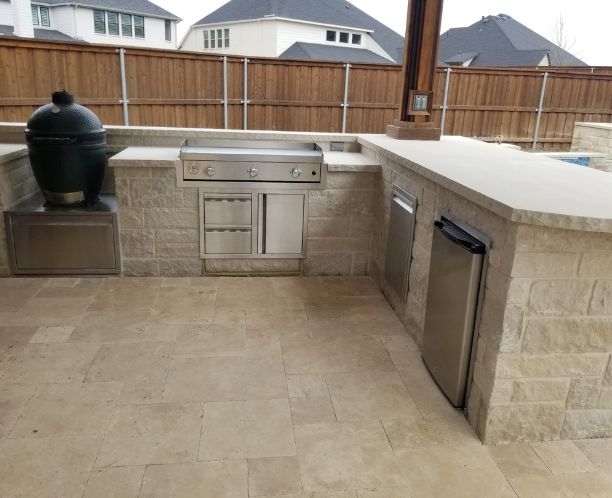
Elevated Culinary Living with Custom Outdoor Kitchens
A professionally designed custom outdoor kitchen can completely transform the functionality, entertainment value, and overall outdoor experience of your home. Our outdoor culinary and BBQ island services focus on building durable, heat-tolerant, and weatherproof cooking spaces that enhance architectural appeal, streamline outdoor entertaining, and add significant long-term market value to your property. Whether you are building a full chef-style kitchen, adding a streamlined BBQ island, or creating a complete dining bar extension, we craft a custom masonry layout tailored specifically to your space.
We do more than just drop in components—we engineer an end-to-end outdoor living hub. With meticulous attention to structural masonry framing, utility integration, heat-resistant countertop surfaces, ventilation clearance, and weather-proof storage, we ensure your outdoor kitchen functions effortlessly, withstands intense Texas heat, and remains structurally sound against North Texas soil movement for years to come.

Built-to-Last Custom Outdoor Kitchen Solutions
We design and construct custom outdoor kitchens, grill islands, and outdoor dining bars engineered for your property’s layout, heat clearance, structural support, and long-term sub-grade stability—ensuring a durable, weather-resistant, and high-performing outdoor cooking station built to thrive in the North Texas climate.

Licensed & Insured Outdoor Kitchen & Masonry Professionals
We build custom outdoor kitchens, masonry grill islands, pizza oven stations, and structural dining bars engineered for your property’s elevation, utility access, soil conditions, and overall design goals—ensuring a safe, durable, and visually striking outdoor culinary space built for long-term stability.

Proper Ground Preparation for Custom Outdoor Kitchens
Our site preparation process includes precise excavation, deep footing installation, utility trenching, base compaction, and structural slab engineering—creating a rock-solid foundation for an outdoor kitchen built to support heavy masonry loads and withstand North Texas soil movement.

Engineered Custom Outdoor Kitchen Installation Process
From structural trenching and deep footing pours to utility hookups, precision stone masonry, and final appliance testing, we focus on delivering a seamless construction process that leaves your property safe, structurally sound, and ready to enjoy.
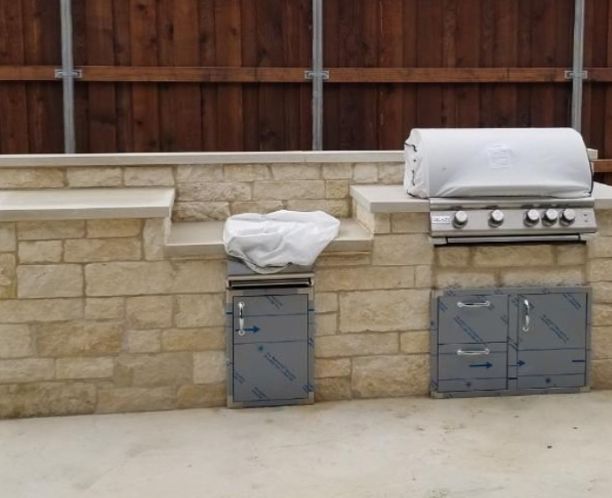
Questions? You Need Answers
Every project begins with a thorough research and discovery phase where we gather all the necessary details about your home and your vision.