
Modern Desert Landscape Front Yard Design Guide
A modern desert landscape front yard can look crisp, clean, and welcoming without the constant mowing, edging, and watering that traditional lawns demand. The key is to treat the yard like a designed outdoor room.
Use strong lines, open space, and a limited plant palette that handles heat well. If you're replacing grass with xeriscape, this guide shows how to design a desert front yard that feels current, stays practical, and delivers low-maintenance desert curb appeal all year.
Start With a Simple Plan (Modern Xeriscape Design Principles)
Great modern desert landscaping is less about filling every corner and more about shaping space. These modern xeriscape design principles help your modern desert landscape stay clean rather than crowded:
- Use bold geometry: Straight paths, rectangular planting bays, and clear edges.
- Repeat materials: One gravel type, one boulder style, and 2-3 hero plants.
- Layer heights: Ground plane gravel, mid-layer succulents and shrubs, and vertical cactus or yucca.
- Keep open space: Empty gravel areas make plants read as sculpture.
- Group by water needs: Set up hydrozones so irrigation is efficient.
Tip: Take a photo of your house front and sketch hardscape lines over it. If the lines match the home's architecture, your xeriscape front yard design will feel built in, not random.
Choose a Cohesive Gravel and Boulder Landscape Layout
A strong gravel and boulder landscape layout is the backbone of a modern yard. Think of boulders as furniture. They anchor the plan and create rooms within the open gravel field.
How to place boulders quickly:
- Pick 2-3 boulder sizes: one statement boulder, several medium stones, and a few small ones.
- Cluster in odd numbers, like 3 or 5, and partially bury 15-25% for a natural, grounded look.
- Line up clusters with key sightlines such as the front door, window views, or property corners.
Rock Mulch vs Decomposed Granite (What Looks Most Modern?)
When deciding between rock mulch vs decomposed granite, think about the look, budget, and foot traffic:
- Decomposed granite (DG): Softer and more designed. It works well for paths and courtyards. It can compact well but may track a little.
- Rock mulch (gravel): Crisp texture, excellent drainage, and strong durability. Choose one color for a modern feel.
For many homes, a mix works best. Use DG for walkways and gravel for planting fields.
Pick Drought-Tough Plants That Still Look Designed
The best plantings for a desert front yard feel planned, like living sculpture. Start with form first, then color.
Best Desert Plants for Full Sun (Modern-Friendly Choices)
If you need best desert plants for full sun, start here:
- Agave for bold rosettes and center points
- Yucca for clean vertical lines
- Cacti for structure and tall accents
- Texas sage or brittlebush for soft mounds and seasonal bloom
- Desert spoon for a spiky sphere form
- Penstemon for color without much fuss
These are among the most reliable drought tolerant plants for desert yards, especially when you pair them with proper spacing and rock mulch.
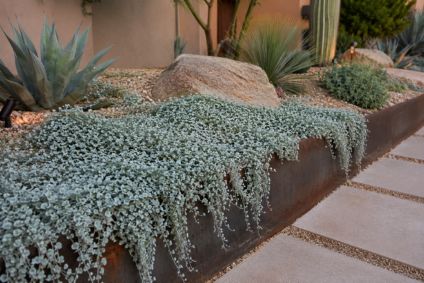
Foxtail Agave Landscaping (A Modern Statement Plant)
Foxtail agave landscaping is a strong choice for contemporary front yards because it looks full but stays drought resilient. Use it as a focal point near the entry or repeat it along a path. Give each plant room. Modern design needs breathing space around every specimen.
Safety note: Place sharp plants away from tight walkways and play zones.
Cactus and Succulent Garden Planning (Keep It Clean, Not Crowded)
For cactus and succulent garden planning, the most common mistake is overplanting. A modern approach uses fewer plants with clearer spacing:
- Space large agaves and yuccas so their mature widths do not overlap.
- Use smaller succulents as understory in limited patches, not everywhere.
- Repeat 2-3 species to create unity.
- Avoid too many textures in one bed, or it can look messy.
If you want wildlife value, include native desert plants for pollinators such as penstemon, globemallow, desert marigold, or native salvias in a dedicated color band so it still feels modern.
Build a Low Maintenance Modern Desert Landscape Front Yard (Step-by-Step)
A low maintenance modern desert landscape front yard comes from smart construction, not just tough plants.
1) Remove Lawn and Prep the Base
When replacing grass with xeriscape, do not skip prep:
- Remove sod and roots, or sheet mulch where it makes sense.
- Grade for drainage away from the house.
- Install a quality weed barrier only if your site really needs it. In many cases, proper gravel depth and upkeep are enough.
- Add steel or aluminum edging for crisp lines.
2) Create Clear Zones
Keep it simple with 3-5 zones:
- Entry path zone with DG or pavers
- Gravel field zone with open negative space
- Plant islands for agaves and shrubs
- Boulder clusters
- Optional dry creek or rain-catch basin
3) Mulch Correctly
Use 2-3 inches of gravel in planting areas, or DG where it fits. Keep mulch a few inches away from plant crowns to reduce rot.
4) Space for Mature Size
The modern look improves over time only if plants are not jammed together. Read mature widths and plan for year-3 and year-7 shapes.
Desert Landscaping Ideas for Small Yards (Make It Feel Bigger)
If you're searching for desert landscaping ideas for small yards, modern desert style works well because open space creates calm.
Try these space-expanding moves:
- One bold focal plant, like an agave, instead of many small plants.
- Diagonal path alignment to make a short run feel longer.
- Two-tone gravel bands for subtle depth.
- Wall-hugging plant islands so the center stays open.
- A single sculptural boulder instead of a pile of rocks.
This approach keeps your modern desert landscape front yard from feeling busy and makes maintenance much easier.
Desert Landscape Lighting for Pathways (Modern, Safe, and Subtle)
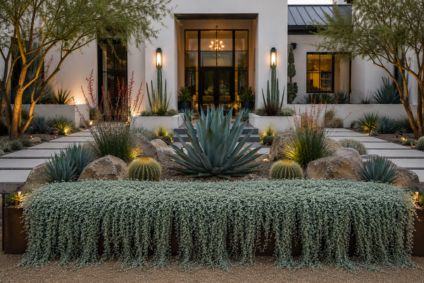
Good desert landscape lighting for pathways boosts safety and makes the design look high end at night.
Modern lighting guidelines:
- Use warm white, around 2700K-3000K, for a welcoming tone.
- Light surfaces, not bulbs. Aim fixtures at gravel texture, boulder faces, or plant forms.
- Mix:
- Low path lights for navigation
- Uplights to graze a cactus or agave
- Step or entry lights near the door
Keep spacing even and avoid runway brightness. A few well-placed fixtures look more modern than many scattered ones.
Drip Irrigation Setup for Xeriscaping (Efficient and Hidden)
A smart drip irrigation setup for xeriscaping is one of the biggest upgrades you can make, especially for establishing plants.
Basics to get right:
- Use separate zones for:
- New plants that need more frequent watering at first
- Established shrubs and accents
- Cacti and succulents, which usually need the least water
- Run inline drip tubing or individual emitters, depending on the layout.
- Place emitters at the root zone edge, not at the crown.
- Install a filter and pressure regulator. Add a smart timer if possible.
Once established, many front yards can be watered deeply and infrequently, depending on local climate and soil. That keeps the look lush without wasting water.
How Much Does Desert Landscaping Cost? (Realistic B
Homeowners often ask: how much does desert landscaping cost? It depends on removal work, hardscape, materials, and whether you do the job yourself.
Typical cost drivers:
- Lawn removal and hauling
- Grading and drainage changes
- Quantity and type of gravel or DG
- Boulders, including size and delivery access
- Plants, since specimen agaves cost more
- Irrigation and lighting
- Edging and pavers
Rule of thumb: A simple DIY refresh with gravel and a few plants can be affordable. A full pro redesign with lighting, irrigation, boulders, and premium plants can cost much more. If you want the best return, spend on:
- Clean edging and lines
- A strong focal plant
- Correct irrigation
- A cohesive gravel choice
Quick Checklist: Modern Desert Front Yard That Always Looks Finished
Use this checklist before you buy materials:
- One consistent gravel color, or two at most
- Crisp edging and defined planting islands
- 1-2 focal hero plants, such as agave, yucca, or cactus
- Repetition of 2-3 supporting plants
- Boulders partly buried and deliberately grouped
- Path lighting placed for safety and texture
- Drip irrigation zoned by plant water needs
This formula delivers reliable low maintenance desert curb appeal while keeping the design modern and uncluttered.
Takeaway
A stunning modern desert front yard comes from restraint: strong lines, a disciplined palette, and plants chosen for form as much as toughness. With a thoughtful xeriscape front yard design, a clean gravel and boulder landscape layout, and efficient modern desert landscaping practices like drip irrigation and subtle lighting, you can build a front yard that looks well designed, saves water, and stays beautiful in full sun for years.
Q&A
Question: What is the easiest way to make a desert front yard look modern instead of messy?
Answer: Focus on restraint and repetition. Use one main gravel color, defined edging, a few bold plant forms, and open space. A modern desert landscape should feel composed, with clear zones, repeated materials, and plants spaced for their mature size rather than crowded together.
Question: Should I use decomposed granite or gravel for a xeriscape front yard?
Answer: Both can work well, but they serve slightly different purposes. Decomposed granite is ideal for walkways, courtyards, and areas where you want a softer, more compact surface. Gravel or rock mulch is better for planting fields because it drains well, looks crisp, and is very durable. Many modern designs use DG for paths and gravel around plants.
Question: How many plant species should I use in a modern desert landscape front yard?
Answer: Keep the palette limited. The guide recommends repeating 2-3 supporting plant species and using 1-2 focal hero plants such as agave, yucca, or cactus. This creates unity, reduces visual clutter, and makes the yard easier to maintain over time.
Question: Is drip irrigation still necessary for drought tolerant desert plants?
Answer: Yes, especially during establishment. Even drought tolerant plants need steady water while roots develop. A smart drip irrigation setup with separate zones for new plants, established shrubs, and cacti or succulents helps water efficiently. Once established, many desert front yards can be watered deeply but infrequently, depending on local climate and soil.
Question: What should I prioritize if I have a limited budget for desert landscaping?
Answer: Spend first on the features that create the biggest visual and practical impact: crisp edging and clean lines, one strong focal plant, correct irrigation, and a cohesive gravel choice. These elements help the yard look intentional even if you add boulders, lighting, or more plants later.
Contact us today to design your modern desert landscape installation!