
Foundation Drainage Systems: Why They Matter
Water is one of the biggest threats to a home's foundation, and good foundation drainage systems move it away before it can do harm. Whether you deal with damp basement walls, soggy landscaping, or pooling water after storms, the right foundation drainage solutions can lower pressure around the home and protect the structure over time. This guide explains how foundation drains work, where different systems fit, and what to know before installing a french drain around the foundation.
Why does foundation drainage matter?
Foundation drainage matters because soil holds water, and that water can press against foundation walls, seep through cracks, and weaken the ground supporting the home. A well-planned foundation drain system collects and redirects water so it does not sit beside the structure. In practical terms, better drainage around foundation areas can mean fewer moisture problems, less hydrostatic pressure, and a lower risk of long-term movement.
Many homeowners first notice problems as musty basement smells, salt stains on walls, puddles near the house, or soil that stays wet long after rainfall. These signs do not always mean the foundation has failed, but they do suggest that house foundation drainage deserves attention. Addressing the issue early is usually easier than waiting until water intrusion becomes a repeat repair problem.
How water affects the soil around your home

Water changes how soil behaves. Clay-heavy soil can expand when wet and shrink when dry, creating stress around foundation walls and footings. Loose or poorly compacted soil may wash away or settle unevenly, which can leave parts of the foundation less supported than others.
Drainage around house foundation areas is not just about keeping a basement dry. It also helps manage the environment around the footing, where stability matters most. When water is directed away from the home, the soil is less likely to stay saturated, and the foundation has a better chance of staying stable through changing weather.
Common foundation drainage systems
Different foundation drainage systems solve different water problems. The best choice depends on where the water comes from, how the lot slopes, soil type, and whether the issue is surface runoff, subsurface water, or both.
Common options include:
- Gutters and downspout extensions: These are the first line of defense. They move roof water away from the foundation instead of dumping it directly beside the wall.
- Surface grading: Soil should generally slope away from the home so water naturally flows outward rather than toward the foundation.
- Exterior foundation drainage system: This usually collects water near the footing and sends it to a safe discharge point, such as daylight, a storm system where allowed, or a sump setup.
- Foundation drains: These are perforated pipes installed near the footing to collect groundwater before it builds pressure against the wall.
- Curtain drain around house: This system intercepts water before it reaches the foundation, often uphill from the home or along a wet section of the yard.
A foundation curtain drain can be especially useful when water is moving across the property from a slope. Instead of waiting for that water to arrive at the foundation, the drain captures and redirects it earlier.
What is a French drain around a foundation?
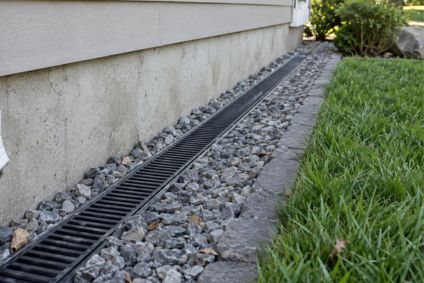
A french drain around house foundation areas is a gravel-filled trench with a perforated pipe that collects water and carries it away. A french drain foundation drainage setup works because water moves through gravel more easily than through packed soil, then enters the pipe and flows to a lower outlet. When built the right way, a french drain around foundation walls can cut standing water and ease pressure against the structure.
You may hear related terms such as foundation french drain, french drain for house foundation, french drain along foundation, or french drain exterior foundation. These phrases often describe similar drainage ideas, though the layout can differ. A french drain outside foundation walls may sit near the footing, while a french drain next to foundation landscaping may handle surface water and shallow subsurface water closer to grade.
A french drain foundation wall installation is more involved when it requires digging down to the footing. That type of exterior foundation drainage can work well, but it should be planned with care because excavation, pipe slope, waterproofing, gravel, filter fabric, and discharge location all affect performance.
Interior and exterior drainage serve different purposes
Exterior foundation drainage stops water before it enters the home. This can include foundation drains house builders install during construction, a french drain outside foundation walls, or a drain around foundation footing. Because exterior systems handle water at the source, they are often a strong choice when the property allows proper excavation and discharge.
Interior systems usually handle water after it reaches the inside perimeter. They can help in basements where exterior digging is not practical, but they do not remove outside soil pressure in the same way. In many cases, homeowners use exterior foundation drainage, waterproofing, gutter upgrades, and grading changes together for better protection.
Choosing the best foundation drainage system for your property
The best foundation drainage system is the one that matches the real water problem. A wet basement caused by short downspouts does not need the same fix as groundwater pressing against a below-grade wall. Before choosing a system, it helps to watch how water behaves during and after heavy rain.
Use this practical checklist:
- Look for low spots where water pools near the home.
- Check whether gutters overflow or downspouts discharge beside the foundation.
- Note whether water comes from uphill areas, neighboring properties, or paved surfaces.
- Inspect basement or crawl space walls for dampness, staining, or mineral deposits.
- Confirm that any proposed foundation drain system has a realistic outlet.
- Avoid sending water toward neighboring properties or back toward the house.
If the water source is uphill runoff, a curtain drain around house areas may work better than placing every drain beside the wall. If groundwater is collecting at the footing, foundation drains or a french drain around foundation perimeter may be the better approach.
Important details when installing drainage near the foundation
Installing french drain around foundation areas takes more than digging a trench and adding pipe. The system needs the right slope so water flows the correct way. It also needs clean gravel, tough filter fabric to cut clogging, and a discharge point that can handle the water without creating a new problem.
For a french drain along foundation walls, placement matters. Too shallow, and the system may miss deeper water. Too close or poorly dug, and it can disturb soil support or create safety issues. A french drain next to foundation structures should be planned with care, especially around older homes, deep basements, utilities, patios, and tight lot lines.
Maintenance matters too. Even well-built foundation drainage systems can struggle if gutters clog, outlets block, or sediment fills the system over time. Keeping surface water under control lowers the load on underground drainage.
Irrigation Dripline Along the Foundation
An irrigation dripline can also be used along the foundation to help maintain more consistent soil moisture during hot, dry periods. In North Texas, clay-heavy soils can expand when wet and shrink when they dry out, which can contribute to movement around the foundation. A properly designed dripline delivers small, controlled amounts of water to the soil near the perimeter of the home, helping reduce extreme moisture swings without saturating the area. The system should be installed and scheduled carefully so the goal is consistent soil moisture—not keeping the foundation constantly wet—and it should work alongside proper grading and drainage rather than replacing them.
A drier foundation starts with smarter water management
Foundation drainage is not about one product or one trench. It is a full plan for moving water away from the home with grading, gutters, foundation drains, exterior drainage, and French drain options where they make sense. The goal is simple: keep water from collecting against the structure.
If you see recurring wet spots, basement moisture, or pooling beside the house, start by finding where the water comes from. From there, the right foundation drainage solutions are easier to choose, whether that means improving surface flow, adding a foundation curtain drain, or planning a french drain exterior foundation system that protects the home for years.
Q&A
How do I know whether my foundation drainage problem is caused by surface water or groundwater?
Short answer: Surface water problems often show up as pooling near the house, overflowing gutters, short downspouts, or runoff moving toward the foundation after rain. Groundwater issues are more likely when water collects near the footing, basement walls stay damp, or moisture appears even after surface runoff has drained away. Watching the property during and after heavy rain is one of the best ways to find the source before choosing a drainage system.
Is a French drain always the best solution for foundation drainage?
Short answer: Not always. A french drain around foundation areas can work well when subsurface water or water near the footing needs to be collected and redirected. But simpler fixes like cleaning gutters, extending downspouts, or improving surface grading may solve problems caused by roof runoff or poor slope. The best foundation drainage system depends on where the water comes from, how the property is graded, soil conditions, and whether there is a good place to discharge the collected water.
What is the difference between a foundation drain and a curtain drain around house areas?
Short answer: A foundation drain is usually installed near the footing to collect groundwater before it builds pressure against the foundation wall. A curtain drain around house areas is usually placed to intercept water before it reaches the foundation, often uphill from the home or along a wet part of the yard. If water is moving toward the house from a slope, a curtain drain may solve the problem sooner; if groundwater is already collecting at the footing, foundation drains may be the better fit.
Why is the discharge point so important for a foundation drain system?
Short answer: A foundation drain system must move water to a safe spot where it will not flow back toward the home, overload soil near the foundation, or create trouble for nearby properties. A drain without a real outlet can collect water but fail to remove it well. Proper slope, pipe placement, and discharge planning are all key for long-term performance.
Can interior drainage protect a foundation the same way exterior drainage does?
Short answer: Interior drainage can help manage water after it reaches the inside edge of a basement, especially when exterior digging is not practical. However, it does not reduce outside soil pressure in the same way as exterior foundation drainage. Exterior systems are meant to manage water before it enters the home, while interior systems are often part of a broader plan that may also include waterproofing, gutter upgrades, grading changes, and exterior drainage where possible.
