
Enhancing Your Garden with Outdoor Lighting in Plano TX
Outdoor lighting can make your garden feel more welcoming after sunset. It also helps you see paths, steps, and doors clearly. The best plan mixes useful light with a few decorative touches, like string lights over a seating area or a focused light on a favorite garden feature. Start with how you use the space, then choose fixtures, power sources, and placements that fit those needs without flooding the garden with light.
You do not need to light every corner. A good layout gives you a place to sit, a clear way home, and some dark spots that stay calm.
What Plano tx outdoor lighting works best in a garden?
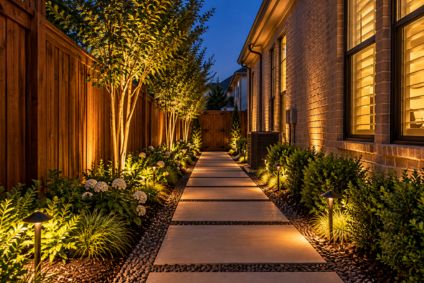
The best outdoor lighting gives each part of the garden a clear job: path and step lights for safe movement, string lights for mood, and directed fixtures for doors or chosen features. Do not ask one bright light to do everything. Plan each area around what you need to see. That helps cut glare and waste.
Begin with a simple sketch. Mark the back door, seating area, main walking route, changes in level, and any feature you want to enjoy from indoors. Then give each proposed light a job:
- Moving around: Focus on the route between your door, patio, gate, and steps. Check the walking surface itself, not just the plants around it.
- Spending time outside: Plan soft light around dining chairs, benches, or conversation spots, with separate task lighting where you need a clearer view.
- Creating a focal point: Pick one feature, such as a sculpture, textured wall, or planted container, rather than lighting every border.
For a small garden, start with the main route and one seating area. Leave extra decorative fixtures off the list until you have seen that first setup after dark.
Make string lights part of the garden's design
Treat string lights as a way to frame a gathering place, not as a replacement for all your landscape lighting. For your first layout, try outlining the dining area or following the shape of a pergola. Keep practical path and step lights separate so you can change the mood without losing the way home.
Layout ideas for patios, pergolas, and seating corners
For a pergola, follow the outer beams to make a simple outline. Or try parallel runs across the seating area if you want a more set overhead pattern. Choose one layout first rather than mixing several shapes.
On an open patio, sketch a gentle zigzag between good mounting points. Measure the full route, including the distance to power and the slack the maker asks for. Before installation, check that the supports, mounting hardware, and light set fit the plan; secure mounting helps protect outdoor lights from wind damage.
For a tucked-away bench, try a shorter run along a nearby structure. Keep the focus on the place where you sit rather than stretching lights across an unused part of the garden. Make sure your front or backyard have a quality drainage system to avoid long term problems!
Choose the effect before choosing the bulbs
For a relaxed setting, use warm-white lights and a simple layout. Compare globe or vintage-style bulb shapes with your furniture and architecture, and save multicolor effects for a playfully colored scheme. If you choose dimmable LEDs, make sure the lights and controller work together; do not assume dimming will work.
Should you choose solar or wired garden lights in Plano?
Choose solar lights where their panels get enough sun and their run time fits your needs. Use wired lighting when you need light on a steady schedule. Solar fixtures store daytime power in batteries, so check how long they last on cloudy days before you rely on them for an important route.
Make the choice by location rather than picking one power source for the whole garden:
- A sunny, decorative border: Standalone solar lights can work well if avoiding a power connection matters. Check where the panel will sit, not just where you want the light.
- A regularly used dining area: Compare plug-in options with the outlet location, cable route, and controls. Ask an electrician about a suitable permanent power option if access is awkward.
- An essential entrance or stairway: Focus on dependable light during the hours you use it. Check the whole system, not just how it looks.
When you compare costs, look at more than the fixture price. Ask what mounting hardware, controls, replacement parts, and paid work each option needs. For solar products, check whether the battery can be replaced and whether good replacements are easy to find. Do not treat the cheapest first buy as the cheapest long-term choice.
Position lights for visibility, not glare
Good placement puts light on the area you need to see instead of into your eyes. Shielded fixtures and careful aiming help keep light on the target and limit spill into nearby spaces. Use the lowest brightness that still does the job.
Test the planned positions from several views. Walk toward the patio from the house, sit in your usual chair, and look back toward the entrance. Also check the view from inside windows: the layout should help the garden without becoming a distraction.
For paths, check whether you can see edges, turns, and changes in level. Do not set fixture spacing only by how neat it looks in daylight. Adjust the layout around what you can see after sunset, following the idea that lighting should help visibility, not hurt it.
Be selective with accents. Try pointing a light downward onto a feature where a good mounting spot allows it, and check that the beam stays in the area you want. Keep wider light for places that truly need it rather than using it as the garden's background light.
Keep energy use and nighttime impact in check

LEDs are worth considering because well-made LED lighting uses less energy and usually lasts longer than incandescent lighting. Still, an efficient bulb does not make up for too many fixtures or too many hours of use. Pick the light output you need, then use controls to limit when it runs.
Think of controls as part of the design. Put decorative lighting on a schedule that fits your evenings instead of leaving it on until morning. Where it makes sense, use motion activation for short access instead of all-night use.
Warm-colored lighting, downward-facing beams, and shorter run times also support a kinder night setting. Keep nearby windows and wildlife habitat in mind when you decide where light is needed. The goal is a usable garden, not a bright property edge.
Check installation safety and plan for maintenance
Outdoor conditions mean the right product fit matters. The Consumer Product Safety Commission recommends checking that lights are rated for outdoor use, choosing products tested by a nationally recognized lab, and powering outdoor lights through ground-fault circuit interrupter protection. Check extension cords for their intended use as well.
Use this checklist before installation and during seasonal checks:
- Inspect the equipment: Look for cracked sockets, frayed insulation, bare wires, and loose connections. Remove damaged sets from use instead of keeping them on.
- Follow connection limits: Use the maker's instructions for how many light strings can connect together. Do not assume that matching plugs mean an unlimited run is safe.
- Protect the cable route: Keep cords away from foot traffic and avoid pinching, crushing, or fastening through electrical wiring. Use clips or hooks, not nails through cords.
- Review supports and surroundings: Check mounting points after rough weather and check the layout again as nearby plants grow. Follow the product directions for cleaning, storage, and replacement parts.
Before you buy, also check whether the product is meant for temporary decoration or for longer use. Seasonal decorative lighting includes temporary-use products, so an outdoor label alone should not be your only test. For new outlets or fixed wiring, ask a qualified electrician instead of making a permanent extension-cord setup yourself.
Start small and refine the result
Begin with one useful change: a clearer route, a better-lit entrance, or string lights around your favorite place to sit. Use the garden for a few evenings before you add more. Keep what works, change what feels off, and resist filling every dark space. The best result is a garden that feels ready to enjoy, not one that simply has more lights.
Q&A
Question: How much of the garden should be lit?
Short answer: Light only the areas you need for use, safety, or enjoyment. Focus on key routes, entrances, steps, seating areas, and one or two chosen features rather than trying to brighten every corner. Leaving some areas dark can make the garden feel calmer, cut waste, and reduce glare or spill to nearby spaces.
Question: Are string lights enough for a garden lighting plan?
Short answer: String lights work best for mood and for framing a gathering place, like a patio, pergola, dining area, or bench. They should not replace practical light for paths, steps, or entrances. Keeping decorative lights separate from route lighting lets you dim or turn off the mood light without making the way back hard to see.
Question: When are solar lights a good choice?
Short answer: Solar lights can work well in sunny spots where the panel gets enough daylight and the needed run time is modest. They are especially useful for decorative borders or places where avoiding wiring matters. But for essential spots like stairways, entrances, or busy dining areas, check whether solar lights can give steady light through cloudy days and the hours you really need them.
Question: How can outdoor lighting reduce glare and nighttime impact?
Short answer: Aim lights at the surfaces you need to see, use shielded fixtures, choose the lowest brightness that still works, and favor warm-colored, downward-facing light. Timers, schedules, and motion activation can also cut extra use. These choices help the garden stay useful while limiting spill toward neighbors, windows, and wildlife habitat.
Question: What safety checks matter most before installing outdoor lights?
Short answer: Make sure the lights and extension cords are rated for outdoor use, choose products tested by a nationally recognized lab, and use ground-fault circuit interrupter protection. Check for cracked sockets, frayed insulation, bare wires, loose connections, and damaged cords. Follow the maker's connection limits, protect cable routes from foot traffic and crushing, and ask a qualified electrician about new outlets or fixed wiring.