
Creating a Stunning Modern Desert Landscape Front Yard
The days of relying solely on thirsty, high-maintenance lawns to create a beautiful home exterior are fading. Today, homeowners are discovering that a modern desert landscape front yard is not just an eco-friendly choice, but a striking architectural statement. With their clean lines, sculptural plants, and earthy color palettes, these outdoor spaces offer a serene and sophisticated aesthetic that complements a wide variety of architectural styles.
If you are considering a front yard makeover, shifting from a traditional lawn to a water-wise oasis is a brilliant move. Let's dive into the essential elements, design tips, and practical steps needed to craft a stunning, drought-resistant landscape.
The Rising Popularity of Arid Landscapes
There is a profound shift happening in residential exterior design. The process of transforming grass lawns into arid landscapes is gaining incredible momentum, driven by a desire for sustainability and lower water bills. However, making this switch does not mean settling for a barren patch of dirt and a single cactus.
Today's modern desert landscaping focuses heavily on deliberate design. By leveraging Xeriscaping for curb appeal, you can create a front yard that actually increases your property value. The minimalist approach of a modern desert landscape relies on the intentional placement of every rock, plant, and pathway, resulting in an uncluttered space that feels both relaxing and luxurious.
Establishing the Foundation: Hardscaping Basics
The backbone of any successful desert style landscaping project is its hardscape. Without grass to blanket the yard, the materials you use for the ground, pathways, and borders take center stage.
Finding the Perfect Balance
Achieving the right hardscape vs softscape balance in dry climates is crucial. Too much stone can make the yard feel hot and uninviting, while too many plants can clutter the minimalist vibe of a modern desert landscape you are striving for. Aim for a ratio where hardscaping covers about 60% to 70% of the yard, allowing the remaining softscape (plants) to stand out as sculptural focal points.
Selecting the Right Ground Cover
When replacing grass, stone becomes your primary canvas. Many homeowners find themselves comparing crushed gravel vs river rock to find the best fit:
- Crushed Gravel: Features angular edges that lock together, making it an excellent, stable surface for walking paths and driveways. Quarter-inch minus gravel is a staple in modern designs.
- River Rock: Smooth and rounded, river rock is perfect for creating dry creek beds to manage water runoff or for adding contrasting borders around planting beds.
Pathway Pavers and Rock Gardens
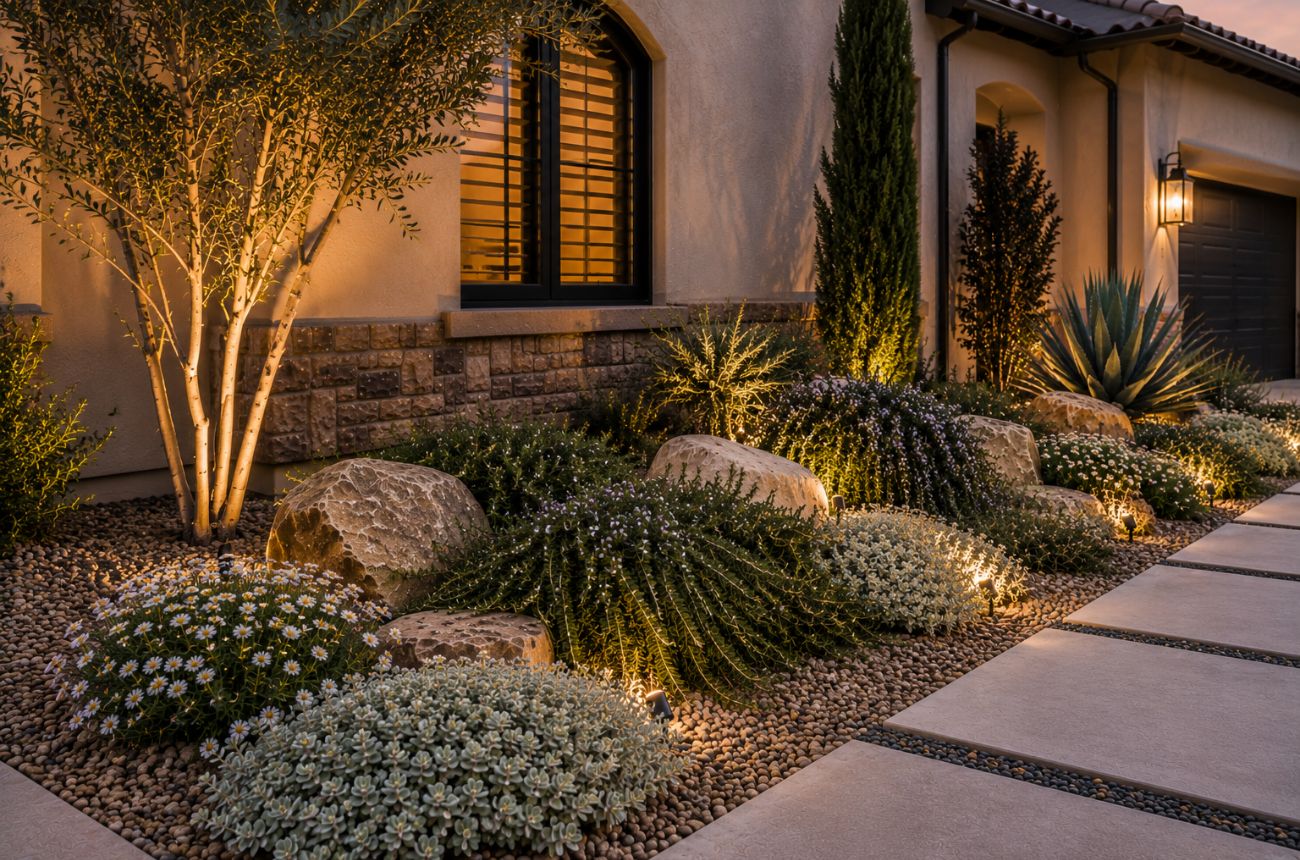
To achieve that highly sought-after contemporary look found in modern desert landscaping, focus on integrating modern pavers with desert flora. Large, oversized concrete step pads laid out in a geometric pattern, surrounded by dark crushed gravel and punctuated by soft tufts of ornamental grass, scream modern luxury.
If you are wondering how to design a minimalist rock garden, the secret lies in restraint. Choose a single, uniform gravel color for the base. Then, focus on creating visual interest with large boulders. Bury the bottom third of the boulders into the ground so they look like natural outcroppings rather than rocks simply dropped on the surface. Group them in odd numbers—threes or fives—and plant small succulents near their bases to soften the hard edges.
Curating the Perfect Desert Plant Palette
A modern desert landscape front yard truly comes to life when you introduce vegetation. The key is to select plants that offer geometric shapes, varying textures, and striking colors while requiring minimal water.
Focusing on Drought-Tolerant Natives
Your first step should be drought-tolerant native plant selection. Native plants are already adapted to your local climate's rainfall and soil conditions, practically guaranteeing their survival. Consider pairing structural plants with softer textures to keep the yard looking dynamic.

When people think of the desert, cacti immediately come to mind. But which cacti thrive in direct sunlight and fit a modern aesthetic?
- Golden Barrel Cactus: Their striking spherical shape and bright yellow spines look incredible when planted in neat grids or sweeping curves.
- Organ Pipe Cactus: Offers excellent verticality to contrast against low, horizontal property lines.
- Saguaro: The ultimate statement piece if you live in a climate that supports them.
For a softer yet equally architectural look, foxtail agave landscaping is a massive trend. Unlike the century plant, the foxtail agave features smooth, spineless rosettes that arch gracefully. This makes them perfect for planting near walkways where you wouldn't want sharp thorns snagging guests.
Succulent Arrangements and Ground Covers
You don't need a massive yard to make an impact. Implementing low-maintenance succulent arrangement ideas—such as grouping aloe vera, blue chalk sticks, and echeveria in modern, corten steel planters—can add rich greens and blues to your front porch or walkway entrance.
To replace the greenery of a lawn, look into heat-resistant ground cover alternatives. Plants like creeping thyme, trailing lantana, or silver carpet (Dymondia) can spread across the soil, keeping the ground cool and providing a pop of seasonal color without the heavy water requirements of turf.
Smart Irrigation and Water Management
Even drought-tolerant plants need water, especially during their first year of establishment. However, dragging a hose across your beautifully raked gravel is hardly efficient or modern in a modern desert landscape front yard.
Automating Your Watering
The most effective way to maintain your new yard is by installing a smart drip irrigation system. Unlike traditional sprinklers that lose massive amounts of water to wind and evaporation, a drip system delivers water directly to the root zone of each plant. When paired with a smart controller that adjusts watering schedules based on local weather forecasts, you ensure your plants thrive while minimizing water waste.
If you happen to have a beach property in Port Charlotte FL and are looking for custom curbing, we highly recommend Kustomized Kurbing!
Harvesting Nature's Water
Forward-thinking exterior design also looks at sustainable water harvesting techniques for homeowners. You can design your landscape's topography to work in your favor. By grading your yard to include subtle swales (shallow depressions) and dry river beds, you can capture rainwater from your roof and direct it toward your deeper-rooted trees and large shrubs. Not only does this save municipal water, but the dry creek beds also add a beautiful, natural aesthetic to the hardscape.
Elevating the Vibe: Lighting and Finishing Touches
A well-designed front yard should look just as good at night as it does during the day. Lighting is the final layer that brings your modern desert landscape together.
To match the clean, contemporary aesthetic, opt for mid-century modern outdoor lighting fixtures. Think sleek, matte black path lights, brushed brass sconces by the front door, and hidden uplights. Uplighting is particularly effective in desert landscapes; placing a spotlight at the base of a Golden Barrel Cactus or a multi-trunk Palo Verde tree creates dramatic, architectural shadows against the exterior walls of your home.
Bringing It All Together: DIY vs. Hiring a Professional
While laying out a few succulents and spreading gravel might seem like an easy weekend project, a truly cohesive, long-lasting modern yard requires grading, soil preparation, irrigation plumbing, and an eye for spatial design.
If you want a flawless execution, you might start searching for a "desert landscape near me" or specifically a "luxury landscape design near me." Working with a professional ensures that your plants are spaced correctly for their mature size, your irrigation is flawless, and your hardscape materials are high quality.
Naturally, budget is a consideration. The cost of professional xeriscape installation varies wildly depending on your location, the square footage of your yard, and the size of the plants you choose. While the initial investment might be higher than laying down sod, the long-term savings are undeniable. You will drastically cut down on your monthly water bill, eliminate the need for lawnmower gas and chemical fertilizers, and free up your weekends from endless yard maintenance.
Conclusion
Creating a modern desert landscape front yard is an exciting journey that merges environmental responsibility with high-end design. By carefully balancing your hardscaping materials, choosing striking architectural plants like foxtail agaves and barrel cacti, and utilizing smart irrigation, you can build a breathtaking exterior. Whether you tackle the project yourself or hire a luxury designer, embracing the arid aesthetic will reward you with a serene, low-maintenance, and incredibly stylish home front that will turn heads for years to come.
Frequently Asked Questions
Question: Why choose a modern desert landscape over a traditional lawn?
Short answer: A modern desert landscape is both eco-friendly and design-forward. It dramatically reduces water use and maintenance while delivering a clean, sculptural aesthetic that can boost curb appeal and even property value. Rather than looking barren, today’s xeriscapes use intentional placement of plants, rocks, and pathways to create a serene, luxurious, and uncluttered front yard.
Question: How do I balance stone and plants so the yard feels inviting, not stark?
Short answer: Aim for about 60–70% hardscape (stone, pavers, gravel) and let the remaining softscape (plants) act as sculptural focal points. Too much stone can feel hot and severe, while too many plants dilute the minimalist vibe. This ratio keeps the space visually calm, highlights plant forms, and maintains a modern aesthetic.
Question: What hardscape and lighting choices create a contemporary look?
Short answer: Use crushed gravel as a stable walking surface and for a crisp, modern base; reserve smooth river rock for dry creek beds and contrasting borders. Large, geometric concrete step pads surrounded by dark gravel and punctuated with tufts of ornamental grass instantly read as modern. For rock gardens, stick to one gravel color, bury a third of boulders for a natural look, group them in odd numbers, and soften edges with small succulents. Finish with mid-century modern fixtures—sleek path lights, brushed brass sconces, and discreet uplights that dramatize architectural plants like Golden Barrel cacti or multi-trunk Palo Verdes.
Question: Which plants fit the modern desert aesthetic and stay low-water?
Short answer: Start with drought-tolerant natives to match your local climate, mixing structural forms with softer textures. Standout choices include Golden Barrel (gridded or in sweeping curves), Organ Pipe for verticality, and Saguaro where climate allows. For walkways, choose spineless foxtail agave for an architectural look without thorns. Layer in succulent groupings (aloe, blue chalk sticks, echeveria) in modern planters, and consider heat-tolerant ground covers like creeping thyme, trailing lantana, or silver carpet (Dymondia) to add cooling greenery and seasonal color without heavy watering.
Question: How should I handle irrigation and rainwater in a desert landscape?
Short answer: Install a drip irrigation system so water goes directly to each plant’s roots, and pair it with a smart controller that adjusts schedules based on local weather—especially important during the first year while plants establish. Shape your site to harvest rainfall with subtle swales and dry creek beds that capture water from the roof and direct it to deep-rooted trees and shrubs. This reduces municipal water use and adds a natural, sculptural feature to the hardscape.
Question: Should I DIY or hire a professional for the best results?
Short answer: While you can place a few succulents and spread gravel, a polished, long-lasting design often requires grading, soil prep, irrigation plumbing, and strong spatial planning. Pros ensure correct plant spacing for mature sizes, reliable irrigation, and durable hardscape materials. Upfront costs vary by region, yard size, and plant selection and can exceed the price of sod, but long-term savings—lower water bills, no mower fuel or chemical fertilizers, and minimal maintenance—make the investment pay off.
Contact us today to schedule your in-person consultation for your desert style backyard!