
Benefits of Installing a Retaining Wall
A retaining wall does more than hold back soil. It can make a sloped yard easier to use, cut down erosion, frame outdoor living spaces, and give the front or back of a home a cleaner look. With the right design, materials, drainage, and plants, a retaining wall becomes both a practical fix and a strong landscape feature.
Why install a retaining wall in Plano?
A retaining wall is built to handle changes in grade, hold soil in place, and create outdoor space where a slope would otherwise make the yard hard to use. It is especially helpful for uneven yards, sloped driveways, raised beds, and areas that need a clearer edge. Beyond function, retaining walls can also improve curb appeal by turning awkward grades into layered landscape zones.
For many homeowners, the main benefit is control. Instead of letting runoff cut through mulch, grass, or planting beds, a well planned wall helps organize the yard. It can support a patio, border a driveway, create a planting terrace, or turn a hard to use hillside into part of the property.
Stronger soil control and better drainage
One of the biggest benefits of a retaining wall is erosion control. Sloped ground naturally shifts over time, especially after heavy rain, irrigation, or freeze and thaw cycles. A wall helps resist that movement by holding soil in place and creating a stable edge.
Drainage is just as important as the wall itself. Water pressure can build up behind the structure if it has nowhere to go. Good installation often includes gravel backfill, drainpipe, and grading that moves water away from the home. That is why a house retaining wall or front house retaining wall should be planned with care, especially near a foundation, walkway, or driveway.
A wall can also keep soil, mulch, and plants where they belong. Behind garden walls, roots have a better defined growing area, and upkeep can be easier because beds stay contained instead of spilling into lawn or hardscape.
More usable outdoor space
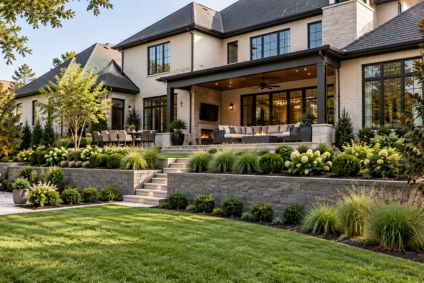
Sloped yards can be attractive, but they are not always practical. A backyard retaining wall can create level zones for seating, play areas, fire pits, garden beds, or outdoor kitchens. Instead of one hard incline, the yard becomes a series of spaces that are easier to move through and enjoy.
This is where backyard designs with retaining walls become useful. A single wall might support a patio, while a set of shorter walls can create terraces for planting or entertaining. A stepped retaining wall design can soften a steep grade and make the whole yard feel easier to use.
Useful design ideas include:
- Creating a lower patio with a wall behind it for privacy and soil support
- Using retaining wall stairs ideas to connect upper and lower yard levels
- Adding built in planters for color, herbs, or small shrubs
- Pairing a wall with a deck for smooth transitions between outdoor spaces
- Exploring decking retaining wall ideas when a raised deck meets a sloped lawn
What design options work best for your home?
The best retaining wall design depends on slope, soil, home style, drainage needs, and how you plan to use the space. A clean modern front yard retaining wall may use smooth concrete, large blocks, or simple lines. A cottage style yard may look better with stone texture, brick, curves, and layered plants. The goal is to solve the grade problem while still fitting the home.
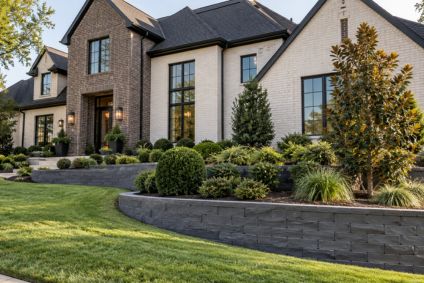
If you are gathering retaining walls ideas, begin with the areas that need structure most. Front yard retaining wall ideas often focus on curb appeal, entry paths, driveways, and planting beds. Front of house retaining wall ideas may include low walls around foundation plantings, raised beds near a porch, or a tiered layout that frames the entry.
For smaller properties, small front yard retaining wall landscaping ideas can make a big impact without taking over the space. A low wall along a walkway can define the garden, while a compact front yard driveway retaining wall can help manage a slope between the drive and the lawn. Driveway retaining wall ideas are also useful when soil tends to wash onto pavement or when a drive sits above or below the surrounding grade.
Retaining walls can also become an important part of the overall landscape style instead of looking like a separate structural feature. In an Evergreen Style landscape, for example, a natural stone or clean concrete retaining wall can pair beautifully with layered shrubs, ornamental grasses, hollies, magnolias, and year-round greenery. The wall adds structure while the plants soften its appearance, creating a polished landscape that stays attractive through every season. Retaining walls can also be adapted to Resort-Style, modern, Mediterranean, or Desert-Style landscapes by changing the materials, colors, planting palette, and overall shape of the wall.
Curb appeal with structure and style
A retaining wall adds instant visual order. It creates lines, layers, and edges that make the landscape look finished. Even a simple wall can make a front yard feel more polished by separating lawn from planting beds or guiding the eye toward the entry.
There are many retaining wall styles to consider. Modern retaining walls often use clean edges, neutral colors, and fewer plants. More traditional landscape wall ideas may feature natural stone, brick, or textured concrete blocks. Landscape brick ideas can work well for classic homes, garden borders, and warm toned hardscapes.
Material inspiration might include:
- Concrete block for strength, consistency, and a clean modular look
- Brick for timeless character and smaller garden walls
- Natural stone for organic texture and irregular beauty
- Poured concrete for sleek modern forms
- Timber for rustic settings where it is appropriate and well protected
Cement block retaining wall ideas are popular because blocks come in many shapes, colors, and finishes. They can be used for straight walls, corners, curves, and terraces, depending on the product and the installation method.
Planting opportunities that add beauty
A retaining wall does not have to feel hard or heavy. Planting softens the structure and helps it blend into the rest of the landscape. Retaining wall flower bed ideas can include cascading groundcovers, ornamental grasses, seasonal flowers, or shrubs that add year round shape.
Retaining wall planter ideas are useful when you want the wall to feel built in rather than separate. A low wall can act as the edge of a raised bed, while a terraced wall can create several planting layers. This works well in front yard landscaping ideas with retaining wall features, where flowers and shrubs can frame the home without looking crowded.
Curved retaining wall ideas can also help a wall feel more natural. Curves work well around patios, trees, paths, and garden beds because they guide movement and reduce the rigid look of a straight line.
Planning before you build
Before you choose materials, gather inspiration and note what you like. Searching for retaining wall images, retaining wall photos, retaining wall pics, or pictures of retaining walls on a slope can help you compare shapes, heights, colors, and planting mixes. Use those examples as style references, not as fixed plans, because every property has different soil, drainage, and load needs.
A smart planning checklist includes:
- Identify the slope problem or the space you want to create.
- Decide whether the wall is decorative, structural, or both.
- Plan drainage before choosing finishes.
- Match materials to the home's architecture and existing hardscape.
- Plan stairs, paths, lighting, and planting at the same time.
- Check local rules or professional requirements for taller or load bearing walls.
Landscape design retaining walls should feel connected to the whole yard, not added as an afterthought. When the wall, plants, steps, driveway, deck, and patio all work together, the result is more useful and more balanced.
A retaining wall is an investment in usable space
The best retaining wall solves a real landscape problem while also improving how the property looks and works. It can protect soil, guide drainage, support gardens, shape outdoor rooms, and turn a difficult slope into a useful feature.
Whether you are considering a backyard retaining wall, a modern front yard retaining wall, or a simple garden border, start with the purpose first. Once the structure is planned correctly, the style choices become easier, and the finished wall can add lasting value to everyday outdoor living.
Q&A
What is the main reason to install a retaining wall?
Short answer: The main reason is to manage changes in elevation and stabilize soil, especially in sloped or uneven areas. A retaining wall can help prevent erosion, control runoff, create level outdoor space, and make a yard easier to use and maintain.
Why is drainage so important behind a retaining wall?
Short answer: Drainage matters because water pressure can build up behind the wall if it has nowhere to go. Good planning may include gravel backfill, drainpipe, and grading to move water away from the structure and nearby areas such as foundations, walkways, and driveways.
Can a retaining wall improve curb appeal as well as function?
Short answer: Yes. A retaining wall can add structure, clean lines, planting space, and a more finished look to the landscape. Front yard retaining walls can frame entry paths, define garden beds, support driveway slopes, and make the home's exterior feel more intentional.
What materials are commonly used for retaining walls?
Short answer: Common options include concrete block, brick, natural stone, poured concrete, and timber. The best choice depends on the home's style, the wall's structural needs, the look you want, and the surrounding hardscape or landscape design.
What should homeowners consider before building a retaining wall?
Short answer: Homeowners should identify the slope problem or the space they want to create, decide whether the wall is decorative or structural, plan drainage early, choose materials that match the home, include paths or stairs if needed, and check local rules for taller or load bearing walls.