
What is the purpose of a retaining wall and what is it?
Retaining walls are more than just functional structures. They play a crucial role in construction and landscaping. These walls hold back soil, preventing erosion and landslides.
Understanding their purpose is essential for anyone involved in construction or landscaping. Retaining walls can transform sloped areas into usable spaces. What is a retaining wall and its purpose? In short, it provides stability and creates usable space while protecting the site.
Different materials and designs cater to various needs and environments. From concrete to wood, each material offers unique benefits. Proper retaining wall design ensures these walls withstand the pressure of the soil they support.
In this article, we will explore the purpose, design, and benefits of retaining walls. Discover how they enhance both residential and commercial landscapes. We'll also touch on retaining wall benefits, retaining wall applications, and common retaining wall uses.
What is a Retaining Wall?
A retaining wall is a structure designed to restrain soil. It holds back earth in areas with steep slopes, effectively preventing erosion. These walls maintain the landscape's integrity. Put simply, what is the purpose of a retaining wall? The purpose of a retaining wall is to restrain soil safely and protect grades while improving usable space.
Retaining walls come in various types. Their purpose is to resist lateral pressure from soil. They work by converting horizontal force into vertical force, which disperses downwards.
Materials used for retaining walls vary widely. Here are some common ones:
- Concrete: Known for strength and durability.
- Stone: Offers a natural appearance.
- Brick: Provides an aesthetic, uniform look.
- Wood: Used for small, decorative walls.
Each material has distinct advantages. The choice often depends on the wall's design and surrounding environment. Proper selection ensures the wall's effectiveness and longevity, supporting overall retaining wall stability.
Purpose of Retaining Walls in Construction
Retaining walls have crucial functions in construction; the purpose of retaining wall in construction is to counteract the lateral pressure of soil. This helps in areas with varying elevations or steep terrains.
They provide essential stability to landscapes. By creating level surfaces, retaining walls prevent landslides and soil erosion. These structures are vital in maintaining the integrity of natural landscapes.
The purpose of retaining walls extends beyond erosion control. They also enhance the aesthetic appeal of properties. By incorporating terraces or garden beds, they improve the visual look of outdoor spaces.
In construction, retaining walls support various structures. Here are some key purposes:
- Support for buildings on slopes.
- Create additional usable space.
- Enhance landscape design features.
- Control water flow and manage drainage.
These uses highlight their versatility and importance in construction projects. By understanding the purpose of retaining walls, we can better appreciate their value in architecture and landscaping. The purpose of retaining wall also includes controlled drainage and long-term site protection. People also ask what is the purpose of retaining wall and what s the purpose of a retaining wall; both questions point to stability, drainage, and space creation.
Types of Retaining Walls
Retaining walls come in several types, each with distinct features. Their design depends on site conditions and project needs. Understanding these types is essential for choosing the right one.
Gravity walls rely on their massive weight to resist soil pressure. Made from heavy materials, they are often used for lower heights. They don't require additional reinforcement.
Cantilever walls are more complex, using steel-reinforced concrete. These walls have a horizontal base, providing extra leverage against soil. This design is suitable for medium heights.
Sheet pile walls are thin, vertical structures used in tight spaces. They consist of steel, wood, or vinyl sheets driven into the ground. This type is common in waterfront and soft soil areas.
Here's a quick list of retaining wall types:
- Gravity walls
- Cantilever walls
- Sheet pile walls
Each type has its specific applications and limitations. Selecting the right type ensures structural stability and project success. These categories align with different retaining wall applications depending on soil and space constraints. Proper planning and material choice are crucial in retaining wall design.
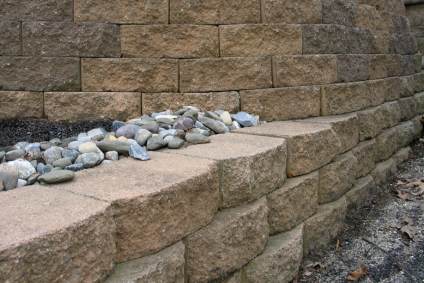
Key Elements of Retaining Wall Design
Successful retaining wall design involves several critical elements. Each component plays a role in ensuring structural integrity. Ignoring these can lead to costly failures and safety concerns.
Firstly, proper drainage is essential. It prevents water buildup behind the wall, which can increase pressure and risk collapse. Effective drainage systems involve pipes or gravel layers.
Next, foundation strength is vital. The wall's base must be stable to support the structure and soil loads. A deep, firm foundation prevents shifting and settling.
Additional factors include material selection and height considerations. Choosing the right materials affects durability and appearance. Height determines complexity and may require expert engineering.
Key design elements of retaining walls include:
- Proper drainage
- Foundation strength
- Material selection
- Height considerations
These components must be thoughtfully integrated for a successful retaining wall design and long-term retaining wall stability.
Benefits and Advantages of Retaining Walls
Retaining wall benefits and retaining wall advantages are numerous for homeowners and property developers alike. Their ability to stabilize slopes is a prime advantage. This stabilization prevents landslides and soil erosion, ensuring safety for the landscape.
Additionally, retaining walls greatly enhance property aesthetics. They create attractive terraces and defined garden spaces. These enhancements can boost property value, making it more appealing to buyers.
Moreover, they expand usable land area by leveling uneven terrain. This creates more practical spaces for landscaping or construction. Retaining walls also support environmental efforts by managing stormwater and reducing erosion.
Key advantages of retaining walls include:
- Soil stability
- Enhanced aesthetics
- Increased usable space
- Environmental benefits
These benefits underline the importance of investing in well-designed retaining walls for your property.
Common Applications and Uses of Retaining Walls
Retaining walls are versatile structures used in various settings. Common retaining wall applications and retaining wall uses span residential yards to major infrastructure. They are commonly found in residential landscaping, where they shape gardens and outdoor spaces. By holding back soil, they create level areas on sloped properties.
In commercial landscapes, retaining walls support embankments and prevent erosion. These walls are integral to road construction, serving as barriers against soil collapse and stabilizing cut slopes along highways.
Their uses extend to sustainable practices, such as water management and flood prevention. Retaining walls direct and control stormwater flow, protecting properties from potential water damage.
Common applications include:
- Residential and commercial landscaping
- Road and highway construction
- Water management and flood prevention
These diverse uses highlight the functional importance of retaining walls across various environments.

Factors Affecting Retaining Wall Stability and Performance
Several factors influence retaining wall stability and overall performance. Soil type plays a significant role, as different soils exert varying pressure on the wall. Proper understanding of soil mechanics is essential for effective wall design.
Climate conditions also affect wall durability. Seasonal changes in temperature and moisture can cause expansion and contraction, impacting the wall's integrity. It is crucial to anticipate these environmental effects during construction.
Retaining wall design must consider structural load requirements. The wall should resist both static and dynamic forces over time. Key stability factors include:
- Soil type and properties
- Climate and environmental conditions
- Load and pressure considerations
By addressing these factors, retaining walls can maintain their strength and function effectively for years.
Conclusion: The Importance of Retaining Walls
Retaining walls are vital in construction and landscaping. They provide stability, prevent erosion, and create usable space in uneven terrains. Their design must account for various factors like soil type, load, and environmental conditions to ensure durability.
Beyond functionality, retaining walls enhance a property's aesthetic appeal. They contribute to sustainable practices by managing stormwater and reducing erosion. This underscores retaining wall importance across residential and commercial projects. Investing in a well-designed retaining wall can greatly increase property value and usability. Retaining walls truly combine practicality with beauty, making them an essential component in many settings. For these reasons, their importance in construction cannot be overstated.
Q&A
Question: What is a retaining wall and why is it used? Short answer: A retaining wall is a structure built to restrain soil on sloped or uneven terrain. Its primary purposes are to counteract lateral soil pressure, prevent erosion and landslides, protect grades, and create level, usable spaces. Beyond stability, retaining walls can enhance property aesthetics by forming terraces and garden beds, support buildings on slopes, and help manage drainage and stormwater.
Question: How do retaining walls resist the pressure of soil? Short answer: Retaining walls are designed to resist lateral (horizontal) soil pressure by converting it into vertical forces that are transferred downward into the foundation and ground. Depending on the wall type and design, this is achieved through mass (gravity walls), structural leverage with a base slab (cantilever walls), or embedded depth and stiffness (sheet pile walls), all of which stabilize the retained soil.
Question: What are the main types of retaining walls and when are they used? Short answer:
- Gravity walls: Rely on their own weight; typically built from heavy materials and used for lower-height applications without extra reinforcement.
- Cantilever walls: Reinforced concrete with a base slab that provides leverage; suited for medium-height walls.
- Sheet pile walls: Thin, driven sheets (steel, wood, or vinyl); ideal for tight spaces, waterfronts, and soft soils. Selecting among these depends on site constraints, soil conditions, required height, and available space.
Question: What materials are commonly used for retaining walls, and how do you choose among them? Short answer: Common materials include concrete (high strength and durability), stone (natural appearance), brick (uniform, aesthetic look), and wood (best for small, decorative walls). The right choice depends on design requirements, site conditions, desired appearance, and longevity needs. Proper material selection supports both performance and the long-term stability of the wall.
Question: What design elements and site factors most affect retaining wall stability and performance? Short answer: Key design elements:
- Proper drainage to prevent water buildup and excess pressure
- A strong, stable foundation to resist shifting and settling
- Material selection matched to conditions and desired durability
- Height considerations that may require engineering expertise
Critical site factors:
- Soil type and properties (which influence lateral pressure)
- Climate and environmental conditions (moisture and temperature cycles)
- Load and pressure demands (both static and dynamic over time)
Addressing these together ensures structural integrity, durability, and effective long-term performance.