
Top Benefits of Retaining Wall Blocks
Is your backyard more of a ski slope than a usable space? Do you watch your topsoil wash away every time it rains? For many homeowners, a sloped yard feels like a frustrating, unsolvable problem.
Fortunately, this common challenge has a powerful and accessible solution: retaining wall blocks—also called landscape wall blocks, concrete landscape blocks, landscaping blocks, or simple wall blocks. They are specifically designed for leveling a sloped backyard for more space, creating stable, flat tiers where you once had a difficult incline. They turn a problem hill into a functional part of your landscape, preventing costly soil erosion while dramatically improving your home's curb appeal and unlocking the full potential of your property. Here are the top benefits of retaining wall blocks you can expect as you plan your project.
How Retaining Wall Blocks Turn a Useless Hill into a Perfect Patio
The primary job of landscape retaining wall blocks is to create flat, usable ground where none existed before. Think of the wall as a sturdy dam for soil. By installing it at the bottom of a hill, you can fill the area behind it to engineer a new, level surface, instantly transforming a steep grade into a valuable patch of real estate. Depending on the types of retaining wall blocks and the retaining wall block sizes you choose, you can tailor the design for patios, pathways, or raised garden beds.
Suddenly, new landscaping ideas open up. That newly flattened area is perfect for a patio, a fire pit, or a level patch of grass for kids to play on. What was once difficult to mow can become the foundation for a beautiful raised garden bed or the most popular spot in your yard for relaxing on a summer evening.
For larger hills, you don't have to stop at just one wall. Creating a tiered garden on a slope involves building a series of shorter walls, like giant, elegant steps running up the hillside. This approach not only looks stunning but also helps manage the entire landscape, which has another powerful benefit: preventing soil from washing away.
Why Your Garden (and Foundation) Will Thank You for a Retaining Wall
This control over the landscape does more than just create a new patio space. Heavy rain can wash loose soil, mulch, and vital nutrients downhill. This soil erosion is best stopped by a solid retaining wall. By creating a sturdy barrier, the wall holds everything in place, keeping your topsoil in your garden and your mulch out of your driveway.
Runaway water can cause bigger problems than just a messy lawn. When a slope directs rain straight toward your house, it can pool against your foundation. Over time, this constant moisture and pressure can lead to leaks, cracks, and expensive water damage in your basement or crawlspace. A retaining wall acts as a crucial line of defense, intercepting that water before it ever reaches your home.
A well-designed wall actively manages water, not just dirt. It serves as a dam for runoff and, when built with proper drainage, channels water safely away. This ability to withstand the immense force of both wet soil and gravity isn't accidental; it comes from a clever design feature built right into the blocks themselves.
The Built-In 'Secret' That Makes Block Walls Incredibly Strong
This incredible strength doesn't come from messy mortar or glue. Modern concrete retaining wall blocks are designed as part of interlocking retaining wall block systems with a hidden advantage. Instead of just sitting on top of each other, they are engineered to physically lock together, forming a single, massive unit that resists the immense pressure of the soil as one cohesive structure. These concrete wall blocks—sometimes called concrete retaining blocks or cement retaining wall blocks—deliver reliable performance for years.
The secret is a small ridge or lip on the back edge of each block. As you place each block, this lip hooks securely onto the course directly below it. This simple mechanism connects each piece, preventing individual blocks from shifting or being pushed forward over time by the constant force of the earth behind them.
This interlocking design also does something brilliant: it forces each new layer to be "set back" slightly from the one beneath it. This creates a subtle, backward lean into the very hill the wall is holding back. By leaning into the pressure, the wall cleverly uses gravity to anchor itself, making for an incredibly long-lasting retaining wall and turning a potential weakness into a source of enduring stability.
More Than Just a Wall: A Simple Way to Boost Curb Appeal and Property Value
Beyond their brute strength, retaining walls are one of the most effective tools for elevating your home's curb appeal. They introduce clean lines and a sense of order to your landscape, turning a chaotic slope into a deliberate and polished design feature. This structured look signals a well-cared-for, complete property—a key element of high-end landscaping.
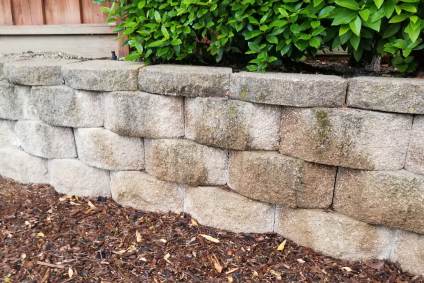
Modern blocks also offer a rich palette for any home style. You can move far beyond basic concrete with options that mimic natural stone, from the warm, earthy tones of a sandstone retaining wall to the sleek, contemporary look of a charcoal gray retaining wall block or even a dramatic black retaining wall. Others prefer the timeless character of a stone retaining wall or a classic brick retaining wall using wall stones or concrete wall blocks for texture. For a cohesive finish, pair pavers and retaining walls; a matching retaining wall paver cap or adjacent patio pavers can tie the whole space together.
This investment in function and beauty pays off. Transforming an unusable hill into an attractive, functional patio or garden enhances your daily life and can also increase property value with a retaining wall. A beautiful, practical landscape is a major draw for potential buyers, making it one of the smartest improvements you can make.
Can You Build It Yourself? A Realistic Guide to DIY Walls
The appeal of a weekend project is strong, and many homeowners wonder if they can tackle a retaining wall themselves. When planning a block retaining wall project, a great rule of thumb is the four-foot rule: walls under this height are often manageable for a handy homeowner using the best big box retaining wall blocks.
Once a wall exceeds four feet, however, the physics change dramatically. The weight of the soil it's holding back becomes immense, requiring complex engineering and often a building permit. These taller walls need extra support, like geogrid reinforcement for retaining walls—a strong, buried mesh that anchors the wall to the earth behind it. A wall this high, or one supporting a critical area like a driveway, is definitely professional territory.
Even for a smaller project, success hinges on what's underneath. Cutting corners on the foundation is the number one reason DIY walls fail. Every wall, no matter its size, needs a compacted gravel base to provide a level, stable footing and prevent shifting. It's the single most important step for ensuring your hard work lasts for decades.
Your 3-Step Plan to Start Reclaiming Your Yard stone wall retaining wall
That difficult slope in your yard is no longer just a challenge; it's an opportunity. You now see how retaining wall blocks create possibilities for patios and gardens, turning a problem area into a beautiful asset.
Are you prepared to begin the task at hand?
Take the first step from idea to action this afternoon:
- Identify the Spot: Find the one slope you'd most like to fix.
- Measure & Dream: Roughly measure the length and height. If it's under 4 feet, start imagining what you could put there—a garden, a bench, or a level patch of grass.
- Browse for Inspiration: Visit a home improvement store or search online for "landscape retaining wall blocks" to see the different colors and styles available. Also explore concrete landscape blocks, landscaping blocks, wall stones, and concrete wall blocks so you can compare textures and finishes. While you research, check where to buy retaining wall blocks in your area, compare retaining wall blocks price ranges, and look for retaining wall blocks for sale. For larger projects or bigger savings, consider bulk retaining wall blocks or wholesale retaining wall blocks; if your design calls for oversized units, search for extra large retaining wall blocks near me. Budget-minded shoppers can also watch for cheap retaining wall blocks on seasonal promotion.
If you are looking for a retaining wall company, contact us today!