
Professional Outdoor Lighting Installation Near Me in Plano
The right outdoor lighting can make a Plano home safer, more welcoming, and more useful after sunset. If you are comparing outdoor lighting services for a front walk, back patio, pool area, driveway, or full-yard plan, the best results come from good design, safe wiring, durable parts, and steady care. This guide shows how to review outdoor lighting contractors, what to consider, and what to expect before you book an installation.
What should you look for in an outdoor lighting contractor?
A good outdoor lighting contractor should explain design choices, product quality, install methods, power needs, and upkeep in plain language before you agree to the job. In Texas, anyone who performs non-exempt electrical work must be licensed and work through a licensed electrical contractor. That matters most when the project includes hardwired fixtures, new circuits, transformers, or other electrical changes. Plano homeowners should also check whether permits or inspections apply, since the City of Plano points residents and businesses to its building inspection and permit resources for project rules. (tdlr.texas.gov)
Start with the basics: confirm that the company serves your area, carries the right insurance, and has experience with residential exterior lighting installation Plano TX homeowners actually need. A contractor who installs only a few path lights may not be the right fit for a layered plan with uplighting, step lights, patio lights, and smart controls. The lowest quote is not always the best value if it skips design work, uses weak fixtures, or offers little support after the job.
Use this quick screening checklist when comparing companies:
- Licensing and credentials: Ask who does the electrical work and whether the company uses properly licensed pros when required.
- Local experience: Look for jobs like your home type, lot size, roofline, trees, outdoor living spaces, and neighborhood style.
- Design process: A strong contractor should talk about beam spread, glare control, fixture placement, color temperature, shadows, and how the system will look from the street and inside the home.
- Product quality: Ask about fixture materials, LED modules or lamps, transformers, wire quality, weather resistance, and replacement parts.
- Warranty and service: Get written details on fixture warranties, labor coverage, maintenance visits, and repair response times.
- Clear estimate: The proposal should list the main parts, install scope, control options, and any limits that could change the final cost.
Outdoor lighting does more than brighten the yard
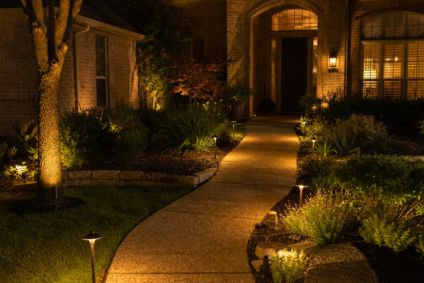
Well-planned landscape lighting Plano homeowners can count on should feel purposeful, not random. The goal is not to flood the yard with light. It is to guide movement, show off key features, reduce dark spots, and make outdoor spaces more comfortable. Good light adds contrast, depth, and direction so guests can find steps, paths, gates, and seats without harsh glare.
Curb appeal is one of the biggest reasons homeowners invest in outdoor lighting services. Uplighting can draw attention to stone, columns, special trees, and entry features. Path lights can frame walkways without making them feel like runway strips. Soft deck and patio lighting can make an outdoor kitchen or seating area feel finished instead of ignored after dark.
Safety matters just as much. Steps, level changes, pool edges, driveways, and side-yard paths are easier to use when light is placed where people actually walk. Security lighting can also be part of the plan, but it should be used with care. Motion lights, shielded floodlights, and smart schedules can help light needed areas without bothering neighbors or adding too much spill.
The main types of outdoor lighting services
Most home projects use more than one fixture type. During a consult, outdoor lighting contractors should ask how you use the yard at night, what you want to feature, and which areas feel unsafe or unfinished. From there, they can build a plan that fits both the home and the way you live.
Landscape and building lighting
Landscape lighting includes path lights, uplights, downlights, garden lights, tree lights, and accent lights. It works best in layers: some light at ground level, some on walls or other upright surfaces, and some on focal points. Building lighting focuses more on the home itself, such as columns, fronts, dormers, textures, and entryways.
The best designs often use less light, not more. Lighting every shrub can make a yard feel busy. Highlighting a few strong features can make the whole property feel more refined. Ask your contractor why each fixture is in the plan.
Patio, deck, and outdoor living lighting
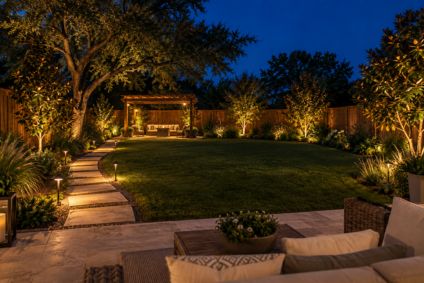
Outdoor living spaces need light for comfort, talk, cooking, and moving around. Step lights, under-rail lights, wall sconces, pergola lights, and small downlights can make a patio or deck more useful without taking over the space. If you entertain often, dimming and zone control are worth a look.
Fixture placement matters here too. A light in someone's eyes will get annoying fast, even if the fixture looks nice. Searches for professional outdoor lighting installation near me should lead you to installers who understand how people use the space, not just where fixtures can fit.
Outdoor lights go well with any landscape style! We love pairing them with Desert style Shrubs near Desert Style ornamental grasses!
Security and entry lighting
Security lighting works best when it is focused. Entry doors, garages, side gates, dark corners, and driveways can use motion sensors, timers, or smart controls. But more brightness is not always better. Badly aimed floodlights can cause glare, wash out camera footage, and spill light onto nearby lots.
A contractor should help you choose fixtures that light the useful area and control beam direction. Some homes can tie security lighting to cameras or smart-home routines. Others only need simple timers and well-placed fixtures.
Is low-voltage lighting the right choice?
Low-voltage outdoor lighting is often a smart choice for residential landscapes because it can provide attractive, efficient light with smaller fixtures and flexible placement. Many homeowners searching for low voltage landscape lighting near me want a system that looks neat, uses LED tech, and can be changed as the yard changes. The U.S. Department of Energy says efficient exterior lighting can cut operating costs over time, and LED exterior lights can also work well with controls that adjust light based on use or conditions. (energy.gov)
Low-voltage systems usually use a transformer to step power down for the lighting run. That makes them a good fit for path lights, garden beds, tree accents, and other landscape uses. They still need careful design. Long wire runs, overloaded transformers, weak connections, shallow burial, and cheap fixtures can lead to dim lights, flicker, rust, or early failure.
LED fixtures are common because they are efficient, small, and come in many beam angles and color temperatures. ENERGY STAR says LED life is measured differently from older light sources and that qualified products are tested for heat control so output can stay steady over the rated life. In plain terms, homeowners should ask about heat, replaceable parts, and what happens if one light fails years later. (energystar.gov)
Low voltage is not the right answer for every job. Line-voltage fixtures may fit some wall lights, overhead structures, or larger security needs. A good contractor will explain the tradeoffs instead of selling one system for every home.
What happens during a professional installation?
A professional installation usually starts with a walkthrough, not a sales pitch. The contractor should look at the property in daylight and may also suggest an evening visit or a temporary demo to study shadows, sightlines, and current lights. Good design talks cover both looks and practical details: where people walk, where water drains, where irrigation heads spray, where pets or children play, and where future plants may grow.
A typical process may include:
- Consultation and goals: You explain whether the main goal is curb appeal, safety, entertaining, security, or all of the above.
- Site check: The contractor reviews power access, landscape features, hardscape, trees, walls, rooflines, and dark zones.
- Lighting design: Fixture types, locations, beam angles, brightness levels, controls, and zones are selected.
- Proposal: You get a written scope with products, install steps, warranty details, and optional upgrades.
- Installation: Fixtures, wiring, transformers, controls, and any required electrical parts are installed to plan.
- Night aiming: Final adjustments are made after dark so beams hit the right spots and glare is reduced.
- Care plan: The contractor explains cleaning, seasonal changes, timer settings, repairs, and future growth options.
Installation time depends on design size, soil, wire paths, fixture count, controls, and whether electrical upgrades are needed. A small path-light project may be simple, while a full front-and-back system with smart zones and building lighting takes more coordination. If a company gives a timeline before seeing the property, ask more questions.
Pricing should be clear, even when the final number varies
Outdoor lighting costs depend on the system, not just the number of fixtures. Fixture quality, transformer size, wire distance, control type, trenching, mounting surfaces, electrical work, and care support all affect the final proposal. That is why two quotes for lighting installation near me can look very different even when both list the same number of lights.
Instead of shopping by fixture count alone, compare what each estimate includes. A lower quote may leave out smart controls, stronger fixtures, night aiming, warranty labor, or future service. A higher quote should be able to justify itself with better materials, stronger design support, safer install practices, or a clearer maintenance plan.
Ask these pricing questions before you approve the work:
- What fixture brands or materials are included?
- Are lamps or built-in LED modules replaceable?
- Is the transformer sized for future growth?
- Are timers, photocells, dimmers, or smart controls included?
- Does the quote include wire burial, mounting hardware, and final aiming?
- What does the warranty cover, and for how long?
- What service fees apply after installation?
A good contractor should not rush you to decide before you understand the proposal. If the plan is phased, ask what should be done first and what can wait. Planning for growth from the start can cut rework later.
Maintenance keeps the system looking intentional
Outdoor lighting lives in a tough setting. Soil shifts, mulch gets refreshed, plants grow, irrigation sprays fixtures, lenses collect mineral buildup, and storms can move or damage parts. Even a well-installed system needs some care if you want it to keep looking like the original design.
Maintenance may include cleaning lenses, trimming plants around fixtures, re-aiming lights, checking connections, replacing damaged parts, updating timer settings, and checking exposed wire. Seasonal changes are especially useful in landscaped yards because plants that looked fine in spring may block the beam by late summer. If your system has smart controls, app or schedule updates may also be needed.
When comparing outdoor lighting services, ask whether maintenance is offered as a one-time visit or a recurring plan. This matters because many lighting problems start small. A loose fixture, dim lamp, or dirty lens may be easy to fix early, but it can hurt the whole look if ignored.
Smart controls and energy-conscious design add flexibility
Modern exterior lighting installation Plano TX homeowners request often includes more than a simple timer. Smart controls can split the property into zones, change schedules by season, dim certain areas, or turn lights on for guests and deliveries. Networked controls can help exterior LED lighting respond to use and conditions, which is one reason the Department of Energy points to controls as a way to improve efficiency and performance in exterior systems. (energy.gov)
Still, smart features should support the design rather than make it harder to use. If you want simple operation, a photocell and timer may be enough. If you travel often, host often, or already use smart-home devices, app control may be worth it. The key is choosing controls that everyone in the house can use.
Energy-conscious design also includes fixture placement. A smaller number of well-aimed lights often works better than many very bright fixtures. Shielding, warm color temperatures, dimming, and motion settings can make the system more comfortable while reducing wasted light.
Better lighting starts with better questions
Finding the right outdoor lighting services is less about choosing the first company that appears for lighting installation near me and more about asking the right questions. Look for outdoor lighting contractors who understand design, safety, local rules, product quality, controls, and long-term service. A well-planned system should make your home easier to move around, more fun at night, and more attractive from the curb.
If you are comparing landscape lighting Plano projects, start with a walkthrough and a written proposal. Ask how the system will look after dark, how you will maintain it, and how it can grow with your home. The best outdoor lighting feels easy when it is done, but that clean result comes from careful planning before the first fixture goes in.
Q&A
Do Plano homeowners always need a licensed electrical contractor for outdoor lighting?
Short answer: Not every outdoor lighting job is the same, but licensing becomes very important when the work includes non-exempt electrical work, hardwired fixtures, new circuits, transformers, or other electrical changes. The article notes that Texas requires non-exempt electrical work to be done or offered through properly licensed pros, so homeowners should check who will handle the electrical part and whether permits or inspections apply.
Why is the cheapest outdoor lighting quote not always the best option?
Short answer: A lower quote may leave out important parts of the job, such as design planning, quality fixtures, stronger wiring, smart controls, final night aiming, warranty labor, or future service. The better comparison is not just the number of lights. It is what the estimate includes, how the system will work after dark, and how it will be maintained over time.
Is low-voltage landscape lighting better than line-voltage lighting?
Short answer: Low-voltage lighting is often a strong choice for residential landscapes because it supports smaller fixtures, flexible placement, LED efficiency, and easier changes as landscaping grows. But it is not always the best fit for every use. Some wall lights, overhead structures, or larger security fixtures may need line-voltage options, so a contractor should explain the tradeoffs for the specific home.
What should happen after the outdoor lighting fixtures are installed?
Short answer: A professional installation should include night aiming and a care talk. Night aiming lets the contractor adjust beams after dark so the lights hit the right areas without glare. Care guidance should cover cleaning lenses, trimming plants, checking connections, updating timers or smart controls, re-aiming fixtures, and planning for future growth.
Are smart controls needed for a good outdoor lighting system?
Short answer: Smart controls can be useful, especially for homeowners who want zones, seasonal schedules, dimming, app control, or light routines for guests and deliveries. But every home does not require them. A simple photocell and timer may be enough if the homeowner wants easy use. The best control setup is the one that fits the design and is easy for the house to use.