
Evergreen Trees for Landscaping: Key Benefits
Evergreen trees for landscaping bring year-round green, shape, and privacy to outdoor spaces. They also work as natural windbreaks. They need less pruning than many deciduous trees, so they are a smart choice for busy homeowners. Their flexibility helps them fit formal, natural, and modern garden styles. They can also boost curb appeal and property value. Small evergreen trees for landscaping work well in compact yards and city gardens. Pairing them with high end landscape lighting can create a dramatic night look.
Why Choose Evergreen Trees for Landscaping?
Evergreen trees stay green all year. Unlike deciduous trees, they keep their needles or leaves through every season. That gives your yard a steady look.
They also add real function. Evergreens can block wind, soften noise, and mark borders. Planted well, they can also help lower energy use by adding shade and insulation.
Evergreens also help wildlife. They give birds and small animals food and shelter, which supports more life in your yard. Their roots can also help hold soil in place on slopes.
Common choices include pine, spruce, fir, and cedar. Each one has a different look, so it is easy to find the best evergreen trees for your site.
Top Reasons to Choose Evergreens:
- Low maintenance: Less pruning is needed.
- Flexibility: Fits many garden styles.
- Drought-tolerant choices: Helps in many climates.
Choose evergreens, and your landscape will feel alive all year. They add balance, beauty, and a sense of lasting structure.
Key Benefits of Landscaping with Evergreens
Landscaping with evergreens gives you a green backdrop in every season. The result is steady color even as the weather changes.
Their value goes beyond looks. Evergreens can raise property value by improving curb appeal. They also give a clear design line that many buyers like.
Evergreen trees can work as privacy screens. They can define borders, hide unwanted views, and make a yard feel more private.
Many evergreen species are drought-tolerant. That makes them a good fit for many climates. They also need less watering once they are established.
Evergreens can also cut noise. When placed well, they act like sound barriers and make outdoor spaces calmer.
These trees can inspire many evergreen landscaping ideas. From living walls to focal points, their flexibility supports creative design.
Benefits at a Glance:
- Higher property value
- Natural privacy screens
- Drought-tolerant choices
- Noise reduction
- Design flexibility
Evergreens also help local wildlife. Birds and small animals can find shelter and food in their branches.
Best Evergreen Trees for Landscaping
Choosing the best evergreen trees for landscaping depends on your climate and goals. With many varieties available, you can find one that fits both style and use.
Spruce trees are loved for their neat shape and dense needles. They create a classic look and work well as windbreaks and privacy screens.
Pine trees are another favorite because they adapt well and come in many sizes. They fit many landscapes.
Fir trees add a soft, elegant look. Their flat needles make them good focal points, and they also work well in groups.
Cedar trees bring a rustic feel with aromatic wood and unusual branch shapes. They also do well in poor soil, which adds to their appeal.
If space is limited, choose small evergreen trees like dwarf Alberta spruce or Japanese holly. They keep the charm of larger trees but fit compact areas.
Top Evergreen Choices:
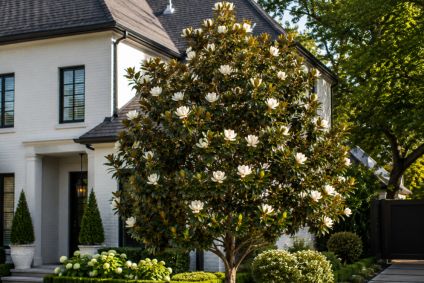
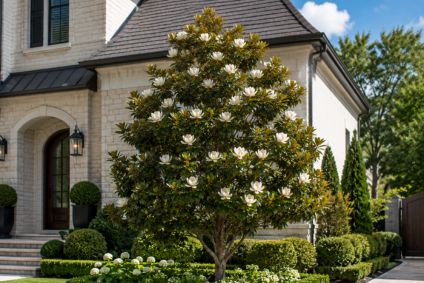
- Little Gem Magnolia
- Pine Trees
- Fir Trees
- Cedar Trees
- Dwarf Alberta Spruce
- Japanese Holly
In harsh winters or dry summers, pick species that match the climate. That helps them stay healthy with less care.
Small Evergreen Trees for Landscaping: Compact Spaces
Small evergreen trees are ideal for small gardens and urban spaces. They add depth and green color without taking over the yard. They offer the same benefits as larger trees in a smaller form.
Dwarf spruces are a strong choice for compact spaces. Their slow growth and tight shape make them easy to care for. They also bring a classic look.
Japanese holly gives year-round color and can be shaped to fit many styles. It is valued for glossy leaves and a small size, which makes it a good front-yard plant.
Boxwoods and dwarf cedars are also useful choices. They work well as hedges, borders, or stand-alone accents. They are hardy in many conditions.
When you pick small evergreen trees for landscaping, check the mature size and growth rate. That helps them stay useful as they grow.
Ideal Small Evergreen Options:
- Dwarf Spruce
- Japanese Holly
- Boxwood
- Dwarf Cedar
Place these trees with care. They can add privacy, create focal points, and provide shade while staying easy to manage.
Evergreen Landscaping Ideas for Every Style
Evergreen trees offer many evergreen landscaping ideas for both modern and traditional yards. They create interest and work with many design styles. Their flexibility makes them a favorite in landscape design.
For a simple look, pair evergreens with stone or pavers. Use them to set off the rich green color. This creates a neat, polished garden.
Cottage-style gardens gain texture from evergreens. Pair them with wildflowers for a look that feels both soft and structured. The garden will still look lively in every season.
In rustic spaces, evergreens work well with wood. Use logs or reclaimed wood to highlight natural features. The trees add structure and help the space feel organic.
Asian-inspired gardens often use evergreens for calm. Pair them with bamboo or water features. This can bring balance and peace to the garden.
Classic Ideas:
- Formal hedges with boxwoods
- Green screens with cedar
Modern Ideas:
- Geometric plantings with dwarf spruces
- Bold color contrast with Japanese holly
These ideas give you room to create. Mix them to match your style.
Planting Evergreen Trees: Tips for Success
Planting evergreen trees takes planning, but the results are worth it. Start with a site that gets enough sun. Also think about the tree's mature size so the area does not feel crowded.
Soil matters too. Make sure it drains well to help prevent root rot. Test the soil pH and adjust it if needed.
Watering is very important in the first few years. Young evergreens need steady moisture while roots grow. A drip system can make watering easier and more even.
Mulch helps too. Spread organic mulch around the base to hold moisture and balance soil temperature. It also helps block weeds.
Key Planting Tips:
- Select the right site.
- Prepare the soil well.
- Water often, especially at first.
Also leave enough space for healthy growth. Good spacing reduces competition for light and nutrients. Follow these tips, and your evergreens should thrive.
Enhancing Evergreens with High End Landscape Lighting
High end landscape lighting can turn an evergreen yard into a showpiece at night. Well-placed lights bring out shape and texture. The result is strong curb appeal after dark.
Up-lighting is a popular method. It shows off the height and form of trees. Put spotlights at the base and aim them upward. This works well for tall evergreens.
Path lights add another layer. They light the walk and also show off lower shrubs. Good placement improves both safety and style.
Smart lights are another good choice. These systems offer adjustable settings for brightness and timing. With an app or remote, you can change the mood with ease.
High End Lighting Tips:
- Use up-lights for bold tree highlights.
- Install path lights for safer walks.
- Choose smart lighting for more control.
Conclusion: Year-Round Beauty and Value
Evergreen trees for landscaping bring year-round beauty and value. They keep outdoor spaces green and strong in every season.
Adding these hardy trees to your plan brings more interest and long-term value. Choose evergreens to build a lush outdoor space that lasts.
Q&A
Question: What makes evergreen trees a practical choice for busy homeowners?
Short answer: Evergreen trees are practical because they keep their green color all year and need less pruning than many deciduous trees. Many are also hardy, drought-tolerant, and useful for privacy, wind protection, noise control, and curb appeal.
Question: Which evergreen trees are best for small gardens or urban landscapes?
Short answer: Good options for compact spaces include dwarf spruce, Japanese holly, boxwood, and dwarf cedar. These small trees add color, shape, and privacy without crowding a small yard.
Question: How can evergreen trees improve comfort and privacy in an outdoor space?
Short answer: Evergreens can act as natural privacy screens by setting borders and blocking unwanted views. Planted well, they also soften wind, reduce noise, add shade, and make a yard feel more private.
Question: What should homeowners consider before planting evergreen trees?
Short answer: Homeowners should choose a site with enough sun, check that the soil drains well, and think about the tree's mature size. Proper spacing and steady watering in the first few years help young trees settle in.
Question: How does high end landscape lighting enhance evergreen trees?
Short answer: High end landscape lighting brings out the shape, height, and texture of evergreen trees after sunset. Up-lighting can make tall trees stand out, path lights can improve safety, and smart lighting can adjust brightness and timing for different moods.
Call us today to schedule your in-person consultation!