
Creative Privacy Fence Landscaping Ideas for a Lush Yard with Jaguar Landscape
Looking out at a bare wooden boundary line often feels a bit like living inside a giant crate. While stark wooden slats successfully block out the neighbors, they simultaneously create a harsh, clinical environment in your own yard. Transforming that rigid structure into a lush "living wall" offers immense psychological benefits, instantly turning a claustrophobic enclosure into a breathable, natural sanctuary. As you begin, keep a few practical ideas for privacy landscaping in mind.
Think of your yard as a theater stage where the fence acts merely as a blank backdrop. By strategically layering tall shrubs and short flowers in front of it, you introduce vital visual depth that tricks the eye into perceiving a larger, more expansive space. This crucial balance of softscaping vs hardscaping replaces sharp architectural angles with gentle, organic shapes that make your yard feel naturally welcoming.
Industry data reveals that well-planned privacy fence landscaping increases your property value far more than the bare structure alone. Beyond simply boosting curb appeal, leaves and branches provide natural acoustic softening, actively absorbing and scattering harsh neighborhood noise much better than flat wood. Implementing these clever backyard privacy ideas allows you to successfully muffle a busy street while cultivating a quiet, beautiful retreat.
Summary
Turn a stark fence into a lush, year-round “living wall” using the staircase method—evergreens in back, mid-height shrubs in the middle, and low groundcovers up front—to add depth, block multiple sightlines, and make small yards feel larger. Plan first by mapping sun, testing drainage and soil, and checking setbacks; then space plants correctly to protect the fence, using lattice with twining vines, clumping (not running) bamboo, and columnar evergreens for tight areas. Maintain airflow gaps, stone/mulch strategies, and annual pruning to prevent rot and keep screens dense. Phased installation delivers stronger privacy, noise softening, curb appeal, and higher property value.
Know Your Ground: Mapping Sun, Soil, and Setbacks Before You Plant
While tracking sun exposure is a familiar first step, root-to-fence safety is equally crucial for your privacy landscaping ideas. Always leave a one-foot air gap between mature plants and wooden slats to prevent trapped moisture and rot. Remember the "mirror" concept: a plant's roots grow as wide as its branches, meaning large shrubs planted too closely will eventually push against and break your fence.
Before installing low maintenance border plants for property lines, check your dirt. Proper soil preparation for planting along fence lines requires a quick drainage test:
- Dig a 12-inch deep hole near the fence.
- Fill it with water and let it drain.
- Refill it; if emptying takes several hours, you have heavy clay requiring compost.
Navigating local property laws protects your investment from expensive mistakes. Always verify setback requirements, which dictate the exact legal distance your garden beds must stay from neighbor boundary lines or buried utilities.
The Staircase Effect: Master Layered Planting for Visual Depth and Total Screening
Transform a flat boundary into a stunning living gallery using the "staircase" method. Think of your garden like a theater stage: tall plants stand in the back, medium shrubs sit in the middle, and short groundcovers fill the front. This tiered approach drives professional layered planting techniques for backyard boundaries, creating visual depth that makes small yards feel much larger.
Achieving true seclusion requires blocking multiple viewing angles simultaneously. While the tall back row hides a neighbor's second-story window, the middle tiers fill gaps closer to the ground. Utilizing varying plant heights ranks among the most effective backyard privacy fence ideas for stopping nosy eyes completely.
Visual variety prevents your new border from looking like a boring green block. By blending broad leaves with fine, needle-like textures across these three steps, you easily build year-round interest garden beds that stay beautiful and engaging through every season.
Every successful layered landscape starts with the tallest elements first. The back row handles the core screening, requiring robust plants that keep their winter foliage.
Selecting Your Living Wall: The Best Evergreens for Year-Round Seclusion
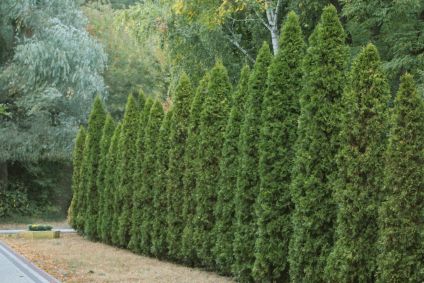
When planning your back row, the secret to year-round seclusion is knowing the difference between "deciduous" and "evergreen" plants. Deciduous trees drop their leaves in the fall, leaving bare branches that neighbors can easily see through. Evergreens, however, stay lush all winter. Choosing the best privacy trees means picking evergreens so your living barrier never takes a season off.
Finding the right match depends on your available space and local wildlife. Here is a quick comparison of top evergreen trees for privacy screening:
- Arborvitae: These are incredibly popular tall narrow evergreens for tight spaces. They grow up to 4 feet wide at a moderate rate, though deer notoriously love to eat them.
- Juniper: Highly deer-resistant and fast-growing, these reach about 5 feet wide.
- Holly: A fast-growing, broad-leaf option expanding up to 10 feet wide, featuring prickly leaves that naturally deter animals.
To build a solid wall without overcrowding, always plan for the plant's mature width. Plant your best privacy tree at least half of its expected maximum width away from the fence so the roots have room to breathe.
Instant Camouflage: Fast-Growing Shrubs and Vines to Hide Ugly Wooden Slats
Figuring out how to disguise an ugly wooden fence often leads homeowners straight to climbing plants. However, not all are fence-safe. "Self-clinging" vines use aggressive aerial roots that can slowly rot your wood. Instead, choose gentle "twining" vines. These climbers wrap around supports rather than gripping the wood directly, making them perfect climbing vines for decorative lattice panels.
When evaluating the best fast-growing shrubs for backyard screening, many homeowners weigh bamboo vs arborvitae for natural screening. Bamboo shoots up incredibly fast, but you must select "clumping" bamboo, which stays in a neat, contained circle. You should actively avoid "running" bamboo, an invasive type that spreads aggressively underground and will quickly overtake your entire yard.
Even with these speedy plant choices, your new barrier will need about two growing seasons to look completely full.
Small Space Solutions: Vertical Gardening and Narrow Evergreens for Tight Side Yards
Narrow corridors and urban backyards often lack ground space for wide, sprawling bushes. To maximize privacy with minimal soil, combine hardscaping with smart planting. Adding a lattice topper to an existing fence increases height immediately without eating up your yard, providing the perfect framework for vertical gardening ideas for outdoor seclusion.
At the ground level, choose plants with a "columnar" growth habit—meaning they grow straight up like a pillar instead of outward. These tall narrow evergreens for tight spaces act like living fence posts. This upright shape also makes them excellent pool privacy landscaping ideas where splashing water and narrow walkways restrict traditional planting. Top choices for widths under three feet include:
- Sky Pencil Holly
- Skyrocket Juniper
- Hicks Yew
- Slender Hinoki Cypress
Packing greenery into confined areas requires careful positioning to ensure roots have room to breathe and your wooden boundary stays rot-free.
If you are considering other landscape styles, check out some Desert Style Landscape ideas!
Maintenance and Safety: Keeping Your Living Fence Healthy and Fence-Friendly
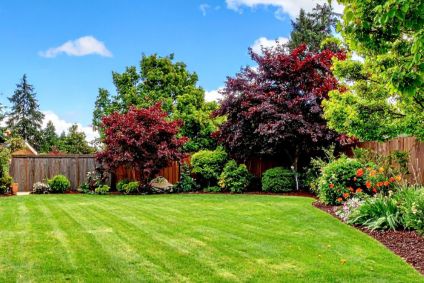
Your new greenery shouldn't cause a rotting wooden structure. Trapped moisture is your fence's biggest enemy, acting like a wet sponge against the wood. When spreading woodchips or compost, always leave a six-inch gap between the material and the boards to prevent mulch-induced rot. This vital airflow gap lets the wood dry quickly after rainstorms while still keeping your plants nourished.
To minimize weeding, incorporate modern hardscaping for private backyard retreats, like a narrow river rock trench directly under the fence. Beyond this stone barrier, establish shade-tolerant perennials for under fence lines, such as hostas, to naturally suppress weeds. As your taller shrubs mature, remember to prune the back branches annually to maintain that essential breathing room, which conveniently encourages the front foliage to grow into a thicker, denser screen.
Selecting low maintenance border plants for property lines ensures this necessary upkeep remains a quick seasonal chore rather than a weekend burden. Balancing plant health with structural safety guarantees a lush oasis that lasts for years.
From Blueprint to Backyard: Your Action Plan for a Private Retreat
That bare wooden barrier is no longer just a property line. By thoughtfully layering plants, you can turn everyday privacy fence landscaping into a lush, functional backdrop that delivers instant curb appeal.
Start your project in phases to ensure healthy growth and budget management. Measure your available space, test your soil, and purchase your large "anchor" shrubs first. Setting realistic growth expectations ensures your landscaping will flourish over the coming seasons.
When planting day arrives, double-check your spacing, gather your tools, and dig in with confidence. You are no longer just blocking out a neighbor's view; you are crafting a sustainable, private retreat.
Q&A
What should I check before planting along my fence?
Short answer: Start with a quick site audit. Map where sun hits through the day, then run a simple drainage test: dig a 12-inch hole, fill it, let it drain, refill it—if it takes several hours to empty, amend heavy clay with compost. Confirm local setback rules and the location of buried utilities to avoid legal or safety issues. Protect your fence by planning a one-foot air gap between mature plants and wood, and remember the “mirror” rule: roots tend to spread as wide as the canopy, so don’t crowd large shrubs where they can push against and damage the fence.
What is the “staircase” method and why does it make small yards feel larger?
Short answer: It’s a layered-planting approach: evergreens in back (tallest), mid-height shrubs in the middle, and low groundcovers up front. The tall back row handles core screening (including second-story views), while the middle and front tiers close lower-level gaps. This tiered depth softens harsh fence lines, blocks multiple sightlines at once, and creates visual perspective that tricks the eye into reading the space as wider and more expansive. Mixing leaf sizes and textures across tiers also keeps the border interesting year-round.
Which plants give fast, year-round privacy—and how should I space them?
Short answer: For all-season screening, choose evergreens over deciduous options. Good back-row picks include arborvitae (narrow, up to ~4 ft wide but deer-favored), juniper (deer-resistant, fast, ~5 ft wide), and holly (broadleaf, fast, up to ~10 ft wide, prickly leaves deter animals). For quick camouflage of wood, mount lattice and train “twining” vines (e.g., clematis-style climbers) that wrap supports rather than cling to and rot the boards; avoid self-clinging types. If comparing bamboo vs arborvitae, use only “clumping” bamboo for contained growth and avoid invasive “running” bamboo. Expect about two growing seasons for a fully filled look. Whatever you plant, allow room to mature: set plants at least half their expected maximum width away from the fence to protect both roots and boards.
How can I get strong privacy in a tight side yard or narrow space?
Short answer: Go vertical. Add a lattice topper to boost fence height immediately without using precious ground area, then train twining vines on it. In the soil strip, pick columnar evergreens that grow up, not out—great options under three feet wide include Sky Pencil Holly, Skyrocket Juniper, Hicks Yew, and Slender Hinoki Cypress. Position them to preserve a one-foot air gap to the fence, which maintains airflow and prevents moisture-related rot.
What maintenance keeps a “living fence” healthy without rotting the wood?
Short answer: Maintain airflow and keep moisture off the boards. Leave a one-foot plant-to-fence gap and a six-inch mulch/compost-free strip next to the wood. A narrow river rock trench directly under the fence curbs splash-back and weeds; plant shade-tolerant perennials like hostas just beyond it to suppress weeding. Prune back branches on the fence side annually to preserve the breathing room, which also encourages denser foliage facing the yard. With these habits—and smart, low-maintenance plant choices—your screen stays lush while the fence stays sound.
Contact us today to schedule a design consultation !