
Common Pests Affecting St. Augustine Grass
Is your St. Augustine lawn turning yellow and brown despite your best watering efforts? Before you blame the summer heat, the real culprit might be a tiny pest making a meal of your turf. You don't need a biology degree to find the problem. Most lawn issues come from a few common pests. With a little detective work, you can identify the exact cause and treat brown patches with confidence. This guide simplifies pest control by focusing on the three biggest offenders: chinch bugs, grub worms, and sod webworms. St augustine grass texas faces the same common pests. These pests often cause problems for the grass.
In short, this guide highlights the Common Pests Affecting St. Augustine Grass and how to spot them fast.
If you are new to this area and want to know what St. Augustine grass looks like, it creates a thick carpet with wide leaves. Some places call it Augustine grass.
It spreads by above-ground stolons—how does st augustine grass grow—so does st augustine grass spread? Yes; with warmth and moisture, st augustine grass growing can quickly fill thin spots. If you're asking will st augustine grass spread into beds, edge and maintain borders to keep it in place. From an anatomy perspective (st augustine grass anatomy, st augustine grass parts), healthy stolons, nodes, and blades knit together rapidly when conditions and soil for st augustine grass are favorable.
Fungus or Bugs? A 2-Minute Test
Before treating brown patches, you need to know what you're fighting. Using the wrong product is a waste of time and money. A simple way to check for root-eating pests like grubs is the "Tug Test."
Grab a handful of the dead grass and pull. If it rolls up like a carpet with no roots attached, you have your answer—a classic sign that grubs have been feasting underground.
If the roots hold firm, your next clue is the damage pattern. Look closely at the shape and location to determine if you have fungus vs. insect damage.
- Insect Damage: Tends to create irregular, blotchy shapes that look like the grass is thirsty. This damage often starts in the hottest, sunniest parts of the yard.
- Fungal Damage: Usually forms more defined circles, rings, or spots. You might also see discolored lesions on the individual grass blades.
When the Tug Test is negative but the damage looks like drought in a sunny spot, your primary suspect is one of St. Augustine's biggest enemies.
Chinch Bugs: The Sun-Loving Pest
Ever wonder what does st augustine grass look like? When your St. Augustine looks thirsty and yellow only in the sunniest, hottest areas, you're likely seeing bug damage. These tiny pests act like little vampires for your lawn.
They pierce the grass blades and suck out the plant juices, leaving behind expanding patches of dead, straw-like turf. Because they thrive in heat, you'll almost always find their handiwork next to heat-reflecting surfaces like a driveway or sidewalk before it spreads.
To be certain, you must find the culprits.
Adult chinch bugs are very small, about 1/8 of an inch long. They are black and have white wings that fold into an 'X' shape on their backs.
Get on your hands and knees at the edge of a yellowing patch, where dying grass meets green. Firmly part the blades down to the soil and watch closely. In an infestation, you'll see them scurrying for cover.
Finding them along this border is key to stopping their invasion. Treating the dead center of the patch is useless, as the bugs have already moved on to feed on living grass nearby.
By concentrating your control efforts on this area, you can target the problem directly where it is.
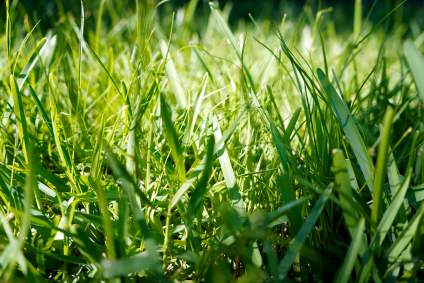
Grub Worms: The Cause of Spongy Turf
A strange, spongy feeling underfoot is a tell-tale sign the problem is in the soil below, likely caused by white grub worms. Grubs are not true worms but the C-shaped, soft-bodied larvae of various beetles.
They live underground and feast on the roots of your St. Augustine grass. This unseen feeding detaches the St augustine turf from the soil, creating that squishy sensation and causing large, irregular patches to turn brown and die. You may also notice more birds or raccoons digging in your yard, as they're looking for a grub meal.
To confirm, perform the "carpet pull" test. In a brown area, grab a handful of dead grass and give it a firm tug. If it rolls back easily with no roots attached, you have found your culprit. As you peel back the sod, you will likely see the milky-white grubs curled into a C-shape.
Finding more than five to ten grubs in a square-foot area indicates an infestation that requires treatment.
Controlling these pests is all about timing. Because grubs live underground, you must apply treatment when they are young and actively feeding near the surface. For most species, the most effective time to apply a granular insecticide is in the late summer or early fall.
- The focus is on reaching the new generation when they are young.
- Its goal is to stop potential harm before it becomes more serious.
- The aim is to step in early to lower future risks.
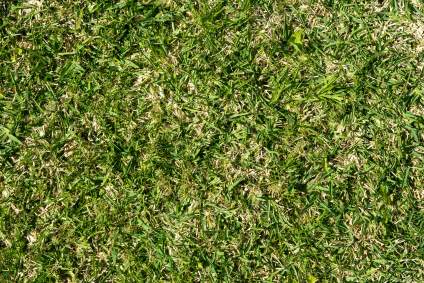
Sod Webworms: A Sign of Moths at Dusk
Small, tan moths fluttering over your lawn at dusk are a warning sign. They lay eggs that hatch into sod webworms—caterpillars that hide during the day and chew off St. Augustine lawn blades at night. Unlike the uniform browning from chinch bugs or root damage from grubs, this attack creates ragged patches that look scalped or unevenly mowed.
For more evidence, part the grass at the edge of a damaged spot. Look for silky, web-like tunnels near the soil and tiny, greenish pellets. These pellets are the caterpillar's droppings (frass) and are a clear sign of active feeding.
To be absolutely sure, perform a simple "flush test." Mix two tablespoons of dish soap into a gallon of water and drench a small, affected area (about two square feet). Within ten minutes, any caterpillars present will wiggle to the surface, confirming the infestation.
A Healthy Lawn is Your Best Defense
Now you can diagnose the cause of dead spots with confidence. However, the best long-term strategy against these invaders is building a stronger, more resilient lawn. Focus on these simple prevention habits:
- Water Deeply, Not Daily.
- Mow High (3-4 inches).
- Reduce Thatch Buildup.
These steps create an environment where pests can't thrive, helping you build a beautiful lawn you can be proud of, season after season.
If you're establishing or repairing a st augustine lawn, review how to plant st augustine grass lawn (how to plant st augustine) and how to grow st augustine sod; the best time to plant st augustine grass (and the best time to plant st augustine, plus how to plant san augustine grass) is typically late spring through early summer once soils warm. For ongoing care and how to grow st augustine well, choose cultivars suited to your region—different types of st augustine include several st augustine grass species, st augustine grass types, and kinds of st augustine grass. The benefits of st augustine grass make it a popular choice; if you've wondered is st augustine grass good or is st augustine grass a weed, remember it's a warm-season turf that can creep beyond borders unless edged and maintained.
If you want someone to help you install a new pallet of st augustine grass, contact us today!
