
Benefits of Professional Hardscape Services in Plano
Professional hardscape services bring design, material choice, site prep, and construction together for patios, walkways, retaining walls, and other built landscape features. The main benefit is not just a better-looking yard. It is a plan that connects the surface you see with the work below it. For homeowners, that means judging use, drainage, upkeep, and long-term cost before they commit.
What do professional hardscape services offer beyond DIY?
Professional hardscape services give you a plan that fits the site. That matters when soil, drainage, slope, or structure make the job more than simple stone setting. CMHA guidance for concrete paver installation covers excavation, soil compaction, base prep, edge restraints, bedding, and joint filling, not just the top layer. A good crew turns those steps into one build process.
That does not mean every outdoor project needs a contractor. A small decorative stepping-stone path may work for an experienced DIY homeowner. A patio near the house, a driveway, or a terraced slope deserves more care because mistakes can affect safety and drainage, not just looks.
When you compare DIY with professional work, think about the full job:
- Site assessment: Who checks elevations, soil, water flow, and access?
- Equipment and logistics: Who handles excavation, delivery, compaction, and disposal?
- Construction details: Who sets the base, edge restraints, transitions, and drainage plan?
- Accountability: Who writes the scope, handles changes, and deals with issues after the work is done?
Hiring a contractor does not guarantee quality. Ask how they work, not just what the finished project looks like.
Hardscape design in Plano starts with everyday use
Start hardscape design with how you want to live outside. Do you need a place for family meals, a direct route to the garage, or a quiet seat in the shade? Put those needs ahead of patterns and border details.
For example, a small backyard meant for dining and gardening may need a compact patio, not the largest one possible. Ask the designer to test furniture layout, protect planting space, and show how a person with tools would move through the yard. That makes the review real: you are checking a usable plan, not just a pretty drawing.
Ask the plan to show doors, furniture, walk paths, beds, and new features together. Check chair clearance with the chairs pulled out. Think about whether a guest can reach the seating area without crossing the cooking zone.
Use material samples beside the home's exterior before you approve colors. Ask for a calm palette if you want the paving, walls, and planting to feel linked rather than competing.
Installation quality begins below the surface
The foundation of durable paving is mostly hidden. CMHA says base material, depth, drainage, and compaction are key to performance. Weak soils, poor drainage, and freeze conditions may require changes to the base design, while poor compaction can lead to settlement.
For homeowners, the lesson is simple: do not compare hardscape installation quotes by surface material and square footage alone. Ask each contractor to explain the build below the pavers. If one proposal includes more prep and another barely mentions it, ask for an explanation before you treat them as equal.
A useful paver installation discussion should cover:
- Existing conditions: What soil, drainage, or elevation issues need review?
- Excavation and base: What materials and depths are proposed, and why do they fit this site?
- Compaction: How will the soil and aggregate layers be prepared?
- Edges and transitions: How will the paving be held in place and meet nearby surfaces?
- Water movement: Where will surface and subsurface water go?
These questions reflect core parts of industry guidance, even though the details should fit the system you choose. cmha.org
Ask for photos of important hidden work before it gets covered. Keep them with the approved plan and product details for later use.
How should you choose materials, including travertine?
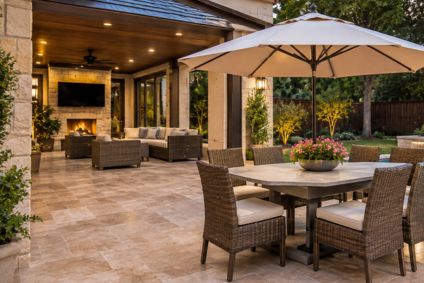
Choose materials by matching the product to the site, climate, use, finish, and care needs, not by looks alone. Natural stone guidance points to wear, slip resistance, staining, and upkeep as key factors, and warns that stone can get slippery when wet. Check whether the stone fits the outdoor use and the exact setting. indystone.com
Start with your priorities: natural variation, a steady pattern, barefoot comfort, easy cleaning, or how well it matches existing paving. Then ask the contractor and supplier which products fit those needs and what trade-offs remain.
Travertine deserves product-specific review
Travertine is a type of limestone with soft earth tones that can support a natural outdoor look. But the Natural Stone Institute says only a few limestone types have a strong record in exterior paving in freeze-thaw climates. A stone name alone does not prove it is right for your yard.
For a travertine patio, ask for proof that the product is meant for exterior use in your climate. Ask about thickness, finish, filled or open cavities, and the install method. Around pools, ask for evidence of wet slip resistance instead of relying on a general non-slip claim.
Do not assume every travertine surface will stay cool in strong sun. Check samples in similar exposure and talk about shade too. Surface heat and traction are separate issues.
Compare complete systems, not product labels
When you compare concrete pavers, stamped concrete, and natural stone, ask for an installed proposal and a maintenance plan for each option. Include prep, drainage, finish, joints, sealing if advised, and repair work. That keeps the comparison focused on what you will actually buy and maintain.
Ask how a damaged section would be fixed and whether spare material should be saved. Also ask for examples of older projects with the same product. Look at their condition and ask what care they have received, not just how new they look.
Retaining walls and outdoor features in Plano TXneed a coordinated plan
Retaining walls can help reclaim a slope, but they need more than a face that matches the patio. CMHA's retaining wall guidance covers the full wall system, including engineering concerns and surface and subsurface drainage. The visible blocks are only part of the job.
If your project involves a slope, ask who will set the wall design needs and whether a qualified engineer should be involved. Make the proposal show drainage duties and any required design documents. Do not choose a wall only because its color looks right next to the patio.
Use the same coordinated approach for other outdoor features:
- Outdoor kitchens: Confirm appliance spots, work space, and who handles utility hookups.
- Lighting: Mark walk paths, steps, controls, and wire plans before you approve the build.
- Irrigation and planting: Show current lines, future beds, and access for upkeep.
- Shade structures: Set the locations and make foundation and permit duties clear.
Ask for one drawing that shows all of these parts together. Even if the work happens in stages, make future features clear so the first phase does not block them.
What maintenance and long-term value should you expect?
Expect a maintenance plan, not a maintenance-free yard. Natural stone care guidance recommends proper cleaners and says sealing can help with stain resistance, but it does not make stone stain-proof. Permeable paving also needs debris and sediment care so the openings keep working.
For travertine and other acid-sensitive stone, ask for a written cleaning guide. The Natural Stone Institute warns that vinegar, lemon, and other acids can etch calcareous stone. It also says to ask the supplier whether sealing is right and which product and schedule to use. naturalstoneinstitute.org
Before you sign, request care instructions for cleaning, joints, drainage checks, approved products, and warning signs that mean you need service. Ask which tasks you can handle and which need a specialist. Include that work in your material choice.
Treat resale value carefully. Do not budget around an assumed return. Ask whether the project makes sense for your household without that return. Focus on the upgrades you will use, then talk with a local real estate professional if you want resale input.
For cost comparisons, request both the construction price and an explanation of expected upkeep. A useful budget talk includes access limits, disposal, drainage, utility work, and restoration of disturbed areas, not just the paving allowance.
Water-conscious design goes beyond replacing lawn
Permeable pavement can help when stormwater control is a project goal. Unlike standard impermeable paving, it lets water move through the surface into an aggregate layer, where it can be stored for a time and may soak into the soil. Its fit depends on the site and the full design, not just the look of the pavers.
Ask whether a permeable system fits your soil, drainage, and intended use. Ask where water goes during bigger storms and what upkeep the system needs. EPA guidance points to clogging and maintenance as key long-term issues.
Keep planting in the discussion too. If you want a lower-water yard, ask for a plan that balances paved areas with plants that fit the local climate instead of covering every open space. Define success regarding outdoor use, plant care, and water management together.
Choose a contractor who makes the details clear
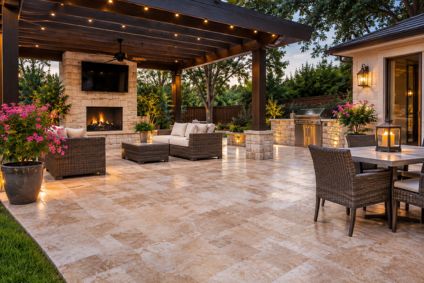
Use the consultation to see how a contractor thinks. Ask them to explain one finished project, the site problems involved, and the build choices they made. Ask for references from similar work, not just photos.
For concrete paver work, CMHA recommends certified installers who know the key guidelines, materials, and methods. Treat that training as one useful factor, then compare scope, references, and communication too.
Before you accept a proposal, ask for written answers to these points:
- Scope and exclusions: List demolition, prep, drainage, utilities, cleanup, and landscape restoration.
- Product specs: Record the maker or stone source, product, color, finish, and install method.
- Approvals: State who will check permits and HOA rules, get approvals, and pay the fees.
- Schedule and changes: Set milestones, decision dates, payment terms, and written change-order steps.
- Warranty and support: Separate product coverage from workmanship coverage, including exclusions and how to report issues.
Do not assume financing, permit help, or a set warranty comes with every contractor. Ask directly, compare written terms, and clear up uncertainties before work starts. End with a walkthrough and keep the care instructions, specs, and warranty papers together.
Invest in the whole outdoor space
The strongest reason to choose professional hardscape services is the chance to judge design, construction, and upkeep as one connected project. A beautiful surface should be the result of those choices, not a substitute for them.
Start with how you want to use the yard, shortlist materials that fit the site, and compare detailed proposals. Give hidden prep as much weight as the finished look. That approach keeps your investment focused on an outdoor space you can enjoy and maintain with realistic expectations.
Q&A
Question: When is DIY hardscaping reasonable, and when should a homeowner hire a professional?
Short answer: DIY may be fine for small, low-risk work like a decorative stepping-stone path, especially for an experienced homeowner. Professional help matters more when the job involves a patio near the house, a driveway, a slope, retaining walls, drainage, soil issues, or changes in elevation. In those cases, mistakes can affect use, settlement, water flow, and long-term durability, not just appearance.
Question: Why should homeowners ask about what is under the finished paving surface?
Short answer: The visible pavers, stone, or concrete are only part of the build. Durable hardscaping depends on excavation, soil conditions, base depth, compaction, drainage, edge restraints, and transitions to nearby surfaces. Two proposals that look similar by square footage and surface material may differ a lot in hidden prep, so homeowners should ask contractors to explain the full system before comparing prices.
Question: Is travertine always a good choice for outdoor patios and pool areas?
Short answer: No. Travertine can create a natural outdoor look, but it should be judged as a specific product for the specific site. Homeowners should ask about exterior use, freeze-thaw performance, thickness, finish, filled or open cavities, install method, surface heat, and wet slip resistance. Around pools, ask for proof about traction rather than trusting a general non-slip claim.
Question: What should be included in a useful hardscape maintenance plan?
Short answer: A maintenance plan should explain cleaning methods, approved products, joint care, drainage checks, sealing advice if needed, and warning signs that call for service. For natural stone such as travertine, it should also list products to avoid, including acidic cleaners that may etch calcareous stone. Permeable paving needs care too, because debris and sediment can cut down its water flow.
Question: How can a homeowner compare contractors beyond looking at project photos?
Short answer: Ask each contractor to explain their build method, provide references for similar work, define scope and exclusions, list products and install methods, explain permit or HOA duties, and outline warranty terms. Photos show the finished look, but written details show how the contractor handles site prep, drainage, schedule changes, utility coordination, cleanup, and support after the job is done.